









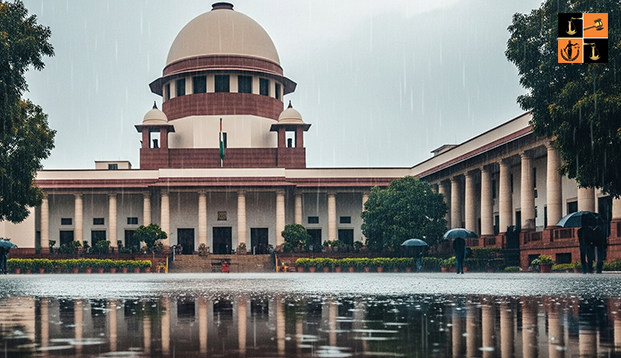
On Thursday, the Supreme Court directed the Centre and the Governments of Delhi, Haryana, Rajasthan, and Gujarat to adopt a uniform definition of the Aravalli Hills and Ranges. Treating the ecological fragility of the Aravallis as a matter of urgent national importance, the Court mandated that no new mining leases shall be issued until a scientifically prepared management plan is finalised, placing renewed emphasis on the mountain range’s role as a natural barrier against desertification.
The case stemmed from long-running proceedings, where the Supreme Court has been monitoring issues of forest governance and environmental protection for decades. During the course of this litigation, the Court found that various States were applying differing interpretations of the expression “Aravalli Hills/Ranges,” resulting in inconsistent regulatory controls and uneven treatment of mining activity across the region. To address this disparity, the Court directed the constitution of a specialised committee comprising representatives of the Ministry of Environment, Forest and Climate Change, the Forest Survey of India, the Geological Survey of India, the Central Empowered Committee, and the Forest Departments of Delhi, Haryana, Rajasthan, and Gujarat. The Committee later submitted a consolidated report proposing uniform operational criteria and setting out conservation measures as well as regulatory safeguards governing mining within the Aravalli landscape.
The Amicus Curiae argued that the 2010 Forest Survey of India definition, based on slope, inter-hill buffers, and morphological continuity, offered a detailed scientific basis and should have been adopted in full. He expressed apprehension that departures from the FSI definition could result in exclusion of smaller or ecologically sensitive hill formations, creating openings for unregulated mining. On the other hand, the Ministry of Environment, Forest and Climate Change supported the Committee’s recommended definition, stating that it captured a larger geographical area of the Aravalli system and provided a practicable foundation for uniform regulation. The Ministry emphasised that the Committee’s recommendations were comprehensive, covering both conservation imperatives and operational guidelines for sustainable mining.
The Apex Court took note of the Aravalli Range’s ancient geological character, ecological importance, and its established function as a natural “green barrier” protecting the Indo-Gangetic plains from desertification. The Bench referred to India’s commitments under the United Nations Convention to Combat Desertification and recorded MoEF&CC’s own acknowledgement of “escalating degradation pressures” across the Aravalli landscape. The Court observed that continued degradation through deforestation, aquifer depletion, illegal mining, encroachment, and infrastructure expansion had created an “undeniable strain” on the region’s ecological resilience. While recognising the value of the Committee’s work, the Court considered it necessary that a more exhaustive scientific analysis be undertaken before permitting any further expansion of mining operations. Referring to the Court’s earlier directions in the Saranda region, the Bench noted that a geo-referenced ecological assessment must precede any determination of areas open for mining, given the vulnerability of the Aravallis.
After reviewing the Committee’s report, the Court recorded its acceptance of the Committee’s definition of the Aravalli Hills and Ranges in the context of mining and acknowledged its recommendations prohibiting mining in core and inviolate zones while prescribing safeguards regulating existing operations. The Court stated that “it would be appropriate that such a study be carried out, taking into consideration the geological importance of the Aravali mountain ranges,” directing the authorities to proceed accordingly.
The Top Court accepted the Committee’s definition of the Aravalli Hills and Ranges and directed that it be uniformly adopted by the Governments of Gujarat, Rajasthan, Haryana, and Delhi, as well as by MoEF&CC. It further accepted the recommendation that mining shall not be permitted in core or inviolate areas, save for limited categories of minerals deemed critical, strategic, or atomic. The Court held that a Management Plan for Sustainable Mining must now be prepared by MoEF&CC through the Indian Council of Forestry Research and Education, covering the entire expanse of the Aravallis from Gujarat to Delhi, incorporating identification of permissible and prohibited mining areas, assessment of cumulative environmental impacts, determination of carrying capacity, and post-mining restoration protocols.
It directed that until the plan is finalised and receives approval, no new mining leases shall be granted in the Aravalli region. Once approved, mining activities may be permitted strictly in accordance with the zones demarcated for sustainable mining in the management plan. Existing legally operational mines may continue to function, subject to the safeguards contemplated in the Committee’s report. The Court concluded by placing on record its appreciation for the Amicus Curiae and the counsels who assisted in addressing the complex environmental issues arising in the Godavarman series of matters.
Case Title: In Re: T.N. Godavarman Thirumulpad Vs. Union of India And Others
Case No: I.A. NO.105701 OF 2024
Coram: Hon’ble Chief Justice of India B.R. Gavai, Hon’ble Justice K. Vinod Chandran, Hon’ble Justice N.V. Anjaria
Advocate for Appellant: Sr. Advs. K. Parameshwar, and Sanjay Parikh, Advs. M.V. Kunda, Kanti, Raji Gururaj, Srinivas Patil, Veda Singh, Prasad Hegde, Sai Kaushal N., Chitransha Singh Shikarwar, Kritika, Tara Elizabeth Kurien, D.p.singh, AOR Srishti Agnihotri, …
Advocate for Respondent: A.S.G. Aishwarya Bhati, AORs Gurmeet Singh Makker, and Gaichangpou Gangmei, Advs. Ruchi Kohli, Suhashini Sen, Gaurang Bhushan, Baij Nath Patel, Rohan Gupta, Arjun D. Singh, Maitreya Mahaley, Yimyanger Longkumer, Kamei Bestman Kabui, ….
Read Judgment @Latestlaws.com
Picture Source :




















