









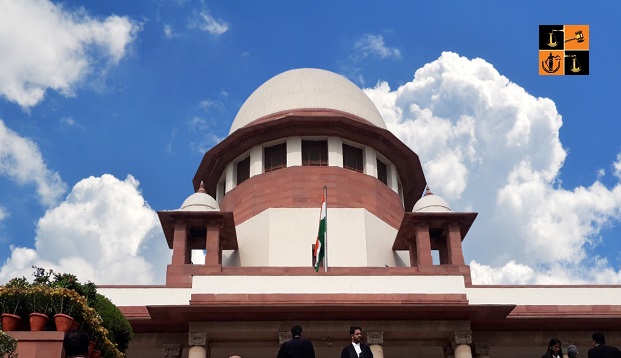
The Supreme Court, in its recent judgment, dealt with the question of evidentiary proof to be presented in a case of sexual harassment at the workplace by a government official. The Supreme Court stated that in cases where a defence of false implication for ulterior motives is raised, the courts are obligated to conduct a thorough examination of any evidence to determine the credibility of the allegations, ensuring that genuine claims are distinguished from baseless ones.
Facts and Judicial History of the Case:
The appeal before the Supreme Court stems from a case in which the respondent, a retired government official, faced disciplinary proceedings following allegations of sexual harassment made by a female employee working under his supervision. The employee filed a complaint, leading to the initiation of disciplinary proceedings. The appeal has been filed against the judgment of the Gauhati High Court, which set aside a penalty imposed on the respondent in connection with these disciplinary proceedings.
Initial Inquiries:
- An initial inquiry found no conclusive evidence of sexual harassment.
- A Frontier Complaints Committee determined that the allegations were not fully substantiated.
Central Complaints Committee:
- A Central Complaints Committee was formed to further investigate the allegations. This was necessitated by the respondent's position as a non-combatised officer.
- During the inquiry, the appellant submitted a second complaint with additional allegations, and the Central Complaints Committee considered both complaints.
Retirement and Withholding of Pension:
- The respondent retired during the disciplinary proceedings.
- The Central Complaints Committee found the charges of sexual harassment proved and, after considering advice from the UPSC, imposed a penalty of withholding 50% of the respondent's pension.
Central Administrative Tribunal:
- The respondent initially approached the Central Administrative Tribunal (CAT), challenging the constitution of the Central Complaints Committee. The CAT dismissed his application, setting a deadline for completing the disciplinary proceedings.
Gauhati High Court:
- Unsatisfied with the CAT's decision, the respondent filed a writ petition before the Gauhati High Court.
- The High Court allowed the writ petition and set aside the penalty on several grounds, including issues related to the scope of the Central Complaints Committee's inquiry, the committee's role, and the sufficiency of evidence.
Contentions of the Parties:
Contentions of the Appellants:
- The appellant argued that there was no violation of the principles of natural justice. The respondent had ample opportunities to defend himself, and the proceedings were conducted in accordance with the relevant rules.
- The appellant contended that the punishment imposed, withholding 50% of the pension, is proportionate to the offence committed by the respondent. The appellant had continuously harassed the complainant despite warnings from his superior, justifying the penalty.
Contentions of the Respondent:
- The respondent emphasised that the scope of judicial review in cases of misconduct and penalty imposition is limited and the Court should primarily examine whether the charges were established through a fair inquiry.
- The respondent argued that he was a decorated officer with an unblemished service record. He was exonerated in the first three inquiries, and the imposed penalty was unjustified. It was implied that he was victimized due to interdepartmental rivalry, leading to trauma and unjust penalties.
Observations of the Court:
The Supreme Court in the case of Vishaka and Ors. v. State of Rajasthan and Ors.[1] had recognized workplace sexual harassment as a violation of women's fundamental rights and established the Vishaka Guidelines. The relevant statutory rules were the Central Civil Services (Conduct) Rules, 1964, and the Central Civil Services (Classification, Control, and Appeal) Rules, 1965, created under the authority of the Constitution of India. In Medha Kotwal Lele and Ors. v. Union of India and Ors.[2], the Supreme Court emphasized on compliance with the Vishaka guidelines.
The scope of judicial review by the high courts is limited only to the propriety of the decision-making process and the fairness of the inquiry procedure, as was held in B.C. Chaturvedi v. Union of India & Ors.[3] Similarly, in Union of India and Ors. v. Mudrika Singh[4], the Supreme Court cautioned the courts from invalidating inquiries into sexual harassment on specious pleas and hyper-technical interpretations of the service rules.
Principle of “Test of Prejudice” in Service Jurisprudence
The legal framework established in Regina v. Deputy Industrial Injuries Commissioner, Ex parte Moore[5], grants the adjudicating authority the discretion to evaluate evidence with probative value, ensuring due regard for judicial approach, objectivity, exclusion of extraneous material, and adherence to the principles of natural justice and fairness.
The jurisdiction of the High Court in matters of this nature is circumscribed, and it should refrain from assuming an appellate role to supplant the findings of the disciplinary authority. Court’s intervention is merited only in instances where there is "no evidence" supporting the decision, where the decision is patently unreasonable, defying logic and accepted moral standards, or when the decision-maker appears to have acted irrationally.
The "test of prejudice" represents a well-established legal doctrine applied in cases of procedural irregularities or violations of the rule of audi alteram. It serves to ascertain whether such violations resulted in actual prejudice or a denial of a fair hearing. The Supreme Court, in this context, held that the High Court's decision to set aside the disciplinary authority's punishment order, based on the absence of an inquiry regarding the respondent's plea of guilt, without applying the "test of prejudice," appears to have overlooked these established legal principles.
Complaint Committee and Mechanism:
The High Court questioned the Central Complaints Committee's role in an inquiry, arguing that its involvement in posing questions and recording testimony was akin to acting as a prosecutor, potentially compromising the inquiry's integrity. Under Rule 14 of the 1965 CCS Rules, disciplinary authorities can either conduct an inquiry themselves or appoint a committee. The inquiry committee may designate a presenting officer to support the charges.
The case of Sakshi v. Union of India and Ors.[6] recognized that victims, particularly in sensitive cases involving crimes against women, might find it difficult to openly share their experiences due to fear or embarrassment. To address this, guidelines were issued for non-embarrassing cross-examinations of victims.
There's no clear legal restriction or logical reason to confine the Complaints Committee's questioning to specific contexts. The Committee, acting as an inquiry authority, should have the flexibility to pose questions independently for a fair and thorough inquiry.
The Supreme Court was of the view that accepting the High Court's view would risk reducing the Complaints Committee to a mere recording entity. Thus, the High Court's claim that the inquiry was tainted due to the Committee's questioning of prosecution witnesses was unfounded.
Principle of “no evidence” and standard of proof:
In domestic inquiries, judicial review is typically limited. The case of State of Andhra Pradesh and Others v. S. Sree Rama Rao[7] clarified that the criminal trial standard of evidence beyond a reasonable doubt does not apply to inquiries under Article 226. The High Court's role is to ensure competence, procedural fairness, and adherence to natural justice.
Regarding sexual harassment inquiries, the Supreme Court in Apparel Export Promotion Council v. A.K. Chopra[8] emphasized assessing broader probabilities considering the overall context. In disciplinary inquiries, the standard of proof is a preponderance of probabilities. Courts should only intervene when findings are perverse or based on no evidence.
In this case, there is ‘some evidence’ supporting the harassment allegations. The Supreme Court held that the High Court's focus on technical arguments, rather than the sufficiency of evidence, was misplaced.
The Decision of the Court:
The Supreme Court allowed the appeal and set aside the impugned judgment and order passed by the High Court. The Court restored the order of penalty imposed by the Disciplinary Authority.
Case Title: Union of India & Ors. v. Dilip Paul
Coram: Hon’ble CJI D.Y. Chandrachud and Justices J.B. Pardiwala and Manoj Misra
Case no.: Civil Appeal No. 6190 of 2023
Citation:
Advocates for the Appellants: K Parmeshwar, Arvind Kumar Sharma, Rekha Pandey, Vaishali Verma, and Manjula Gupta
Advocate for the Respondent: Avijit Roy
[1] 1997 Latest Caselaw 581 SC
[2] 2012 Latest Caselaw 612 SC
[3] 1995 Latest Caselaw 598 SC
[4] 2021 Latest Caselaw 637 SC
[5] (1965) 1 Q.B. 456
[6] (2004) 5 SCC 518
[7] 1963 Latest Caselaw 118 SC
[8] 1999 Latest Caselaw 7 SC
Picture Source :




















