









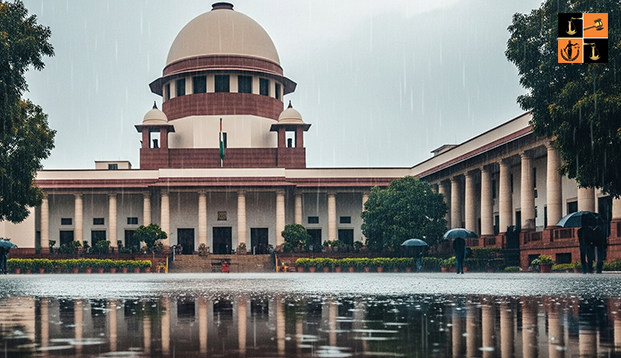
On Friday, in a proceeding that examined the constitutional contours of gubernatorial discretion and presidential assent, the Supreme Court declined to entertain Tamil Nadu’s plea seeking a restraint on the President from acting upon two state bills referred to her by the Governor.
The Division Bench of Chief Justice of India B.R. Gavai and Justice K. Vinod Chandran stated, “We cannot pass an order preventing the President from taking a decision,” when Senior Advocate P. Wilson, appearing for the State, contended that the Governor had violated the constitutional mandate to act on the aid and advice of the Council of Ministers.
The petitions filed by the Tamil Nadu Government challenged the Governor’s referral of two bills, one establishing Kalaignar University and another amending the Tamil Nadu Physical Education and Sports University Act, to the President, allegedly without following the procedure prescribed under Article 200 of the Constitution. The State argued that such referral was “unconstitutional” as it disregarded the elected government’s advice.
Adjourning the hearing, the Bench observed that the State may have to “wait at most for four weeks to get a clear picture,” noting that a five-judge Constitution Bench had already reserved its verdict on a Presidential Reference concerning the time limits for the President and Governors in granting or withholding assent to state legislation. The Constitution Bench, led by the Chief Justice of India B.R. Gavai, had reserved judgment on September 11 and is expected to pronounce it before November 24, when CJI Gavai demits office.
Appearing for the State, Senior Advocate A.M. Singhvi and Senior Advocate Mukul Rohatgi argued that the Governor’s act of testing the repugnancy of the bills amounted to a constitutional overreach. Rohatgi submitted, “If the governor was to test the repugnancy of bills, then he should be sitting in SC and not in Raj Bhavan.”
On the other hand, Solicitor General Tushar Mehta defended the Governor’s action, contending that the practice of examining potential repugnancy before granting assent has existed since the inception of the Constitution. He further presented data to demonstrate that such referrals are relatively rare. “Of the 6,942 bills sent to governors in all states since 2015, assent has been granted in 6,481 bills, 50 have been returned with a message to assemblies, assent has been withheld in 11 and 381 bills have been reserved for consideration of the President,” the Solicitor General submitted.
Disclaimer: This news/ article includes information received via a syndicated news feed. The original rights remain with the respective publisher.
Picture Source :



















