









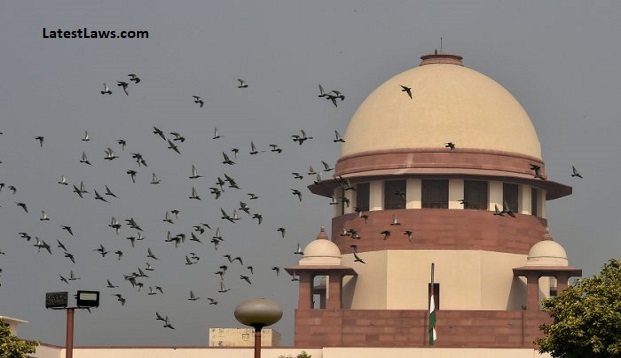
On Thursday, the Apex Court issued notice to the Centre & Election Commission to examine whether lawmakers who resign to topple an elected Govt & later join hands with the rival political faction for the lure of ministerial berths should attract disqualification under the Tenth Schedule of the Constitution.
A 3-Judge bench headed by CJI SA Bobde issued notice on a plea filed by Jaya Thakur, a social activist from Madhya Pradesh, who demanded that a six-year ban should be imposed on such political turncoats in view of the recent trend emerging from the states of Madhya Pradesh as recently as in March 2020 & Karnataka in 2019.
Thakur, in her plea filed through Lawyer Varinder Kumar Sharma said, “The object of the Tenth Schedule (inserted in the Constitution in 1985) was to curb the evil of political defections motivated by lure of office or other similar consideration which endanger the foundations of our democracy. Evil of the political defection has been a matter of national concern. Therefore, now time has come that a defector should be debarred for a period of six year, so that corrupt practice must be discouraged.”
The petition also demanded that any person who gives up membership of the party should be barred from holding any office of a Minister or any other remunerative political post until the term of the House expires. “Politicians including political parties find out a new path to defeat the motive of the Tenth Schedule by giving resignation from an elected post & choose to join the ruling party & take ministerial post or any other public office by contesting bye-elections within six month at the cost of the public exchequer. It is necessary to ban such type of people for up to six years from contesting elections & debar them from holding any public office,” the petition said.
The plea cited the recent example of Madhya Pradesh where 22 rebel members of the state Assembly belonging to the Congress resigned to topple the Kamal Nath government in the state. Later, they contested the bye-elections & got re-elected from the Bhartiya Janata Party (BJP). Some of them joined as ministers in the Shivraj Singh Chouhan Govt.
The ple also gave the example of Karnataka where 10 out of 17 members of legislative Assembly (MLA) in the state resigned or stood disqualified for anti-party activities in 2019. Later, on getting re-elected, the BS Yeddyurappa Govt gave ministerial berths to 10 such MLAs.
Senior advocate Anoop G Chaudhary who argued for Thakur told the Court, “MLAs, MPs contesting the election at the public exchequer’s cost cannot resign for personal benefits with ulterior motive. They are defeating the law laid down by the Parliament in the Tenth Schedule, later upheld by the Supreme Court in the Kihoti Hollohan case of 1992.”
The Tenth Schedule lays down the process by which legislators may be disqualified on grounds of defection by the Presiding Officer of a legislature based on a petition by any other member of the House. A legislator is deemed to have defected if he either voluntarily gives up the membership of his party or disobeys the party whip on voting.
The bench, also comprising Justice AS Bopanna & Justice V Ramasubramanian, agreed to issue notice on the plea to both the Centre & the Election Commission. Since a plea raising similar issue is already pending before the Court in a case titled Lok Prahari v Union of India, the Court tagged Thakur’s petition to be heard along with that case. Chaudhary requested the Court for an early date citing elections in several states but the bench refused to assign any date.
Source Link
Picture Source :



















