









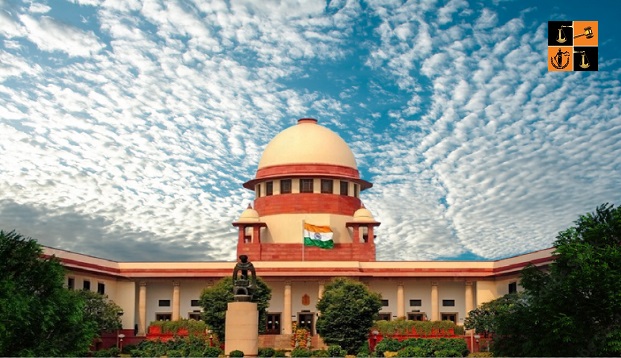
The Supreme Court has issued notices to the Union Government and all States on a petition assailing the constitutional validity of select provisions under the Waqf Act, 1995, along with the amendments introduced through the Waqf (Amendment) Act, 2025.
A Bench comprising Chief Justice of India B.R. Gavai and Justice Augustine George Masih directed that the present matter be tagged with previously instituted petitions also questioning the legality of the 1995 Act. The petition has been filed by Nikhil Upadhyay, who seeks judicial scrutiny of the statutory framework governing the administration of Muslim charitable properties.
During the proceedings, Advocate Ashwini Upadhyay, appearing for the petitioner, was queried by the Bench regarding the delay in challenging the principal legislation enacted in 1995. Responding to the Court's observation, the counsel submitted that the challenge also extends to the 2013 Amendment, which necessitates judicial review of the entire legislative scheme. The Bench, however, expressed concern over the substantial time lapse, stating, “Even then, 2013 to 2025, 12 years. There is delay.”
The Centre, represented by Additional Solicitor General Aishwarya Bhati, informed the Court that while earlier petitions targeting the 1995 Act had not been clubbed with those concerning the 2025 amendments, there was no objection to the present petition being heard alongside existing ones raising similar constitutional questions.
The petitioner has argued that the Waqf Act, in its current form, discriminates on religious grounds by providing an exclusive statutory mechanism for the governance of Muslim charitable properties, while no such legislation exists for properties belonging to other religious communities. This, the petition contends, constitutes a violation of the principles of equality enshrined under Articles 14 and 15, along with the rights to freedom of religion and cultural autonomy under Articles 21, 25, 26, and 27 of the Constitution.
Further, the petition challenges the expenditure of public funds by the State for the survey and verification of Waqf properties, contending that such financial allocation, in the absence of a similar initiative for other religious denominations, is arbitrary and unconstitutional. It asserts that the state should not shoulder the cost of such surveys and advocates instead for the establishment of a uniform legal framework to regulate all religious trusts and endowments, irrespective of denomination.
The matter will now be heard along with similar petitions pending before the Apex Court.
Picture Source :



















