









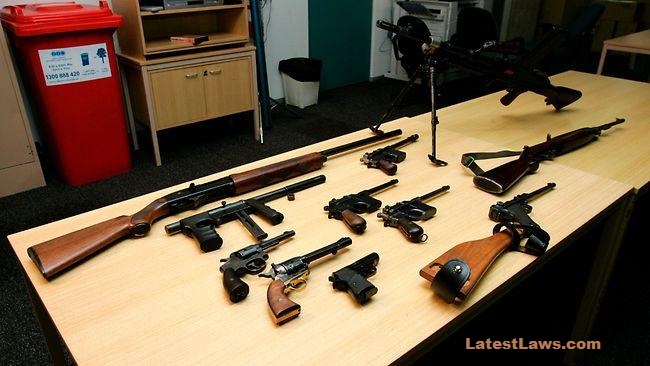
Recently, the Supreme Court took suo moto cognizance of the rise in unlicensed firearms and their link to serious crimes, particularly in Uttar Pradesh. Addressing a bail plea involving the use of an unlicensed firearm, the Court emphasized the need for substantial evidence to justify judicial intervention and dismissed unsubstantiated claims. It also directed the formation of committees in each State and Union Territory to combat illegal firearms. The Court stressed that allegations of procedural irregularities or bias must be backed by credible evidence.
A Special Leave Petition was filed challenging a High Court order denying bail under Section 439 of the Code of Criminal Procedure, 1973. The case involved the use of an unlicensed firearm in an alleged offence under Section 302 of the Indian Penal Code. Recognising the broader implications of unlicensed firearms in serious crimes, the Supreme Court allowed the withdrawal of the SLP but initiated suo moto proceedings to address this systemic issue.
The Counsel for the petitioner argued that the actions of the respondents were arbitrary, discriminatory, and in violation of statutory provisions. They contended that the decision-making process adopted by the respondents lacked transparency and fairness, undermining their legitimate rights. The counsel further alleged that the respondents have acted in blatant disregard of procedural norms, and their actions exhibit clear favouritism and bias, which vitiates the entire process. Additionally, it emphasized that the denial of relief was disproportionate and punitive, thereby contravening the principles of natural justice. It was asserted that the principles of proportionality and fairness require that any punitive action must be justified and not excessive. The counsel also claimed that the respondents had failed to provide adequate reasoning for their decision, violating the principles of reasoned decision-making.
The Counsel for the respondent strongly opposed the petitioner’s claim, asserting that all actions were lawful and in full compliance with statutory requirements. They emphasized that all procedural norms were followed meticulously, leaving no room for allegations of irregularity or bias. The counsel argued that the petitioner’s claims of arbitrariness were based on misinterpreted facts and lacked substantial evidence, labelling them as speculative. The counsel further defended the reasoning behind the respondent’s decisions, highlighting that they were well-supported by detailed explanations, in line with legal requirements. They also dismissed the petitioner’s accusations of bias, stating that such claims were based on subjective perceptions and not credible evidence, which could not form the basis for judicial review.
The Apex Court, in its ongoing efforts to address the escalating issue of unlicensed firearms, issued directions to form a committee in every State and Union Territory to curb the menace. This committee would be composed of key government officials, including the Chief Secretary as the chairperson, the Home Secretary, the Director General/Inspector General of Police, the Law Secretary, and an expert in ballistics nominated by the Chief Secretary. The five-member committee was tasked with a series of critical duties, including formulating an action plan for implementing the relevant laws and rules, inspecting licensed and unlicensed factories involved in arms manufacturing, securing data related to illegal arms activities, preventing arms smuggling, and studying the use of illegal arms in crimes. The committee was also granted the authority to address any other relevant matters deemed necessary. The Court directed that the committee’s reports be submitted within 10 weeks.
The case had originally been initiated suo motu by the Court in response to concerns over the use of unlicensed firearms, particularly in Uttar Pradesh, where a bail plea in a murder case involving a firearm prompted the Court's attention to the issue. Following its initial directions for the state to file an affidavit on the number of unlicensed firearm cases, the Court later sought responses from all states, union territories, and the Union Ministry of Home Affairs. In addition, Senior Advocate S. Nagamuthu was appointed as Amicus Curiae to assist the Court in the matter.
The Court also addressed the petitioner's claims, which were not substantiated with adequate evidence. It emphasized the importance of substantial material evidence in judicial review and rejected allegations that lacked credible support. The Court remarked that judicial review could not be based on unsubstantiated grievances, and reiterated that procedural compliance by the respondents had been duly followed, dismissing any claims of irregularity. Additionally, the Court clarified that claims of bias against the respondents must be supported by concrete evidence and cannot be based on speculative assumptions. It concluded that judicial decisions must be guided by established legal principles and evidentiary merit, ensuring that unfounded accusations do not influence the proceedings.
Case Title: Rajendra Singh v. The State of Uttar Pradesh
Coram: Justice B.V. Nagarathna, Justice Pankaj Mithal
Citation: Miscellaneous Application No. 393/2023 in SLP(Crl) No. 12831/2022
Read Order @LatestLaws.com
Picture Source :




















