









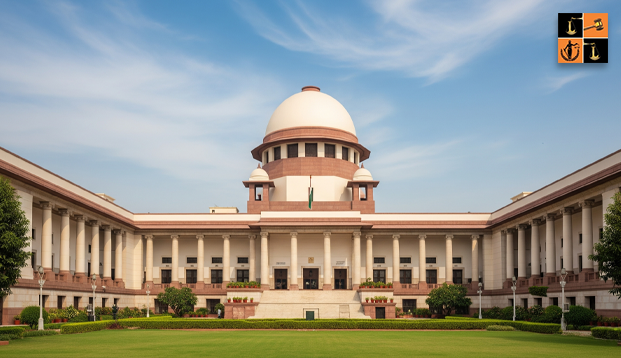
Recently, a pointed judicial intervention unfolded before the Supreme Court when the Bench drew attention to the regulatory opacity surrounding private universities nationwide. While hearing a student’s plea alleging harassment by Amity University for seeking a lawful name change, the Court broadened the inquiry substantially, calling for a nationwide disclosure exercise on the creation, governance, and regulatory oversight of private universities. The Bench declared that “in the larger public interest, it is deemed appropriate to examine the aspects relating to the creation/establishment/setting-up of all private Universities,” thereby converting an individual grievance into a wider examination of systemic concerns in higher education governance.
The case stemmed from the Petitioner’s change of name from Khushi Jain to Ayesha Jain in 2021, duly notified in the Gazette of India. After completing a certificate course under her new name in 2023, she joined Amity Business School’s MBA (Entrepreneurship) programme in 2024.
Her grievance arose when the university allegedly declined to update its records despite being provided with all requisite documents, which, according to her, led to denial of access to classes and examinations. She also alleged harassment, including remarks concerning her adopted name.
Multiple complaints to the UGC and the Ministry of Education, as stated in the petition, brought no corrective response, prompting her to approach the Supreme Court in mid-2025.
During earlier hearings, the Court summoned senior university officials, directing the personal presence of the chairman and the vice-chancellor. The Bench later observed that the university had made a “mockery” of its orders after it attempted to tender Rs. 1 lakh as compensation. In a subsequent hearing, Dr. Atul Chauhan and the Vice-Chancellor appeared before the Court and submitted their affidavits.
The Petitioner asserted that Amity University misused its authority by refusing to change her name despite compliance with all statutory requirements, causing loss of an academic year. She further alleged discriminatory behaviour and persistent denial of access to essential academic processes.
On the other hand, the Respondent’s affidavits and submissions were taken on record during successive hearings; however, the Court did not limit its scrutiny to the individual dispute and instead considered wider issues relating to the structure and oversight of private universities across the country.
The Bench observed that larger issues concerning the establishment and regulation of private universities had surfaced. The Court recorded that “The issues have now come before this Court, which the present coram has also deliberated in detail, in the larger public interest, it is deemed appropriate to examine the aspects relating to the creation/establishment/setting-up of all private Universities, either under the State Governments/Union Territories or the Central Government, and connected concerns.”
The Court further directed disclosure of complete particulars pertaining to the establishment, statutory basis, and benefits granted to each private, non-government, or deemed university. It stated that “Full details of the concerned personnel connected with the establishment/management of such Universities shall be placed on record.” The UGC was specifically tasked with explaining its regulatory powers and the functioning of its compliance mechanism. The Court directed, “The affidavit by the UGC shall cover what the statute/policy mandates as also the actual mechanism to monitor/oversee compliance by the institutions.”
The Bench clarified that “Responsibility for every disclosure and its correctness shall rest with the deponent concerned.” The Court further stated that “If there is any attempt to withhold, suppress, misrepresent or mis-state facts in the affidavits called for, this Court will be compelled to adopt a strict view.” The affidavits were ordered to be personally affirmed by the highest administrative authorities, the Cabinet Secretary, Chief Secretaries of all States and Union Territories, and the Chairman of the UGC.
The Court instructed the Union government, all States and Union Territories, and the UGC to file detailed affidavits setting out the legal foundation under which every private university was established, along with any financial, administrative, or land-related benefits granted to them. The disclosures must also cover the composition and selection process of their governing bodies, the identities of those who manage or control the institutions, and the policies governing admissions, faculty recruitment, statutory compliance, grievance redressal mechanisms, and remuneration practices.
The matter will be taken up next on January 8, 2026, when the Court is expected to scrutinise the disclosures.
Case Title: Ayesha Jain vs. Amity University, Noida & Ors.
Case No.: Writ Petition (Civil) No.531/2025
Coram: Hon'ble Justice Ahsanuddin Amanullah, and Hon'ble Justice NV Anjaria
Advocate for the Petitioner: AOR Mohd Fuzail Khan
Advocate for Respondent: AOR Shashank Shekhar Singh, Parmanand Gaur, Advs. Amitesh Kumar, Priti Kumari, Pankaj Kumar Ray, Abhinav Singh, Vibhav Mishra, Megha Gaur
Read Order @Latestlaws.com
Picture Source :




















