









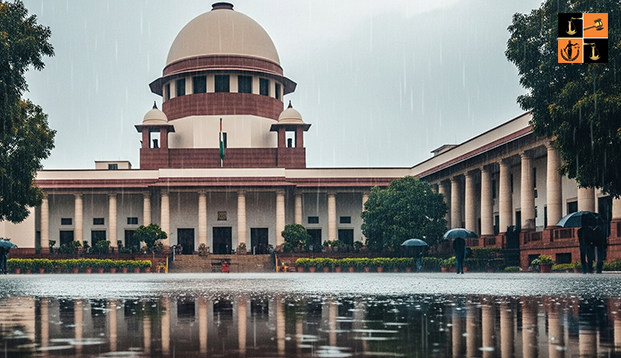
Recently, a matter of judicial discipline reached the Supreme Court, raising compelling questions on the boundaries of judicial discretion and the extent to which High Courts may regulate the functioning of subordinate courts. At the centre of the controversy is a judicial officer who invoked her statutory powers to terminate a large number of minor criminal cases, only to later face disciplinary action for the very orders she claims were passed in good faith while performing core judicial functions.
The case stemmed from disciplinary proceedings initiated against a judicial officer who served as Judicial First Class Magistrate III from August 2016 to December 2016. During this period, she invoked Section 258 of the Code of Criminal Procedure to stop proceedings in 1,910 cases involving minor offences such as rash driving. These orders, however, did not record detailed reasons, which later prompted allegations that they were issued indiscriminately and in violation of an existing office memorandum.
Although the Registrar of the High Court had issued appreciation letters acknowledging her efforts in reducing backlog, a charge memo was later served in September 2018. The disciplinary inquiry culminated in April 2022 with the imposition of a penalty withholding two increments with cumulative effect, an outcome that also delayed her probation and adversely impacted her seniority and promotional prospects. The Kerala High Court upheld both the disciplinary penalty and the rejection of her request for restoration of seniority, leading to the present challenge before the Apex Court.
The Petitioner argued that the disciplinary action was fundamentally flawed, asserting that her orders under Section 258 of the CrPC were passed in good faith with the objective of prioritising contested matters in accordance with administrative directions aimed at reducing arrears. She contended that her conduct was fully protected under the Judges (Protection) Act, 1985 and the Kerala Judicial Officers Protection Act, 1963, both of which insulate judicial officers from disciplinary or civil consequences for bona fide judicial acts.
According to her, the High Court’s approach effectively penalised the exercise of statutory discretion, and the penalty imposed was disproportionate, particularly in light of the long-delayed probation process. She maintained that the proceedings against her were contrary to the legal protections available to judicial officers performing core adjudicatory duties.
The State has not yet filed its response before the Top Court. The Court has sought the government’s stand on the petitioner’s challenge to the two High Court orders that upheld the disciplinary penalty and rejected her claim for restoration of seniority.
The Division Bench of Justice Vikram Nath and Justice Sandeep Mehta considered the matter and issued notice to the State Government. The Bench noted that the petitioner had questioned both the disciplinary penalty of withholding increments with cumulative effect and the decision refusing to restore her seniority. The Court decided to examine the issue further after receiving the State’s response.
Disclaimer: This news/ article includes information received via a syndicated news feed. The original rights remain with the respective publisher.
Picture Source :



















