









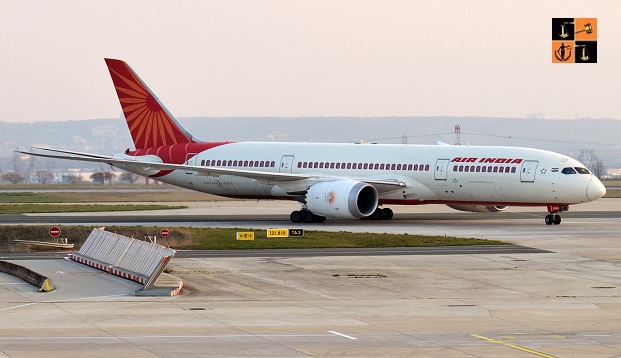
A Public Interest Litigation (PIL) has been instituted before the Supreme Court seeking the immediate suspension of Air India’s Boeing-operated flights following the catastrophic crash of an Air India aircraft in Ahmedabad on June 12, which resulted in 241 fatalities out of 242 passengers on board. The plea, filed by Advocate Ajay Bansal, invokes grave violations of constitutional and statutory obligations governing civil aviation safety in India and seeks urgent judicial intervention to avert further harm.
The PIL arises in the aftermath of the June 12 tragedy involving an Air India Boeing aircraft, which reportedly led to the death of nearly all passengers. The petitioner attributes the accident to alleged chronic lapses in aircraft maintenance and regulatory oversight. The PIL primarily targets systemic operational deficiencies in Air India’s Boeing fleet and regulatory failures by the Directorate General of Civil Aviation (DGCA) and the Bureau of Civil Aviation Security (BCAS).
The petitioner contends that the loss of lives resulting from the crash constitutes a direct violation of Article 21 of the Constitution, arguing that “passenger safety is an integral part of the right to life,” and that persistent maintenance failures, such as those alleged in the present case, infringe upon this fundamental guarantee.
Invoking the Aircraft Act and the Aircraft Rules, particularly Rules 30 and 134, the petitioner alleges that Air India has failed to comply with the statutory mandate for periodic airworthiness and fitness evaluations. The plea points to non-compliance with requirements for regular safety audits and passenger facility standards, especially for international flights.
Further, the PIL accuses the DGCA and BCAS of inadequate regulatory enforcement, allowing routine maintenance failures, such as malfunctioning air conditioning systems prior to take-off, to go unchecked. It is argued that such systemic issues indicate a lack of implementation of pre-flight safety protocols.
The petitioner references M.C. Mehta v. Union of India, asserting that the Supreme Court has issued binding guidelines in prior transport-related safety matters and that judicial directives are warranted to enforce compliance under the Aircraft Act, 1934; the Aircraft Rules, 1937; Civil Aviation Requirements (CAR); DGCA circulars; and the Montreal Convention, 1999.
Source Link
Picture Source :




















