









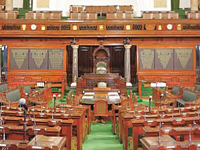
In the wake of heightened political and institutional attention surrounding the removal motion against Justice Yashwant Varma of the Allahabad High Court, the Lok Sabha Speaker is poised to announce the formation of a three-member inquiry committee under the Judges (Inquiry) Act, 1968, within the next 8 to 10 days.
The initiation follows the submission of separate notices under Article 124(4) read with the Judges (Inquiry) Act by Members of Parliament from both Houses. One of the motions, signed by 152 MPs, was submitted to the Speaker on July 21, while another, endorsed by 63 MPs, was presented to the former Rajya Sabha Chairman Jagdeep Dhankhar. The veracity of signatures is currently being verified, a prerequisite before the Speaker admits the motion and proceeds with the constitution of the committee.
Sources familiar with the development confirmed that the committee’s formation is being coordinated between the Lok Sabha Secretariat and the Rajya Sabha, currently presided over by Deputy Chairman Harivansh in an officiating capacity. The committee is to be constituted in accordance with Section 3(2) of the Judges (Inquiry) Act, 1968, and will comprise a sitting judge of the Supreme Court or the Chief Justice thereof, a Chief Justice of a High Court, and an eminent jurist. The Speaker is expected to write to the Chief Justice of India, seeking nominations for the judicial members, while retaining discretion over the choice of jurist.
The motion pertains to allegations of judicial misconduct involving Justice Varma, who is reportedly linked to what has been described as the ‘cash-in-kothi’ episode. Once constituted, the committee will inquire into the veracity of the charges and submit its report to the Speaker. The matter is likely to be taken up in the Winter Session of Parliament, following submission of the report.
Senior parliamentary functionaries, including Home Minister Amit Shah and Leader of the House in Rajya Sabha J.P. Nadda, have reportedly been involved in deliberations surrounding the procedural course to be adopted. Speaker Birla and Deputy Chairman Harivansh held high-level discussions with officers of both Houses on Thursday to review procedural compliance.
Under the existing constitutional mechanism, a judge of a High Court can be removed from office only through a motion supported by a majority in both Houses of Parliament, following an inquiry under the Judges (Inquiry) Act. The current development marks an important procedural step in that constitutional process.
Picture Source :




















