









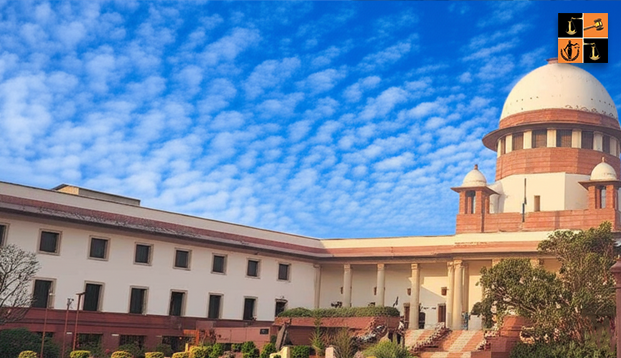
On Tuesday, the Supreme Court directed the release of Sukhdev Yadav alias Pehalwan, one of the three men convicted in the 2002 murder of business executive Nitish Katara, holding that he had already completed the 20-year sentence imposed on him without remission.
A Bench of Justice B.V. Nagarathna and Justice K.V. Vishwanathan accepted the plea moved by Pehalwan, who argued that the Court’s October 2016 judgment had quantified his sentence at 20 years without remission, thereby replacing the earlier life sentence. The Bench observed, “Once the court has quantified a sentence without remission for 20 years, there is no sentence beyond 20 years. In these circumstances, he is entitled to release… He shall be released forthwith if not wanted in any other case.”
The case stemmed from the kidnapping and murder of Nitish Katara by Sukhdev Pehalwan, Vikas Yadav, son of former Rajya Sabha member D.P. Yadav, and his cousin Vishal Yadav. Katara was abducted from a wedding in Ghaziabad on the night of 16–17 February 2002 and killed over his alleged relationship with Vikas Yadav’s sister. In 2011, a Delhi court sentenced all three to life imprisonment, a decision upheld by the Delhi High Court in 2015 with a stipulation that 20 years be served without remission. The Supreme Court, in October 2016, modified the sentence to clarify that the terms would run concurrently rather than consecutively.
Appearing for the Delhi Government, Additional Solicitor General Archana Pathak Dave argued that Pehalwan’s life sentence was still in force and that he would only become eligible for remission after completing 20 years. She submitted that the Sentence Review Board (SRB) had already considered and rejected his plea for remission on 28 March, citing his “potential for committing crime”.
The Bench, however, expressed strong disapproval of the SRB’s approach and stated, “How can SRB sit over judgment of this court? Once a convict has completed a sentence, he is entitled to release. You are mixing it up with remission… If this is the attitude of the government, then every convict will die in jail even if he has completed the sentence.”
In a separate hearing earlier the same day, another Bench comprising Justice M.M. Sundresh and Justice N. Kotiswar Singh dismissed Vikas Yadav’s plea challenging the 25-year term imposed without remission. The Court declined to exercise its powers under Article 142 of the Constitution, granting him liberty to approach the High Court instead.
The Bench, however, extended Vikas Yadav’s interim bail by four weeks. The bail was originally granted to allow him to care for his ailing mother and was set to expire on Tuesday.
Senior advocate Aparajita Singh, appearing for Nitish Katara’s mother, apprised the Court of the influence exercised by the convicts, referring to a Delhi High Court judge’s decision to recuse from a furlough matter after disclosing that he had been approached on Pehalwan’s behalf.
Picture Source :




















