









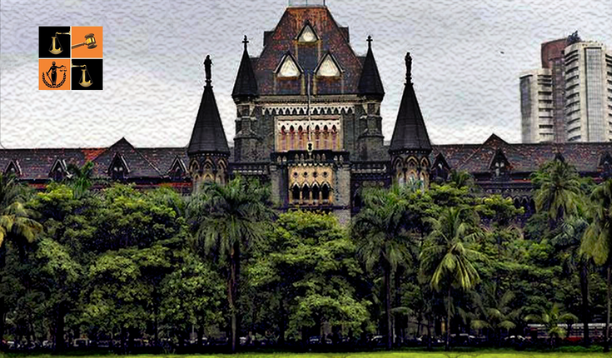
Recently, in a significant ruling involving Gammon India Limited and Konkan Railway Corporation Ltd., the Bombay High Court explored the fine line between arbitral finality and judicial correction under Sections 34 and 37 of the Arbitration and Conciliation Act, 1996. The case raised an important question, when can a court step in to set aside an arbitral award based on ignored contractual clauses or admitted evidence? Read on to discover how the Court addressed claims concerning electricity charges, wage escalation, and excavation disputes, while reinforcing the limits of judicial interference in arbitration.
Brief facts:
The case arose from a contractual dispute between Gammon India Limited and Konkan Railway Corporation Ltd. (KRCL) regarding the construction of a broad gauge single line tunnel (Karbude Tunnel). Gammon was awarded the contract through a Letter of Acceptance, followed by a formal agreement. After several extensions, the work was completed, and Gammon submitted its final bill in September 1998, later amended in May 2001, seeking over ₹15.62 crore under various heads. Disputes regarding the claims led to arbitration, and in January 2006, the Arbitral Tribunal awarded ₹4.39 crore to Gammon, allowing some claims fully, some partially, and rejecting others. While KRCL accepted part of the award, it challenged specific components, including electricity charge refund, price variation due to wage increases, and extra cost for soft strata excavation, under Section 34 of the Arbitration and Conciliation Act, 1996. In November 2006, the Single Judge set aside the award for these disputed components, prompting Gammon to appeal under Section 37of the Arbitration and Conciliation Act, 1996, before the Bombay High Court.
Contentions of the Appellant:
The Appellant contended that the Single Judge exceeded the limited scope of judicial review under Section 34 of the Arbitration and Conciliation Act, 1996, by reappreciating evidence and interpreting contract terms, thereby functioning as an appellate authority contrary to the principles laid down in Associate Builders v. Delhi Development Authority. Regarding the electricity charges, it was argued that the Arbitral Tribunal had rightly distinguished Gammon’s contract from others which expressly allowed recovery, and that the Single Judge’s reliance on a letter, never placed before the Tribunal, ought to have led to a remand under Section 34(4) of the Arbitration and Conciliation Act, 1996, which was wrongly denied. On the issue of price variation, the Appellant submitted that the Single Judge overlooked relevant clauses of the contract, focusing only on Clause 28.1 and thereby rendering the finding perverse. As to the excavation of soft strata, the Appellant maintained that the Single Judge ignored key documents, including an Addendum and related correspondence, which supported the Tribunal’s conclusion about changed geological conditions. It was further submitted that the Tribunal’s reasoning was grounded in business efficacy and practical realities, and even if the reasons were brief, this did not justify setting aside the award, as clarified in OPG Power Generations Private Limited Vs. Enexio Power Cooling Solutions India Private Limited & Anr.
Contentions of the Respondent:
The Counsel for the respondent argued that the appellate court’s jurisdiction under Section 37of the Arbitration and Conciliation Act, 1996, is confined to the grounds enumerated in Section 34, and the Single Judge was justified in setting aside portions of the award for ignoring crucial evidence, in line with the principles laid down in Ssangyong Engineering and Construction Co. Ltd. v. National Highways Authority of India. On the issue of electricity charges, it was submitted that Gammon had admitted liability in a letter, disputing only the rate, and the Tribunal’s failure to consider this letter warranted interference. A remand under Section 34(4) was not necessary, as the material was already on record, relying onI-Pay Clearing Services Pvt. Ltd. Regarding price variation, the Respondent maintained that payments were made in accordance with Clause 28.1 of the contract, which capped escalation at 45%, and Gammon’s claim for 75% was contractually untenable. As for the claim concerning soft strata excavation, it was contended that the Tribunal overlooked Clauses 3 and 4 of the Special Conditions for Tunneling, which precluded additional payment for geological variations, and that Gammon’s own site inspection acknowledgment further undermined its claim.
Observations of the Court:
The Court diligently examined the scope of judicial intervention under Sections 34 and 37 of the Arbitration and Conciliation Act, 1996, emphasizing the limited grounds on which an arbitral award may be challenged. While relying on Associate Builders v. Delhi Development Authority, the Court reiterated that an award may be set aside if it is in conflict with the “public policy of India,” including violations of fundamental policy, lack of judicial approach, breach of natural justice, or perversity. It clarified that perversity arises where the Tribunal “(i) takes into account something irrelevant to the decision which it arrives at; or (ii) ignores vital evidence in arriving at its decision,” rendering such findings legally unsustainable. It further noted that only patent illegality going to the root of the matter warrants interference, minor or trivial errors do not.
The Court upheld the Single Judge’s decision to set aside the award of ₹1,31,58,563, finding that the Tribunal had disregarded crucial correspondence in which Gammon admitted liability for electricity charges, disputing only the rate. The Court observed, “The correspondence speaks for itself, and it was not necessary to invite findings of the Arbitral Tribunal for the purpose of sitting in Appeal over such findings of Section 34 Court.” It also held that the refusal to remand under Section 34(4) was justified, stating that “no useful purpose would be served by inviting the findings of the learned Arbitrator on the above correspondence,” given the unambiguous admission. while referring to the case of I-Pay Clearing Services Pvt. Ltd., the Court reiterated that remand under Section 34(4) is discretionary and inappropriate where material evidence has been clearly overlooked.
The Court found no error in the Single Judge’s reliance on Clause 28.1 of the contract, which capped labour-related price variation at 45%. It held that the Tribunal’s award of ₹65,66,471 for escalation beyond this limit was contrary to contractual terms, noting that “a clear cap of 45% was stipulated for award of price variation on labour component.” Gammon’s reliance on Clauses 28.3 to 28.10 was rejected, with the Court affirming that the Single Judge’s interpretation correctly reflected the contract's scope.
Regarding the award of ₹6,83,000 for excavation in soft strata, the Court upheld its annulment, holding that the Tribunal failed to consider Clauses 3 and 4 of the Special Conditions for Tunneling, which excluded additional payment for rock or soil variation. The Court also relied on Gammon’s prior declaration confirming that rates were quoted after a site inspection, stating, “We therefore do not find any element of perversity or manifest illegality in the findings recorded by the learned Single Judge while setting aside the Award qua Claim No.8.”
The Court further clarified that an appellate court under Section 37 is limited to examining whether the Section 34 court acted within its jurisdiction, as held in MMTC Ltd. v. Vedanta Ltd. It concluded that the Single Judge had not undertaken an independent reappreciation of facts but had rightly intervened to correct the Tribunal’s exclusion of vital evidence and contractual provisions, warranting no interference in the appeal.
The decision of the Court:
In light of the foregoing discussion, the Court dismissed the appeal filed by Gammon India Limited under Section 37 of the Arbitration and Conciliation Act, 1996. The Court upheld the Single Judge’s decision setting aside the Arbitral Tribunal’s award concerning the disputed claims, holding that the intervention was within the permissible scope of Section 34 and warranted no appellate interference.
Case Title: Gammon India Limited Gammon house Vs. Konkan Railway Corporation Ltd.
Case No.: Arbitration Petition No.327 of 2006
Coram: Chief Justice Alok Aradh, Justice Sandeep V. Marne
Advocate for Appellant: Advs. Yazad Udwadia, Aditya Mhatre, and Akshay Zantye
Advocate for Respondent: Advs. D. J. Kakalia, Paresh Patkar, and Ayan Zariwalla
Picture Source :




















