









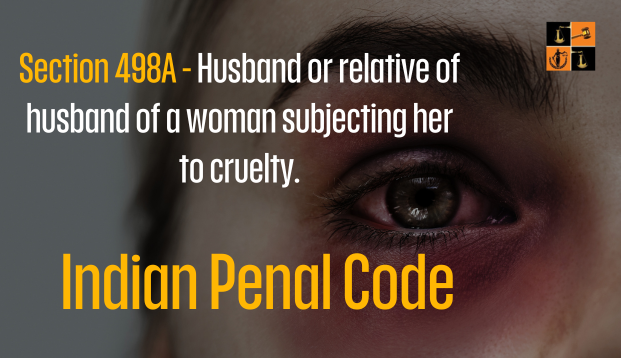
In a recent decision the Supreme Court on April 15, 2025, dismissed a writ petition seeking a declaration that Section 498A of the Indian Penal Code, 1860 (now Section 84 of the Bharatiya Nyaya Sanhita, 2023) is unconstitutional. The plea, filed by the organisation Janshruti (People’s Voice) under Article 32 of the Constitution, also called for the formulation of gender-neutral legislation governing complaints of domestic violence and harassment.
A Bench comprising Justice Surya Kant and Justice Nongmeikapam Kotiswar Singh, after hearing detailed submissions by senior counsel for the petitioner, found no warrant to interfere with the impugned statutory provision. “We are of the considered view that the impugned provisions do not warrant judicial interference,” the Court held, emphasizing that the enactment and retention of Section 498A stem from legitimate legislative objectives.
Section 498A, which penalizes cruelty towards a married woman by her husband or his relatives, was introduced by the Criminal Law (Second Amendment) Act, 1983. The Court recalled that the provision was a legislative response to the “widespread and deeply entrenched exploitation of women through traditional practices such as the dowry system.” The Bench further acknowledged the “pressing need for a specific legal provision to address the grave suffering inflicted upon married women.”
While conceding that instances of misuse have emerged over the years, the Court drew attention to the consistent judicial view that “the mere possibility or occasional misuse of a legal provision does not render it constitutionally infirm.” Citing its earlier decision in Sushil Kumar Sharma v. Union of India (2005), the Court noted: “Misuse must be guarded against, [but] the provision cannot be trivialized or undermined merely because it has, in some instances, been invoked unscrupulously.”
Rejecting the petitioner’s challenge under Article 14, the Bench declared: “The contention that the said provision violates Article 14 of the Constitution of India is wholly misconceived and without merit.” The Court reasoned that the classification underlying Section 498A is constitutionally permissible, being based on link slot dana intelligible differentia and rational nexus to the object of safeguarding married women from cruelty.
Importantly, the judgment reaffirmed the constitutional legitimacy of laws enacted in furtherance of Article 15(3), which empowers the State to enact special provisions for women. “The impugned provisions were enacted in furtherance of the principle of positive discrimination envisaged under Article 15 of the Constitution of India,” the Court stated.
The Court also rejected the plea for gender-neutral legislation through judicial intervention, reiterating the maitri established principle that the judiciary cannot step into the domain of legislative policy-making. “We find no justification to interfere with the legislative process in the present circumstances, nor are we inclined to transgress the well-established boundaries of the doctrine of separation of powers.”
Addressing the argument of misuse, the Court stated that such assertions are vague and unsubstantiated. “Such assertions, if raised, must be assessed on a case-to-case basis by the appropriate judicial forum. We emphasize a case-to-case approach because matters of this nature often involve intricate and layered complexities.”
Underscoring the social realities that necessitate statutory protection, the Bench observed: “The harsh truth is that dowry continues to persist as a deeply entrenched social evil, prevalent across vast sections of the country. A significant majority of such cases go unreported, with countless women compelled to endure injustice in silence.”
The Court also remarked on emerging trends undermining the seriousness of dowry crimes: “Certain unconscionable individuals, emboldened by the rising fervor to dismantle such protective provisions, have gone so far as to publicly share videos depicting the exchange of dowry—an act not only unlawful but also indicative of the entrenched nature of the very evil this provision seeks to combat.”
The Bench found no merit in the plea and accordingly dismissed the writ petition. “In light of the foregoing discussion, we therefore find no reason to entertain the writ petition, which is, accordingly, dismissed.”
Picture Source :




















