









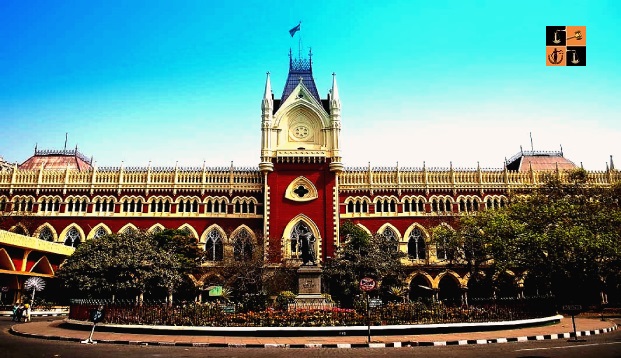
In a significant ruling touching the law of religious endowments and land records, the Calcutta High Court stepped in to examine whether a self-styled committee head could claim the right to represent a Hindu deity and challenge land records before statutory authorities. The case put the spotlight on a recurring legal question, who truly has the authority to speak for a deity in court, and where must the line be drawn to prevent speculative or proxy litigation.
The controversy began when Kalyan Das, claiming to be the president of a committee managing the deity Sri Sri Dodhimohan Jew, moved the West Bengal Land Reforms and Tenancy Tribunal seeking correction of land records in the deity’s favour. Parallel proceedings were initiated by private parties asserting their own rights over the same property and contending that it never vested in the State. While the Tribunal rejected Das’s plea for lack of locus standi, it granted limited relief to the private respondents.
Challenging this outcome, Das approached the High Court, arguing that as a sebait, or at least a representative of the deity, he was entitled to protect debottar property, question alleged illegal transfers, and seek correction of records. The State and private respondents countered that Das had no legal standing whatsoever to represent the deity.
The Division Bench firmly rejected Das’s claim, holding that mere assertions of guardianship or committee leadership do not confer the right to litigate on a deity’s behalf. Reiterating settled Hindu law principles, the Court underscored that “according to Hindu law, it is the sebait who represents the deity and he alone is competent to institute a suit in the name of the deity,” adding that even a third party can act only if formally appointed by a competent court.
Finding no such appointment or exceptional circumstance on record, the Bench termed the locus claim “frivolous” and endorsed the Tribunal’s decision to block the case at the threshold rather than trigger futile proceedings. Consequently, both writ petitions were dismissed, affirming the Tribunal’s ruling in full.
Case Title: Sri Sri Dodhimohan Jew Vs. The State of West Bengal and others
Case No.: W.P.L.R.T. 209 of 2025
Coram: Justice Sabyasachi Bhattacharyya
Advocate for Petitioner: Adv. Sounak Bhattacharyya, Sangeeta Roy, Chandra Prakash, Monalisa Maity
Advocate for Respondent: Adv. Sk. Md. Galib, Abu Siddik Mallick, Sk. Md. Galib, Kapil Guha, Ayan Banerjee, Debasree Dhamali, Riya Ghosh, Debolina Ghosh
Read Judgment @Latestlaws.com
Picture Source :



















