









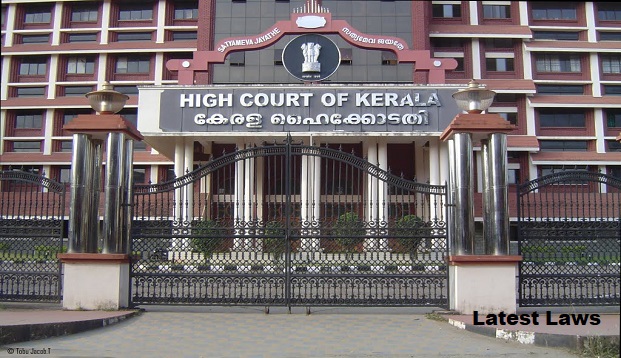
The Kerala High Court on 22nd February,2021 comprising of a single bench of Justice PB Suresh Kumar observed that the authorities are not expected to grant or renew a quarrying lease to a person from whom amounts are due to the government, even if there is no express prohibition in the rules against such grant or renewal. (PLAKKATTU GRANITE INDUSTRIES (P) LTD v. STATE OF KERLA)
The bench also urged the Government to consider appropriate amendments to the Rules to avoid grant of quarrying lease to persons owing money to the government.
Even if the recovery of money is stayed by interim orders of the court, the competent authority must insist on payment of the entire dues while granting renewal or a fresh grant of a quarrying lease.
The bench observed, "...even if there is no interdiction in the Rules to renew an existing quarrying lease or grant a fresh quarrying lease in favour of a person from whom amounts are due to the Government and even if realisation of the dues is interdicted by way of interim orders of the court, the competent authority is not expected to make such grants without insisting payment of the entire dues for the purpose of granting renewal or a fresh grant. It is for the Government to take appropriate measures to prevent such occurrence in future, if necessary, by introducing appropriate amendments to the Rules".
Facts of the case
The petitioner had filed a writ petition in the High Court challenging a demand notice issued by the Director of Mining and Geology calling upon the petitioner to pay a sum of Rs.5.68 crores towards price, royalty and other dues in respect of the granite stones quarried by the petitioner unauthorisedly beyond the limits of the land over which they secured the quarrying lease.
The first demand notice was issued against the petitioner in 2000, by the District Geologist for the recovery of Rs 5.68 Crores. That demand notice was ultimately set aside on the ground that the Geologist had no jurisdiction to issue the same. Subsequently, in 2012, the Director of Mining and Geology issued a demand notice for the very same amount of Rs 5.68 crores. In 2019, the Tahsildar issued recovery notice under the Revenue Recovery Act with respect to the demand made by the Director of Mining and Geology. This led the petitioner to approach the High Court.
The contention of the parties
The learned counsel for the petitioner contended that the only notice issued to the petitioner which is now in force is Ext.P6 and if at all the petitioner is liable to pay the amount covered by the said notice, they are liable to pay interest for the amount covered by the said notice only for the period after the expiry of the time prescribed for payment in terms of the said notice and Ext.P7 demand requiring the petitioner to pay the amount covered by Ext.P6 notice from the date of Ext.P1 is wholly arbitrary.
The learned Special Government Pleader contended that insofar as the amount demanded in Ext.P1 and Ext.P6 notices are one and the same and insofar as the petitioner is liable to pay the price, royalty and other dues in respect of the minerals unauthorisedly removed by them with interest from the date of removal and since there is no substance in the contention that what is sought to be realised from the petitioner as per Ext.P7 demand notice is not the amount covered by Ext.P6 notice, but only the amount covered by Ext.P1 notice.
Courts Observation and judgment
The Court expressed surprise at the fact that no steps were taken for the recovery of an amount of such a magnitude until 2018.
"...even while steps are being taken by all other Government Departments for realisation of even paltry sums by recourse to proceedings under the Revenue Recovery Act, steps have not been taken by the officials concerned in the Mining and Geology Department for realisation of the hefty sum of Rs.5,68,58,560/- due from the petitioner in terms of Ext.P6 notice till February 2018. Abstinence from initiating steps for realisation of amounts of such a magnitude, according to me, would not be possible without the involvement of the concerned officers in the Department", the judgment said.
The bench further observed that natural resources constitute public property, and the State is empowered to distribute the same only by ensuring that the distribution is not detrimental to public interest. Reference was made to the decisions in State (NCT of Delhi) v. Sanjay, (2014) 9 SCC 772 and Kasturi Lal Lakshmi Reddy, Represented by its Partner Kasturi Lal, Jammu and Ors. v. State of Jammu and Kashmir and Ors., (1980) 3 SCR 1338 in this regard.
The Court said, "It is trite that while distributing the natural resources, the Government must act as a prudent businessman and where the State is simply selling a produce, the State must endeavour to obtain the highest price. No part of the natural resources can be dissipated for private exploitation. Each bit of natural resource expended must bring back a reciprocal consideration to the State. Whenever Government or the authorities get less than the full value of the asset, the country is being cheated [See Natural Resources Allocation, In re, Special Reference No.1 of 2012, (2012) 10 SCC 1].
I do not think that a prudent business man would grant a quarrying lease to a person from whom substantial amounts running to several crores are due to him, without realizing the dues. As noted, when sizable amounts running to several crores of rupees are due from the petitioner, the officers concerned of the Department have granted a fresh quarrying lease to the petitioner without insisting settlement of the dues to the Government, that too, without the concurrence of the State Government".
The bench further directed that a copy of the judgment be forwarded to the Chief Secretary of the State Government.
Read Judgment @Latestlaws.com
Share this Document :Picture Source :




















