









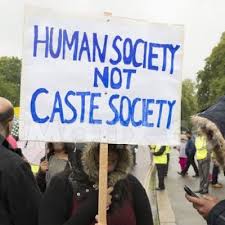
In a recent judicial pronouncement, the Madras High Court on April 16, 2025, held that societies formed exclusively for the benefit of particular castes and structured to admit only members of such castes pursue an impermissible objective under Indian constitutional and statutory law. Justice D. Bharatha Chakravarthy, delivering the verdict in a consolidated set of writ petitions (W.P. Nos. 4563, 5465, and 4994 of 2025), held such caste-based societies to be legally unsustainable and constitutionally untenable, thereby directing a series of corrective measures aimed at dismantling institutionalized caste identity from social, educational, and administrative spaces.
The petitions, although raising differing factual matrices, were united by a common cause, each pertained to societies formed under the Tamil Nadu Societies Registration Act, 1975, that expressly restricted their membership and objectives to caste identity and advancement. In W.P. No. 4563 of 2025, M/s South Indian Senguntha Mahajana Sangam challenged a government order impacting its internal election processes. W.P. No. 5465 of 2025, preferred by Tiruchengode Vatta Kongu Velalar Sangam, sought to compel the District Registrar to act upon its registration renewal application. The Poor Educational Fund, in W.P. No. 4994 of 2025, requested validation of resolutions passed in its annual general meeting.
All three societies had constitutions or by-laws which either explicitly restricted membership to caste members or were geared toward the exclusive upliftment of a specific caste group. The Court noted this shared characteristic as constitutionally problematic and statutorily impermissible.
Justice Chakravarthy’s analysis was anchored in the Tamil Nadu Societies Registration Act, 1975, particularly Section 3(1), which delineates permissible objectives for registration, including educational, charitable, and cultural purposes, but omits any recognition of caste-based aims. Further, Section 9(1)(b) of the Act prohibits registration of societies with names “likely to promote disharmony or feelings of enmity, or hatred or ill-will between different religious, racial, language, or regional groups or castes or communities.”
The Court held that societies registered with caste-based objectives or names and whose membership is confined on caste lines are “opposed to public policy, unconstitutional and cannot be sustained.”
Citing the Supreme Court in Ashoka Kumar Thakur v. Union of India (2008), Justice Chakravarthy invoked the enduring relevance of the constitutional commitment to a casteless society:
“Caste-based discrimination remains. Violence between castes occurs. Caste politics rages on. Where casteism is present, the goal of achieving a casteless society must never be forgotten. Any legislation to the contrary should be discarded.”
Further the Court drew from Dr. B.R. Ambedkar’s 1949 address: “In India there are castes. The castes are anti-national. In the first place because they bring about separation in social life.”
The judgment did not confine itself to legalistic reasoning alone. Justice Chakravarthy expressed deep concern over the sociological ramifications of caste persistence, especially within youth and educational institutions. The Court remarked:
“Parents killing their own children for the sake of caste (honour killing) is on the rise. What more do we want?”
The Court decried the duplicity of schools and colleges operated by caste-based societies that espouse egalitarian ideals in curriculum but retain caste denominations in their names. In a sharp indictment, the Court noted:
“The teacher enters the classroom and begins the lesson with the poem ‘rhjpfs; ,y;iyao ghg;gh’. Height of hypocrisy, dishonesty and sham.”
To redress the institutional entrenchment of caste, the High Court issued a series of mandatory directions:
- The petitioner societies were directed to apply to the jurisdictional Registrars to expunge all caste identifiers from their names, revise their objectives to eliminate caste-based aims, and make their membership accessible to all individuals regardless of caste. “Only thereafter, the petitioner societies will be entitled to seek any relief before this Court.”
- The Inspector General of Registration was instructed to compile a comprehensive list of caste-based societies within three months. Compliance with Circular No. 1/2024 must be enforced within six months. Non-compliance would result in cancellation of registration under Section 38 of the Act for engaging in “unlawful activity.”
- Schools and colleges operated by caste-based societies, whether privately managed or aided, must remove all caste identifiers from signage and records within four weeks. Non-compliant institutions risk de-recognition, and the government must facilitate transfer of students from such institutions by the academic year 2026-27.
- State-run schools bearing caste-prefixed names such as “Adi Dravidar Welfare” or “Kallar Reclamation” must be re-designated as “Government Schools” followed by their respective location. Donor names may only be retained if stripped of caste reference.
These directives resonate with earlier decisions such as Sivakasi Hindu Poorviga Agamudayar Uravinmurai Mahamai Fund Arakkatalai v. The District Registrar (2023) and administrative initiatives including the 2023 Justice K. Chandru Committee Report on caste-based violence in schools.
By holding that caste-centric societies contravene Articles 14, 15, 16, and 17 of the Constitution, the Madras High Court has recalibrated the balance between associative autonomy and constitutional morality. The Court drew support from the Supreme Court’s recent articulation in Sukanya Shantha v. Union of India (2024), which observed:
“The caste system led to harrowing practices of discrimination and subjugation, rooted in the notions of purity and pollution.”
Justice Chakravarthy concluded with an emphatic declaration: “The time has come for this Court to emphatically declare so.”
Picture Source :




















