









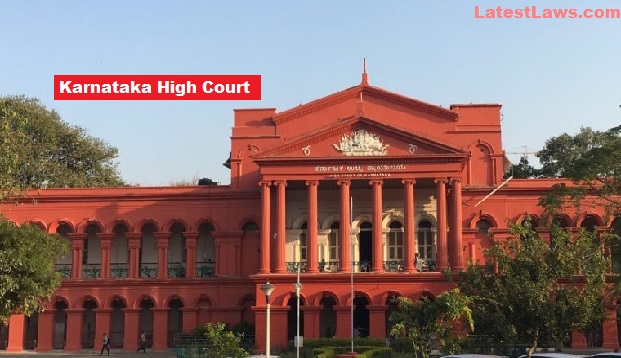
A Single Judge Bench comprising of Justice PS Dinesh Kumar of Karnataka High Court has in the case of Sri Guru Dattatreya Peeta Devasthana Samvardhana Samithi v. The State of Karnataka and Others made it clear that the Government’s order permitting only a Mujawar (Muslim Priest) to perform the rituals at the Datta Peeta (a holy cave shrine in Chikmaguluru which is revered both by Hindus and Muslims communities) amounts to a flagrant violation of both communities guaranteed by Article 25 of the Constitution of India.
The Court very rightly said in its commendable, cogent, convincing, and composed order that,
“…the impugned order infringes the right of both communities guaranteed under Article 25 of the Constitution by preventing Hindus from performing pooja as per their faith and compelling the Mujawar to offer pooja contrary to his faith.” This was just not done! So, no wonder that the Karnataka High Court rightly termed it as a flagrant violation of the right to religion of both Hindus and Muslims.
Factual Background
Shri Guru Dattatreya Peetha Samvardhana Samithi (Petitioner – Trust) presented the instant writ petition with a prayer to issue a writ of certiorari and to quash the impugned Government Order and to direct the State Government to implement Endowment Commissioner's Report dated 10.03.2010.
Reasoning and Decision of the Court
The Court observed that the Endowment Commissioner submitted his Report dated 10.03.2010 before the Apex Court suggesting inter alia that a Hindu Archak be appointed by the Management Committee for performing daily pooja. The Sajjada Nasheen and some contesting respondents raised objections to the said Report. The State Government took a stand before the Apex Court that in view of the sensitive nature of the issues involved in the case, it was required to be considered by the State Cabinet and a decision would be taken thereafter.
“The State Government appointed a High level Committee consisting of a former Judge of this Court and two others, to consider among other things, the recommendation made by the Endowment Commissioner in his order dated 10.03.2010. The High Level Committee submitted its Report on 03.12.2017 with a recommendation to continue the nature and character of religious practices, which were prevailing as on 15th August 1947. Pursuant thereto, State Government have issued the impugned order.”
Further, the Court opined that,
"It is a settled principle of law that justice should not only be done but be seen to be done. Nearly, a century back, Lord Hewart, CJ, has stated that it is not merely of some importance, but of fundamental importance that justice should both be done and be manifestly seen to be done...”
"Article 25 of the Constitution guarantees Freedom of Conscience and free profession, practice and propagation of religion. By the impugned order, firstly, the State have infringed upon the right of Hindu Community to have the pooja and archana done in the manner as per their faith. Secondly, State have imposed upon the Mujawar to perform ‘paduka pooja’ and to light ‘nanda deepa’ contrary to his faith. Both these acts amount to flagrant violation of rights of both communities guaranteed by Article 25 of the Constitution of India."
The Court noted,
"Though the versions of a large number of devotees recorded by the Endowment Commissioner including that of the Mujawar who was working during 1975 demonstrate that both Hindus and Muslims were worshipping as per their respective customs, the State Government have chosen to accept the High-Level Committee’s recommendation to reject Endowment Commissioner’s Report. As recorded hereinabove, the High- Level Committee Report is not free from the vice of bias.”
Held
The impugned order was held to be unsustainable in law for the following reasons,
"• Firstly, because, contrary to the stand taken before the Hon’ble Supreme Court of India that the Cabinet would consider the pros and cons and take a decision, the State Government have delegated the consideration to a High Level Committee;
• Secondly because, the recommendation of the Sub-Committee, has been incorrectly extracted in the impugned order. The recommendation extracted gives an impression that the practices recommended are in consonance with the order of this Court... which is factually incorrect because, the six recommendations recorded in the impugned order are those contained in the earlier Report of the Endowment Commissioner dated 25.02.1989 which has been quashed by this Court. Therefore, the decision arrived at, is on an incorrect premise and hence vitiated;
• Thirdly because, the High Level Committee has mis-directed itself with regard to the 1991 Act, when the issue in dispute has attained finality as per the decree;
• Fourthly because, it is nobody’s case that the place of worship is being converted. On the other hand, it is the common case of both communities that it is a place of worship for both Hindus and Muslims;
• Fifthly, because, the High Level Committee Report is not free from bias, as Shri. Rehamat Tarikere, one of its Members has deposed before the Endowment Commissioner and the Committee has recommended rejection of his Report;
• Sixthly, because, the impugned order infringes the right of both communities guaranteed under Article 25 of the Constitution by preventing Hindus from performing pooja as per their faith and compelling the Mujawar to offer pooja contrary to his faith.”
Thus, the Writ Petition was allowed.
Case Details
Case Name: Sri Guru Dattatreya Peeta Devasthana Samvardhana Samithi v. The State of Karnataka and Others
Case Number: Writ Petition No. 18752 of 2018 (GM-R/C)
Read Order@LatestLaws.com
Picture Source :




















