









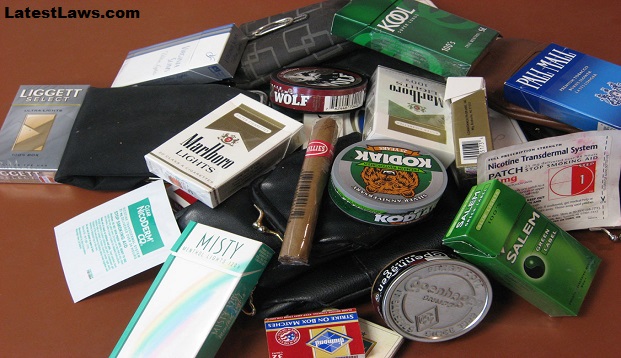
The Single Bench of the Delhi High Court in the case of Sugandhi Snuff King Pvt. Ltd. & Ors. vs Commissioner (Food Safety) Govt. of NCT of Delhi consisting of Justice Gaurang Kanth set aside the ban on manufacture, storage, distribution or sale of tobacco products throughout the NCT of Delhi.
Facts
The Petitioners engaged in the business of lawful manufacture, trade, distribution and sale of scheduled tobacco products, more particularly chewing tobacco, both flavoured and scented for several decades and have obtained all requisite licenses and permissions under the relevant Statutes and Regulations from the concerned Statutory Authorities. They are duly registered under the Central Sales Tax Act and VAT, Central Excise etc. This batch of petitions challenge the legality and validity and seek quashing of the impugned Notifications issued by the Commissioner of Food Safety, Government of NCT of Delhi which prohibit the manufacture, storage, distribution or sale of Gutka, Pan Masala, flavoured/scented tobacco, Kharra and similar products in the interest of public health for one year throughout the NCT of Delhi.
Contentions Made
Petitioner: It was contended that the Impugned Notifications have been repromulgated without any significant change. It was also contended that no study was undertaken by the Government before banning the sale of tobacco vide the impugned Notifications.
It was further contended that Through Entry 52 of List I, the Parliament assumed the power to legislate upon tobacco and food industry. Upon a declaration being made under Entry 52 of List I, the Union can only acquire what is available under Entry 24 of List II. It cannot be said that Entry 52 of List I impinge upon, override, and governs other specific entries in the List. Thus, any encroachment by the Union on the specific entries is beyond legislative competence. Reliance was placed on ITC Limited v. Agriculture Produce Market Committee wherein it was observed that tobacco is not foodstuff. Reliance was also placed on Collector of Central Excise, Bombay & Anr. v. Parle wherein it was held that food is any substance that builds-up normal structure or supply the waste of tissue and includes confectionary. Thus, a product that could neither be nutritive nor restitutive nor promotive would not constitute as ‘food’ because it is consumed. More so, when it is perceived as detrimental to health.
Relying on Union of India v. Elphinstone Spinning and Weaving Co. Ltd. & Ors. it was contended that the declaration u/s 2 of FSSA purporting to take over the “food industry” cannot cover tobacco within its ambit as the same was already covered under the “tobacco industry” when the COTPA was enacted in 2003. Tobacco products have been defined u/s 3(p) of the COTPA, and merely because the definition of food is very expansive in the FSSA, doesn’t mean the competence will flow.
It was further contended that the impugned Notifications were arbitrary and ultra vires the FSSA, COTPA and abridges the fundamental rights enshrined under Articles 14, 19 and 21 as it created an artificial sub-class/distinction of smokeless tobacco within the class of tobacco products. It was also contended that the burden of proof rests on the Respondents to justify the aforesaid artificial intra-tobacco class purported to be created by them.
Respondent: It was contended that the impugned Notifications do not seek to ban pure tobacco, but tobacco mixed with additives which makes it chewing tobacco, which is in compliance with various orders and directives passed by the Hon’ble Supreme Court. It also contended that consuming smokeless tobacco or chewing tobacco have number of harmful effects and it further causes various diseases including cancer and non-cancerous conditions.
It was further contended that Prior to the Regulation 2.3.4 of COTPA coming into existence, a detailed study was undertaken in view of Ankur Gutka v. Indian Asthma Care Society & Ors. and after the detailed study the Regulations and Notifications came into force.
Relying on the circular issued by the Special Secretary, Ministry of Health & Family Welfare it was contended that chewing tobacco is “food” in view of Manohar Lal v. State of U.P and M/s Khedal Lal & Sons v. State of U.P. It was also contended that in view of the said circular, the Central Government considers chewing tobacco as “food” till date.
It was also contended that multiple legislations have failed to effectively control or regulate smokeless tobacco in India. With almost 199.4 million of adult smokeless tobacco users in India as per the official reports with no age barrier for usage, there is an immediate need to strengthen smokeless tobacco control efforts as “no ordinary product”.
Relying on various judgments, it was contended that flavoured/scented chewing tobacco constitute “food” within the wide ambit of Section 3(1)(j) of the FSSA since various ingredients such as food additives are added to chewing tobacco to make it palatable for consumption. Reliance was placed on Godawat Pan Masala wherein it held pan masala and gutka to be “food” u/s 2(v) of the PFA.
Relying on Sakhawant Ali v. State of Orissa it was contended that the Legislature will determine what categories it would embrace within the scope of the legislation and merely because certain categories which are left out would not render the legislation discriminatory and violative of Article 14 of the Constitution.
Observations of the Court
The Bench perused the judicial pronouncements passed by various Courts regarding the issues involved in this case to understand the position of law.
It opined that the impugned Notifications passed by the Commissioner of Food Safety in view of Regulation 2.3.4 in exercise of powers under Section 30(2)(a), in so far as they prohibited the use of tobacco and nicotine with respect to scheduled tobacco products covered under the COTPA were beyond the scope of powers conferred by the FSSA.
It further opined that the declaration u/s 2 of FSSA, a general legislation, purporting to take over the “food industry” cannot cover tobacco within its ambit as the same has already been covered under the “tobacco industry” with the enactment of the COTPA, a comprehensive, self-contained, seamless legislation dealing with the sale and distribution of scheduled tobacco products. Hence, COTPA prevails over FSSA and FSSA does not impliedly repeal the provisions of the COTPA.
It noted that the trade, sale and distribution of tobacco is permissible subject to certain restrictions imposed under the COTPA and the same has only been regulated, not prohibited.
Regarding the question whether tobacco and tobacco products can be termed as “food” under the FSSA, it was opined that tobacco cannot be termed as “food” within the meaning of the FSSA as no science-based standards can be laid down for tobacco to regulate its sale, distribution and storage in order to ensure safe and wholesome tobacco for human consumption. Moreover, such an interpretation would be in complete contravention of the provisions of the FSSA, which is a comprehensive legislation dealing with the food industry.
It further noted that no compliance u/s 30(2)(a) read with Section 18 of the FSSA was undertaken before issuance of the impugned Notifications. No risk analysis, risk assessment or risk management was made in this case. Further, no reference was made to emergent circumstances which led to issuance/passing of the impugned Notifications. No opportunity of being heard was provided to the stakeholders who would be adversely affected by such prohibitory order i.e., issuance of the impugned Notifications. Thus, Respondent No.1 exceeded its power and authority in issuance of the impugned Notifications in contravention of the powers conferred upon him under the FSSA.
Moreover, it was opined that even though the object sought to be achieved by the said prohibitory order(s) is “public health”, there was no justification whatsoever for making such a differentiation in smokeless and smoking tobacco. Even COTPA, which is the Central Act governing the tobacco industry, does not make any such distinction under its Schedule. Further, the impugned Notifications were purportedly issued in the garb of Regulation 2.3.4 which bars the usage of tobacco and nicotine in any food article. So, there was no nexus with the object sought to be achieved to justify a valid classification under Article 14 of the Constitution.
It agreed that tobacco and nicotine are injurious to health, however, this case involved certain questions of law which could not be decided merely based on public conscious and sentiments but have to be decided and settled based on the fair interpretation of law in the light of the judicial precedents.
Judgment
The Bench held that while issuing the impugned Notifications, the Respondent No.1/Commissioner of Food safety exceeded its power and authority in contravention of the powers vested in him under the FSSA and therefore, the said impugned Notifications were quashed and set aside.
Case: Sugandhi Snuff King Pvt. Ltd. & Ors. vs Commissioner (Food Safety) Govt. of NCT of Delhi
Citation: W.P.(C) 3362/2015 & other connected matters
Bench: Justice Gaurang Kanth
Decided on: 27th September 2022
Read Judgment @Latestlaws.com
Picture Source :




















