









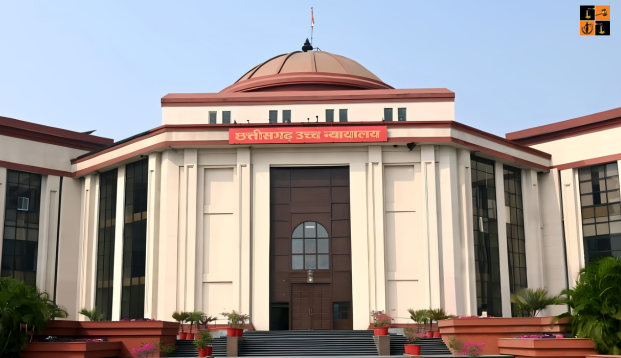
On Friday, the Chhattisgarh High Court raised concerns over the deferment of elections to the Chhattisgarh State Bar Council, calling upon the Bar Council of India to clarify the basis on which its Chairman postponed the electoral process.
Elections to the office bearers of the Chhattisgarh State Bar Council and for a member to the Bar Council of India were notified to be held. However, by an order dated January 6, the Chairman of the Bar Council of India deferred the elections.
The order stated that the Bar Council of India had received certain inputs from multiple sources suggesting that a few members were allegedly involved in corrupt practices, including horse-trading. Apprehensions were expressed that such persons might secure election by adopting illegal and unethical means, thereby affecting the fairness and purity of the electoral process.
Aggrieved by the deferment, a batch of writ petitions was filed before the High Court challenging the validity of the order passed by the BCI Chairman.
The Petitioners contended that the deferment order was arbitrary and disproportionate. It was argued that the decision was based solely on vague and unsubstantiated allegations described as “inputs” and “rumours,” without disclosure of any concrete material or prima facie evidence indicating corrupt practices.
They further submitted that postponement of a long-overdue election on such uncertain grounds undermines the democratic functioning and autonomy of the State Bar Council and erodes the confidence of the legal fraternity.
On a prima facie examination of the impugned order, the High Court observed that the allegations relied upon were general and omnibus in nature. The Bench noted that no specific instance, material, or identifiable act of malpractice had been cited to justify deferring a duly notified electoral process.
The Court emphasised that elections to statutory bodies are central to democratic governance and cannot be deferred lightly, especially when such elections are already overdue. It observed that any interference with an electoral process must be guided by transparency, fairness, and proportionality, and supported by tangible material rather than unverified apprehensions.
The High Court granted the counsel for the Bar Council of India 48 hours’ time to seek instructions and file an appropriate response explaining the basis and material relied upon for passing the order dated January 6. The matter has been listed for further hearing on January 12. The Court also expressed its expectation that the Bar Council of India would take positive steps to ensure that the elections are conducted expeditiously, fairly, and transparently, in the larger interest of the legal fraternity.
Case Title: Chandra Prakash Jangade Versus Bar Council of India & Others
Case No.: WPC No. 103 of 2026
Coram: Hon’ble Mr Chief Justice Ramesh Sinha and Hon’ble Mr Justice Arvind Kumar Verma
Counsel for the Petitioner: Sr. Adv. Fouzia Mirza with Adv. Ali Afzaal Mirza and Adv. Ahmed Ayaan Mirza, Adv. Shikhar Bakhtiyar, Adv. Anshul Tiwari and Adv. Awadh Tripathi
Counsel for the Respondent: Adv. Sourabh Kumar Pande appeared for the Bar Council of India. Additional Advocate General Shashank Thakur, Adv. Pranav Tiwari
Read Judgement @LatestLaws.com
Picture Source :




















