









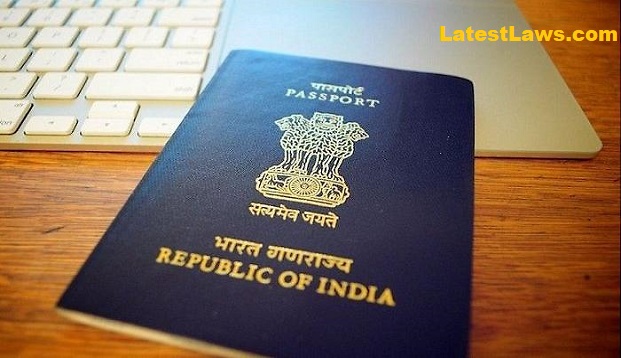
The Chattisgarh High Court, in one of its recent judgement, has held that for renewal of passport, the pendency of criminal case is not a bar if a person seeking renewal obtains permission from the concerned criminal Court for travel abroad.
The judgement came out in Abhishek Tiwari v/s Union of India, Regional Passport Office, State of Chhattisgarh.
CASE BACKGROUND
The petitioner herein had applied for the renewal of his passport with the concerned Passport Authorities under after it went expired.
He was suffering trial for offence punishable under Sections 294, 323, 451 and 506 read with Section 34 of the IPC and therefore in order to acquire the renewal, filed an application under Section 6(2)(f) of 2 the Passports Act, 1967 before the trial Magistrate where his criminal trial was pending, for necessary orders directing renewal of passport.
The Court rejected the application by the impugned order holding that the order seeking explanation is appealable and he then filed the present writ petition.
The Learned Counsel of the petitioner submitted that the Court is absolutely unjustified in rejecting the application and ignorant of the notification dated 25th August 1993 issued by the Central Government in the exercise of its power under Section 22 of the Passports Act, 1967 (Power to Exempt) by which subject to no objection from the criminal court, passport can be renewed pending trial of criminal case.
He demanded that impugned order deserves to be set-aside and the matter to be remitted to the jurisdictional criminal Court for considering the case of the petitioner for granting him permission to depart from India.
COURT ANALYSIS
The Court at very first cited Maneka Gandhi v. Union of India in which the Supreme Court held that right to travel abroad is a part of personal liberty under Article 21 of the Constitution of India and right to travel abroad on the aspect of personal liberty cannot be curtailed without reasonable opportunity to show cause. It was further held that the procedure in Article 21 of the Constitution cannot be arbitrary, unfair, unreasonable and hence rules of natural justice must be followed before impounding a passport under Section 10(3)(c) of the Passports Act, 1967.
The Court stated that on account of pendency of the criminal case, the passport authority is empowered to refuse to issue passport or travel documents for visiting any foreign country under clause (c) of sub-section (2) of Section 5 of the Passports Act, 1967.
The Court then highlighted Section 22 of the Passports Act, 1967 that renders the Central Govt with special powers that could exempt any person or class of persons from the operation of all or any of the provisions of this Act.
What is Section 22 of the Passports Act, 1967?
In exercise of the powers conferred by clause (a) of Section 22 of the Passports Act, 1967 and in super-session of the notification dated 14th April 1976, the Central Government has issued a notification dated 25th August 1993 exempting citizens of India against whom proceedings in respect of an offence alleged to have been committed by them are pending before a criminal court in India and who produce orders from the court concerned permitting them to depart from India, 5 from the operation of the provisions of clause (f) of sub-section (2) of Section 6 of the Passports Act, 1967.
The Court stated that the said notification reveals that that application for renewal of passport is not liable to be refused on the ground of pendency of criminal case if the particular person obtains permission from the concerned criminal Court and cited Deepak Dwarkasingh Chhabria v. Union of India and another in which it was held that for renewal of passport, the pendency of criminal case is not a bar if a person seeking renewal obtains permission from the concerned criminal Court for travel abroad.
The Court was thus of the opinion that in line with the above-mentioned notification, trial Magistrate was required to consider the application of the petitioner for permitting him to depart from India.
The Court so set aside the impugned order and directed the trial Court to deal with the application afresh within two weeks from the date of receipt of a copy of the order.
In the interest of the common, the Court also directed the passport authorities that in case of pendency of criminal case, in which renewal of passport is sought, it will inform the person concerned the Right to Apply for necessary permission from the Court concerned to travel abroad, as the present notification dated 25th August 1993 was issued by the Central Government to avoid unnecessary delay in renewal of passport, without fail.
The order has been passed by Justice Sanjay K. Agrawal on 06-11-2019.
Read Order Here:
Share this Document :
Picture Source :




















