









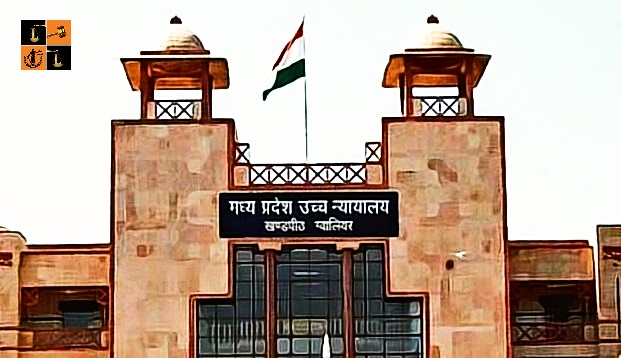
Recently, the Madhya Pradesh High Court held that when one spouse resists divorce despite there being no possibility of restoration, such resistance, particularly when it prolongs the other’s distress, constitutes cruelty. The Division Bench of Justice Vishal Dhagat and Justice B.P. Sharma observed that “other party opposes the prayer for divorce despite their being no possibility of their living together. Said conduct of party in deriving pleasure from difficulties and tension of other party also amounts to cruelty”
The case stemmed from a challenge to the Family Court’s decision dismissing a divorce petition filed under Section 13(1)(ia)(ib) of the Hindu Marriage Act, 1955 (HMA). The marriage between the parties had been solemnised in May 2002 according to Hindu rites, and two daughters were born from the union, presently residing with the husband. The wife had approached the Family Court alleging cruelty and desertion, asserting that she was subjected to dowry demands, physical assault, character assassination, and repeated expulsions from the matrimonial home. She had also withdrawn a pending maintenance claim in an attempt to restore the relationship.
The husband denied all allegations, maintaining that he was caring for the children and contending instead that the wife had behaved cruelly. He further asserted that she had entered into a second marriage in May 2018 during the subsistence of the first, which led to a complaint under Section 494/34 IPC against her second husband. The Family Court rejected the divorce petition on the premise that granting a decree would effectively confer an advantage upon the wife despite her contracting an invalid second marriage. Aggrieved by this reasoning and the dismissal of her petition, the wife preferred the present appeal before the Court.
The Appellant challenged the dismissal of her petition, submitting that the trial court overlooked material evidence demonstrating the respondent’s cruelty, including dowry-related harassment and assault. She contended that she had been forced out of the matrimonial home in 2009 and again in 2016, and that her petition should have been allowed, given the persistent hostility and absence of a functional marital relationship. Her counsel argued that the findings of the Family Court were contrary to the record and that the decree deserved to be set aside.
The Respondent maintained that the appellant had deserted the family, taken valuables and money, and filed false criminal cases. He argued that her subsequent marriage, performed during the subsistence of the first, showed her lack of bona fides. He highlighted statements of the daughters alleging ill-treatment by the appellant and submitted that no error had been committed by the Family Court in rejecting the petition.
The Benchobserved that the parties had once filed a joint divorce petition under Section 13-B of the HMA, admitting ideological differences, constant tension, and an inability to cohabit. They withdrew it upon attempting reconciliation, but separated again within six months. The appellant’s later marriage was found invalid but not determinative of whether she had suffered cruelty.
The Court rejected the trial court’s reasoning that the Appellant’s second marriage barred her from seeking a decree of divorce. The Court noted that the issue before the court was confined to the grounds pleaded under Section 13 of the HMA.
Addressing the state of the marital relationship, the Court held that the marriage had completely broken down, with the appellant living in an invalid second marriage and the respondent leading a separate life with their daughters. The Bench emphasised that while irretrievable breakdown is not an independent ground under Section 13 of the HMA, the court must consider the realities faced by the parties. It observed, “If divorce is not granted in cases of irretrievable breakdown of marriage then it will amount to further pushing party towards continuous pain and suffering. Irretrievable breakdown of marriage is a species within genus of cruelty. Whenever, there is Irretrievable or complete breakdown of marriage then both parties are under pain and suffers day to day cruelty as they were not permitted to exercise their choices and option to choose their partners in life”
The Court further held that the respondent’s act of opposing the divorce despite the absence of any possibility of cohabitation amounted to cruelty, noting that such conduct forced the appellant to remain in a state of ongoing distress.
Finally, while allowing the appeal, the Court granted a decree of divorce under Section 13(1)(ia) of the HMA, holding that the respondent had treated the appellant with cruelty by depriving her of the autonomy to live her life according to her choice, a right recognised as fundamental. The Court dissolved the marriage placed in May 2002 and clarified that the appellant would not be entitled to alimony or any claim over the respondent’s property.
Case Title: X vs. Y
Case No: First Appeal No. 789 Of 2022
Coram: Hon’ble Justice Vishal Dhagat and Hon’ble Justice B. P. Sharma
Advocate for Appellant: Adv. Sanjay Gupta
Advocate for Respondent: Adv. Yashovardhan Shukla
Read Judgment @Latestlaws.Com
Picture Source :




















