









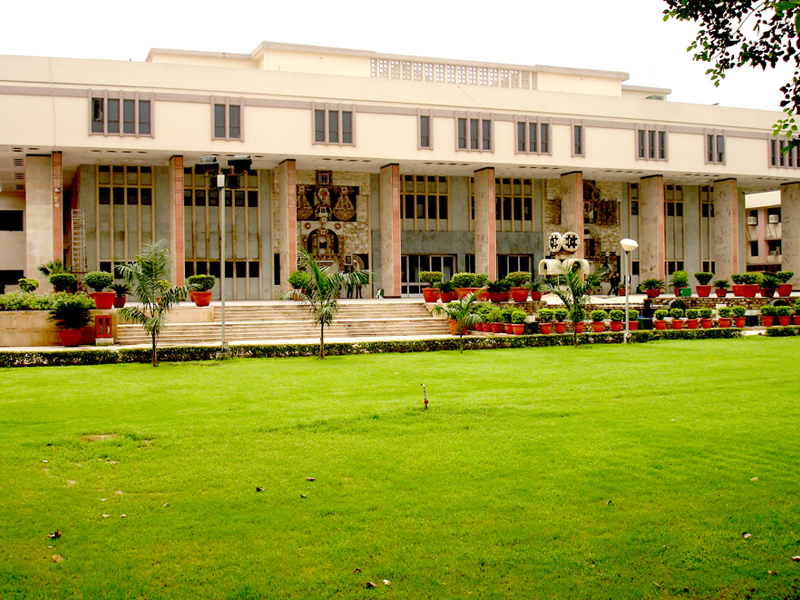
The Single Bench of the Delhi High Court in the case of Raj Bala vs State of NCT & Ors. consisting of Justice Asha Menon reiterated that Section 482 CrPC does not confer unlimited jurisdiction on the High Courts.
Facts
The petition was filed u/s 482 CrPC by the applicant before the learned Metropolitan Magistrate (“learned MM”) being aggrieved by the impugned order. The petitioner had, along with her complaint, filed an application u/s 156(3) CrPC seeking directions to the police for the registration of an FIR for the commission of offences u/s 379/420/406/465/ 467/468/471/506/120B IPC against the respondents No.2 and 3 herein.
Contentions Made
Petitioner: The learned MM had fallen into error in dismissing the application u/s 156(3) CrPC as a similar application had been dismissed, since the fact situation was different as the petitioner was not in possession of any document to substantiate her allegations. That was also the reason why she had withdrawn her first complaint. In a civil suit filed by the respondent No.2, he had filed copies of certain documents based on which, the respondent No.2 claimed that he had purchased a part of the property from the petitioner. But the full consideration had not been paid by the respondent No.3 despite having the possession, and the petitioner was thus defrauded of her valuable property. Her original documents were also stolen by the respondent No.3 and his associates. Moreover, the respondents were not cooperating with the inquiry. Thus, based on new facts, the complaint being maintainable, the application also ought to have been entertained by the learned MM and directions issued to the police for the registration of the FIR and conduct investigations.
Respondent: The application was rightly dismissed by the learned MM as the facts, based on which investigations were sought, were identical in both applications. The order dismissing the first application u/s 156(3) CrPC was a speaking order on merits and therefore, the second application could not have been entertained by the learned MM and hence, it was rightly dismissed. The first complaint had also been withdrawn by the present petitioner, without leading any evidence.
Observations of the Court
The Bench noted that while exercising the inherent powers u/s 482 CrPC the court must be conscious of the scope of such powers. Relying on Dhruvaram Murlidhar Sonar vs. State of Maharashtra, the Court noted that under this section:
“The High Court has inherent powers to make such orders as may be necessary to give effect to any order under the Code or to prevent the abuse of process of any court or otherwise to secure the ends of justice. But the expressions “abuse of process of law” or “to secure the ends of justice” do not confer unlimited jurisdiction on the High Court and the alleged abuse of process of law or the ends of justice could only be secured in accordance with law, including procedural law and not otherwise.”
It was also noted that even if the documents were to be considered, the case of the petitioner does not get strengthened. However, the petitioner was granted an opportunity to lead her pre-summoning evidence u/s 200 CrPC. But the petitioner chose to withdraw that complaint. The revision filed against this dismissal order was also rejected.
Judgment
The Bench noted that if the learned MM chose to be cautious about not issuing directions for the registration of the FIR, no fault can be found with it. At the same time, the interest of the petitioner seems to have been taken care of by the learned MM by permitting her to lead evidence in her complaint case. Thus, dismissal of her second application u/s 156(3) CrPC did not cause any miscarriage of justice. So, the present petition was dismissed.
Case: Raj Bala vs State of NCT & Ors.
Citation: CRL.M.C. 1738/2020
Bench: Justice Asha Menon
Decided on: 20th May 2022
Read judgment @Latestlaws.com
Picture Source :



















