









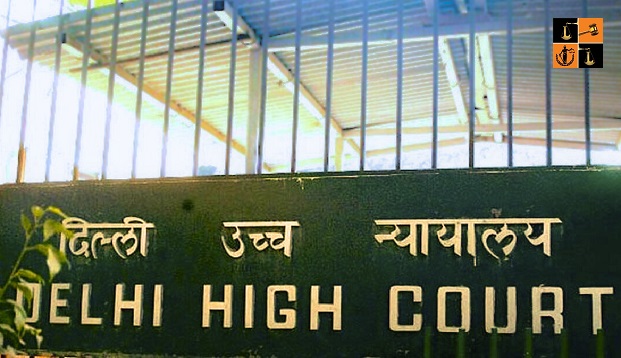
Recently, the Delhi High Court ordered the removal of the mark “BLUE SPOT” from the Register of Trade Marks after concluding that the registered proprietor, Stardford Spirits Pvt. Ltd., had failed to demonstrate any bona fide commercial use for more than five years. Justice Manmeet Pritam Singh Arora held that the allegations of non-use stood admitted due to the proprietor’s absence from the proceedings, clearing the way for Irish Distillers International Limited, part of the Pernod Ricard group, to protect its long-established family of SPOT whisky marks.
The case arose from a rectification petition filed by Irish Distillers International Limited under Section 47 and Section 57 of the Trade Marks Act, seeking cancellation of the “BLUE SPOT” trademark registered in 2019 in the name of Stardford Spirits Pvt. Ltd. The petitioner operates the globally recognized SPOT whisky portfolio, comprising BLUE SPOT, GREEN SPOT, YELLOW SPOT, and RED SPOT, with historical use dating back to the early 1900s.
During the prosecution of its own Indian application for the mark BLUE SPOT in 2023, the petitioner discovered Stardford Spirit’s prior registration. An independent investigation undertaken in October 2024 revealed that the registered proprietor was untraceable at publicly listed addresses, its representative admitted non-use of the mark, and no products bearing “BLUE SPOT” were found in the market. These findings prompted the present rectification action.
Irish Distillers asserted that the impugned mark had not been used in the course of trade for more than five years from the date of registration, satisfying the statutory threshold for removal under Section 47(1)(b) of the Trade Marks Act. It placed reliance on the investigator’s report, sales and brand history of its SPOT whiskies, and statutory provisions that render a non-used mark vulnerable to cancellation. Despite being duly served through email, WhatsApp, and registered address, Stardford Spirits did not enter an appearance and was proceeded ex parte in July 2025.
Justice Manmeet Pritam Singh Arora examined the record and noted at the outset that the registered proprietor, Stardford Spirits Pvt. Ltd., had been duly served through all permissible modes, including email and WhatsApp, yet chose not to participate in the proceedings. As a result, the Court proceeded ex parte, and the pleadings advanced by the petitioner stood unchallenged. The Court recorded that the allegations of non-use remained “unrebutted and are deemed to be admitted,” thereby shifting the assessment entirely to the material placed by the petitioner.
The Court then turned to the statutory basis for removal under Section 47 of the Trade Marks Act and discussed the legal principles governing cancellation for non-use. Justice Manmeet Pritam Singh Arora noted, while referring to the case Rong Thai International Group Co. Ltd. v. Ena Footwear Pvt. Ltd., that Section 47 operates as a safeguard to ensure that the register does not retain marks that are never put into commerce. The Court observed that “Section 47 of the Act serves to protect the integrity of the trade mark register by ensuring that registered marks that are not actively used in commerce are removed,” and emphasised the statutory requirement of a continuous period of five years of non-use from the date the mark is entered in the register.
The Court also relied on the clarification that the burden initially lies on the petitioner to plead non-use; however, once such an assertion is made, the proprietor must specifically deny it and offer proof of genuine commercial use. Referring to Dorco Co. Ltd. v. Durga Enterprises and Anr, the Court highlighted that in cases where the proprietor fails to contest the allegations, the claim of non-use “stood admitted.”
Applying these principles to the present facts, the Court found that the petitioner had provided substantial unrebutted material, the investigator’s report revealed that the registered proprietor could not be traced at its listed addresses, market searches showed no whisky product under the “BLUE SPOT” mark, and the representative of the proprietor, when contacted, acknowledged that the mark had not been used at all. These circumstances, taken together, demonstrated continuous non-use for more than five years from the date of registration and established the absence of any bona fide intention to use the mark. The Court therefore concluded that the statutory conditions for removal were fully satisfied.
Holding that the statutory requirements of Section 47(1)(a) and Section 47(1)(b) of the Trade Marks Act were fulfilled, the Court concluded that the impugned registration was without bona fide intention to use and had not been used in the relevant period. Accordingly, the Court ordered that the trademark “BLUE SPOT” registered in the name of Stardford Spirits Pvt. Ltd. be removed from the Register of Trade Marks.
Case Title: Irish Distillers International Limited Vs. Stardford Spirits Pvt. Ltd. & Anr.
Case No.: C.O. (COMM.IPD-TM) 77/2025
Coram: Hon'ble Justice Manmeet Pritam Singh Arora
Advocate for the Petitioner: Advs. Reha Mohan, Akanksha Majumdar, and Sambhav Jain
Advocate for the Respondent: CGSC Nidhi Raman, Advs. Om Ram, Arnav Mittal, Mayank Sansanwal
Read Order @Latestlaws.com
Picture Source :




















