









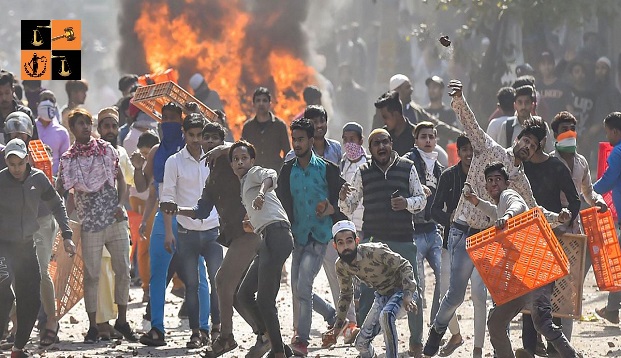
On Friday, the Delhi High Court engaged with a series of public interest petitions linked to the 2020 North East Delhi riots, examining whether the reliefs sought, including SIT-monitored investigations and registration of FIRs against political leaders, ought to be pursued before the Supreme Court instead of simultaneously progressing before multiple forums. The Bench explored the propriety of parallel proceedings arising from identical material and allegations, prompting a pointed inquiry- why should petitioners litigate the same issues before two constitutional courts at once?
The case stemmed from a series of public interest petitions alleging hate speech by multiple political leaders, seeking registration of FIRs and calling for an independent Special Investigation Team to investigate the 2020 North East Delhi riots. Among them was a petition represented by Senior Advocate Colin Gonsalves, which sought FIRs against four political figures for speeches alleged to have instigated violence. Additional petitions demanded action against police officials, a probe by an agency not connected to the Delhi Police, and an investigation into the purported funding of protests related to the Citizenship Amendment Act.
During the proceedings, the Delhi Police apprised the Court that in a related matter filed by petitioner Brinda Karat, similar prayers had already been rejected by the magistrate and later by a Single Judge of the High Court. It was further pointed out that a special leave petition challenging that decision was currently pending before the Supreme Court, and that the reliefs sought across the present batch were effectively covered by the petition before the Apex Court.
Counsel for the petitioners contended that an independent investigation was essential, particularly since the allegations involved police officials and politically sensitive accusations. It was further argued that the nature of the relief, specifically, the constitution of an SIT comprising officers from beyond the State machinery, warranted the exercise of constitutional jurisdiction.
On behalf of the Delhi Police, it was submitted that all the prayers across the batch were already subsumed within the matter pending before the Top Court. Reference was made to the prior proceedings under Section 156(3) of the CrPC in the petition by Brinda Karat, and the pending special leave petition arising from it. The State argued that entertaining parallel PILs on the same facts could lead to conflicting orders.
The Division Bench of Justice Vivek Chaudhary and Justice Manoj Jain closely examined the overlap between the present petitions and those pending before the Supreme Court. The Bench queried the petitioners as to why they could not seek impleadment before the Apex Court, stating that the prayers, parties, and underlying allegations were derived from the same material.
The Court observed that, “Because it is the same relief, based on same material. Why two hearings on same matter? You can be impleaded there and argue and raise it there.” The Bench further explained the impropriety of parallel reliefs in PIL jurisdiction, observing, “These are PILs. There cannot be separate orders regarding same facts and incidents in different petitions. If in one set of petitions on same facts, already an order is passed and now matter is pending before Supreme Court, should other PILs be entertained here?”
Emphasising the nature of PIL adjudication, the Bench added, “The moment it is a PIL, Court is no more bound by technicalities. If the Court has passed an order, why in other PILs separate orders be passed?” At the same time, the Bench directed Senior Advocate Gonsalves to place on record the material relating to Section 156(3) of the CrPC proceedings to elucidate the prior history of litigation.
In light of the foregoing discussion, the Court listed the batch of petitions for further consideration on December 11, directing the petitioners to file the relevant materials and indicating that impleadment before the Supreme Court may be the appropriate course given the pendency of identical issues there.
Disclaimer: This news/ article includes information received via a syndicated news feed. The original rights remain with the respective publisher.
Picture Source :



















