









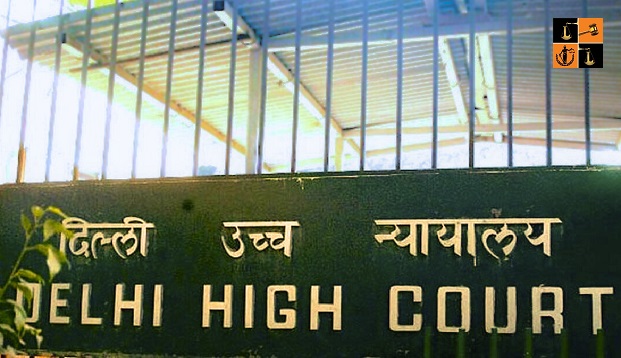
Against the backdrop of Delhi’s worsening air quality and its documented impact on public health, a Public Interest Litigation before the Delhi High Court has raised a pointed challenge to the tax treatment of air purifiers. The petition urges judicial scrutiny of the continued classification of air purifiers as ordinary consumer goods, arguing that in a city grappling with hazardous pollution levels, such devices have moved beyond comfort appliances into the realm of health necessities.
The PIL has been instituted by Advocate Kapil Madan, seeking directions to the Union of India and other authorities to declare air purifiers as “medical devices” under the Medical Devices Rules, 2017. Such a declaration, according to the petitioner, would bring air purifiers within the 5% GST bracket applicable to medical devices, as opposed to the existing 18% levy.
At present, air purifiers attract GST at the rate applicable to electronic appliances. The petition contends that this classification ignores the realities of Delhi’s air pollution, which the plea describes as an “extreme emergency crisis.” The matter has been listed before a Division Bench comprising Chief Justice Devendra Kumar Upadhyaya and Justice Tushar Rao Gedela and is scheduled for hearing today.
The petitioner has argued that treating air purifiers as luxury items is detached from the lived conditions of residents exposed to unsafe air. It has been submitted that “The imposition of GST at the highest slab upon air-purifiers a device that has become indispensable for securing minimally safe indoor air renders such equipment financially inaccessible to large segments of the population and thereby inflicts an arbitrary, unreasonable, and constitutionally impermissible burden.”
Relying on a 2020 notification issued by the Central Government, the plea asserts that air purifiers satisfy the statutory criteria of a medical device. In this context, the petition states that “Air-purifiers perform a critical medical-device function by enabling safe respiration and mitigating life-threatening exposures, placing them squarely within the preventive and physiological-support purposes.”
It is further contended that the current GST rate results in unequal fiscal treatment when compared with other devices performing comparable preventive or health-support functions.
While the Court is yet to examine the merits of the challenge, the petition places emphasis on constitutional principles governing taxation. According to the plea, “Continued imposition of 18% GST on air-purifiers, despite their medically recognised role in crisis situations and their functional equivalence to devices taxed at 5%, constitutes an arbitrary and unreasonable fiscal classification. Such differential treatment fails the constitutional test of intelligible differentia and bears no rational nexus to public-health objectives, thereby warranting judicial intervention.”
The Court is expected to consider whether the classification adopted for GST purposes aligns with the statutory scheme of the Medical Devices Rules, 2017, and the broader constitutional limits on fiscal policy.
Disclaimer: This news/ article includes information received via a syndicated news feed. The original rights remain with the respective publisher.
Picture Source :




















