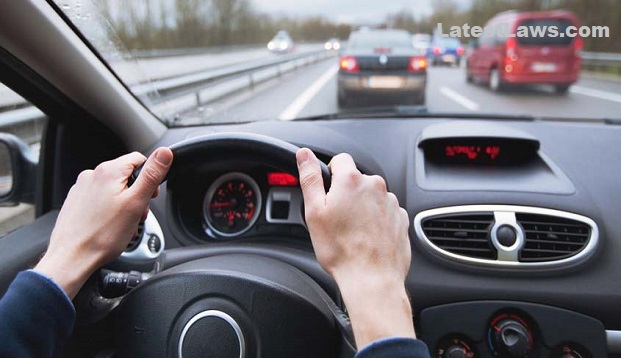
The High Court of Kerala has recently held that even when one is driving a vehicle at a slow speed but the manner is 'reckless and negligent', it would fall within the meaning of Section 279 IPC.
Interpreting the meaning of 'manner so rash or negligent as to endanger human life' the Division Bench of Justice Anil K. Narendran and Justice P.G Ajithkumar ruled that Legislature in its wisdom has used the words.
"The preliminary conditions, thus, are that (a) it is the manner in which the vehicle is driven; (b) it be driven either rashly or negligently; and (c) such rash or negligent driving should be such as to endanger human life. Once these ingredients are satisfied, the penalty contemplated under Section 279 of the Indian Penal Code is attracted."
The Court was deciding a suo-moto matter, wherein the Sabrimala Devotees alleged that negligent driving of tractors for transportation of goods on the trekking road was threatening the safety of the pilgrims.
Relying on SC Judgement in Ravi Kapur Vs. State of Rajasthan, 2012 Latest Caselaw 426 SC , the Court stated:
"A person who drives a vehicle on the road is liable to be held responsible for the act as well as for the result. It may not be always possible to determine with reference to the speed of a vehicle whether a person was driving rashly and negligently. Both these acts presuppose an abnormal conduct."
The Court noted that there is no exact precision or any mathematical formula by which negligence or lack of it can be infallibly measured in a given case.
"'negligence' means omission to do something which a reasonable and prudent person guided by the considerations which ordinarily regulate human affairs would do or doing something which a prudent and reasonable person guided by similar considerations would not do. Negligence is not an absolute term but is a relative one; it is rather a comparative term."
It further added that it is totally circumstantial whether there exists negligence per se or the course of conduct amounts to negligence. In a given case, even not doing what one was ought to do can constitute negligence, it said.
Deciding the case on other parameter of 'reasonable care', the Court commented:
"The doctrine of reasonable care imposes an obligation or a duty upon a person (for example a driver) to care for the pedestrian on the road and this duty attains a higher degree when the pedestrian happen to be children of tender years. It is axiomatic to say that while driving a vehicle on a public way, there is an implicit duty cast on the drivers to see that their driving does not endanger the life of the right users of the road, may be either vehicular users or pedestrians."
Accordingly, the Court directed the Deputy Superintendent of Police and Station House Officer to take necessary steps to ensure that the movement of tractors through the trekking path doesn't pose any threat to the safety of pilgrims even if its an emergency.
Read Judgement Here:
Picture Source :
Sheetal Joon