









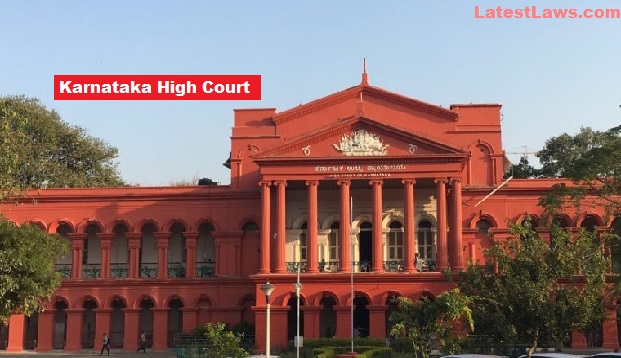
A single-judge bench of Justice K Natarajan of Karnataka High Court has- in the judgment titled State of Karnataka by CID represented by State Public Prosecutor v. Greenbuds Agro Form Limited Company and others stated that filing of a common charge sheet for a complaint filed by the individual investors against the same accused in different Police stations is against the law and filing amalgamated charge sheet is impermissible under the Criminal Procedure Code (CrPC). The Court held that the state CID Police have no authority to file a common charge sheet in different complaints however the investigating officer has to file a separate charge sheet against each crime registered by the police on individual complain thereafter the special court shall take cognizance of the offences both punishable under IPC and the special act by following the CrPC and dispose of the matter in accordance with the law.
Factual Background
Greenbuds Agro Farms Limited Company (accused no. 1) along with its Managing Directors and Directors (accused Nos. 2 to 5) were alleged to have cheated the general public of up to Rs. 12,95,13,433/- via investments from it. The individual investors filed complaints before different Police Stations in Mysuru District. The State Government appointed the jurisdictional Assistant Commissioner as Competent Authority for taking action against the accused u/s 5 of the Karnataka Protection of Interest of Depositors in Financial Establishments Act, 2004 (Act). Accordingly, the investigation was done and a common charge sheet came to be filed by the Police Inspector Financial and Vigilance Unit, CID, before the Trial Court.
The Trial Court, by its impact order, rejected the charge-sheet filed under the Act on the ground that the Police Inspector is not the competent officer to file the report or for taking action and hence the accused were discharged for the offence punishable u/s 9 of the Act. However, liberty was granted to Investigating Officer to file a charge sheet before the jurisdictional Magistrate for the offences punishable under IPC which is under challenge before this court.
The State by CID filed this petition under section 482 of the Code of Criminal Procedure Code, 1973 being aggrieved by the order dated 8-8-2016 passed by the Principal District and Sessions Judge Mysuru (Trial Court) for having rejected the charge-sheet filed by the Police Inspector Financial and Vigilance Unit, CID, Bengaluru.
Previously, this Court dismissed the petition on 12- 6-2020 and later, restored the same on 1-10-2020. At that time, the learned counsel for the respondents appeared and submitted no objection to recall the order. Accordingly, I.A. No.1 of 2020 was allowed and the petition was restored by recalling the order of dismissal.
Case of the State
The Court noted that the accused Company and its Directors were made accused under the IPC and also under the 2004 Act. The Assistant Commissioner was appointed u/s 5 of the Act for making an enquiry and to file a report. The Assistant Commissioner’s report- required to deal with the investments of the Company or other property believed to have been acquired from out of the deposits and to attach the said investments u/s 3 of the Act and to protect the interest of the investors in accordance with the procedure laid down in the Special Act.
Section 9 of the Act, the Court noted, prescribed punishment for the offence committed by the Company which is liable for punishment of both imprisonments as well as fine. As per Section 18 of the Act, the Cr.P.C. is applicable and the Special Court shall follow the procedure specified in the Cr.P.C. for the trial of warrant cases by the Magistrate, which is nothing but a Judicial Magistrate, First Class or Metropolitan Magistrate.
“Once the complaint is lodged against the Company for cheating the investors as per Section 154 of the Cr.P.C. before the Police and once the case is registered, the Investigating Officer is required to file charge-sheet against the offenders as per Section 173 of the Cr.P.C. The Special Court has been established for trying the offences committed under Section 10 of the Act. Therefore, the Investigating Officer is required to file charge-sheet before the Special Court established under the Act.”
Counsel for the State further submitted that as per Section 4 of the CrPC, the Special Court established under the Act is having the power to try the offences punishable under the IPC as well as the offences punishable under the Special Law, but the Trial Court misread Section 5 of the Act and committed error in discharging the accused which is illegal.
It was further submitted that as per Section 4(2) of the Cr.P.C., all offences under any other law shall be investigated, inquired into, tried and otherwise dealt with according to the same provisions, but subject to any enactment for the time being in force regulating the manner or place of investigating, inquiring into, trying or otherwise dealing with such offences. Such being the case, bifurcating the offences punishable under IPC and Special Law is not correct. Both the offences are required to be tried together by the Special Court established under the Act.
Reasoning and Decision of the Court
Stating the Trial Court committed an error, the Court observed that,
“Though the Trial Court rightly refused to accept the charge-sheet, but committed error in discharging the accused and directing the Investigating Officer to file charge-sheet before the jurisdictional Magistrate. Once the Special Court is established, the question of discharging the accused for the reasons that the charge-sheet is filed by incompetent Investigating Officer does not arise. The Trial Court misread the provisions of Special Act and has not considered Section 4 of the Cr.P.C.”
(...)
The Investigating Officer committed mistake in filing common charge-sheet for the various crime registered in different Police Stations which is impermissible."
Delhi High Court held in STATE v. KHIMJI BHAI JADEJA that filing an amalgamated charge-sheet is impermissible.
“76. From Chapter XII of the Cr.P.C., it is evident that upon disclosure of information in relation to commission of a cognizable offence, the police is bound to register the FIR. The registration of FIR sets into motion the process of investigation. The same culminates into the filing of the final report by the police officer before the Magistrate. Thus, in respect of every FIR, there would be a separate final report and, there could be, further report(s) in terms of Section 173(8).
xxx xxx xxx
Thus, our answer to question (b) is that in respect of each FIR, a separate final report [and wherever necessary supplementary/ further charge sheet(s)] have to be filed, and there is no question of amalgamation of the final reports that may be filed in respect of different FIRs. The amalgamation, strictly in terms of Section 219 Cr.P.C., would be considered by the Court/ Magistrate at the stage of framing of charge, since Section 219(1) mandates that where the requirements set out in the said Section are met, the accused "may be charged with, and tried at one trial for, any number of them not exceeding three”.”
Showing agreement with this decision of the Delhi High Court, the Court observed that,
“I am in respectful agreement with the view taken by the Division Bench of the Delhi High Court. On perusal of the judgment stated supra, it is clear that, the offences which are similar in nature committed by the same accused within twelve months can be tried together by framing a common charge as per Section 219 of the Cr.P.C., but the question of filing common charge-sheet in multiple crimes or complaints is impermissible.”
Held
Observing that the State-C.I.D. Police have no authority to file common charge-sheet in different complaints, the Court observed that,
“However, the Investigating Officer has to file separate chargesheet against each crime registered by the Police on individual complaint. Thereafter, the Special Court shall take cognizance of the offences both punishable under the IPC and the Special Act by following the Cr.P.C. and dispose of the matter in accordance with law. So far as on the report of the Competent Authority, it has to be submitted to the State Government and later, the Trial Court on the report of the Competent Officer to attach or seize the properties and investments under Section 3 of the Act for the purpose of protecting the interests and refunding the money to the investors as per Section 12 of the Act.”
Allowing the petition, the Court held,
“Trial Court committed error in rejecting the charge-sheet on the ground that the Investigating Officer is not the Competent Authority to file the charge-sheet and wrongly discharged the accused for the offence punishable under Section 9 of the Act and also committed error in directing the Investigating Officer to file the charge-sheet before the jurisdictional Magistrate in respect of the offences punishable under the IPC. Therefore, the impugned order requires to be quashed.”
Case Details
Name: State Public Prosecutor v. Greenbuds Agro Form Limited Company and others
Case No.: Criminal Petition Number 9302 of 2016
Bench: Justice K Natarajan
Picture Source :




















