









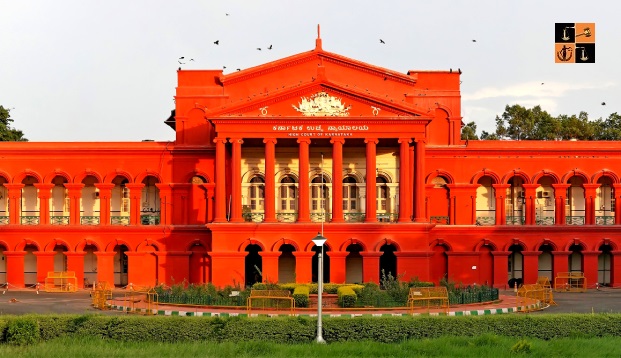
On Thursday, the Karnataka High Court ruled that the Karnataka State Bar Council (KSBC) is duty-bound to consider and permit the re-registration of an advocate who, after surrendering his sanath and availing benefits under the Advocate Welfare Fund, seeks to resume legal practice. Holding that denial of such permission would trench upon the constitutional guarantee under Article 19(1)(g) of the Constitution, the Court observed that regulatory authorities cannot stand in the way of an advocate’s right to return to the profession of law.
The case arose from a writ petition filed by M.A. Hameed, an advocate with over 25 years of practice after enrolment with the Karnataka State Bar Council. During the Covid-19 pandemic, he applied for surrender of his sanath and sought disbursement of the amounts payable to him under the Karnataka State Advocate Welfare Fund Act.
The Bar Council accepted the surrender and released the welfare benefits. Thereafter, the petitioner had a change of mind and submitted a representation seeking withdrawal of the surrender and restoration of his registration. As the representation remained unattended by the KSBC, he approached the High Court seeking appropriate relief.
The Petitioner contended that he was willing to return the entire amount received under the Welfare Fund, along with any applicable interest, and that refusal to restore his registration had no statutory backing. He asserted that once he expressed his intention to resume practice and refund the benefits received, there was no legal impediment to his re-registration.
The KSBC opposed the plea, arguing that there was no provision under the relevant statutes permitting withdrawal of a surrender once made. It was further contended that upon payment of welfare benefits, the Council had lost income which formed part of its functioning resources. According to the Bar Council, the petitioner had voluntarily retired from practice and could not subsequently seek to reverse that decision.
Justice Suraj Govindaraj examined the statutory scheme governing enrolment and welfare contributions of advocates. The Court noted that enrolment with the Bar Council is a prerequisite for practising law and that welfare stamps affixed on vakalatnamas constitute contributions made by advocates towards the welfare fund.
The Court observed that “Non permitting the same would infringe the Fundamental Right of a citizen to practise his profession, in this case profession of law under Article 19 (1) (g) of the Constitution of India.”
The Court further recorded that by surrendering the sanath, the petitioner had merely indicated an intention to retire from practice, which could not be treated as irrevocable. Referring to the petitioner’s request to withdraw the surrender, the Court noted that “By way of surrender the sanath the petitioner had in fact indicated that he would not practise in court of law and that he has retired from practise of law. Subsequently the petitioner having a change of heart/mind had approached the bar council with a request to withdraw his earlier surrender and restore his registration with KSBC enabling him to practise in court of law. Thereby exercising his right under Article 19 (1) (g) of the Constitution of India.”
Emphasising the institutional role of the Bar Council, the Court observed that “The very purpose of the existence of Karnataka State Bar Council is to enable registration of advocates with the bar council to enable them to practise in a court of law and for the bar council to exercise such discretionary powers and other powers as are provided under the Act.”
The Court remarked that “The petitioner has now even come forward to make the payment received by him along with due interest which the respondent would have earned… This in my considered opinion is not the right attitude on the part of KSBC. I do refrain from saying anything further keeping in mind the reputation of the bar council.”
Ultimately, while allowing the writ petition, the Court issued a mandamus directing the KSBC to consider the petitioner’s representation. The Court ordered that, subject to the petitioner repaying the amount received along with interest at the rate of 7.5 per cent per annum from the date of receipt until repayment, the Bar Council shall restore his registration on its rolls. The entire exercise was directed to be completed within 15 days of receipt of the payment.
Disclaimer: This news/ article includes information received via a syndicated news feed. The original rights remain with the respective publisher.
Picture Source :



















