









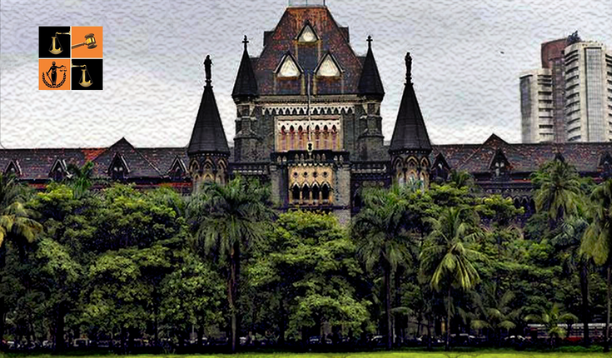
The Bombay High Court recently comprising of a bench of Justice N.J. Jamadar observed that Civil Court cannot usurp the jurisdiction of DRT u/S 13 of the SARFAESI Act until civil rights are affected. Preliminary jurisdiction to try cases involving debt shall always be aligned with the Debts Recovery. (Maharashtra Gramin Bank v Anwar)
The bench held that only when civil rights are involved in the issue of credit then the matter hall be presented before the civil court otherwise the preliminary jurisdiction lies with the Debts Recovery Tribunal.
Facts of the Case
The Applicant had accorded a cash credit facility to the Respondent, which was inter-alia secured by certain immovable property of the Respondent. Upon default by the Respondent in making repayment of the instalments against such cash credit facility, the Applicant proceeded to issue a notice of sale of the mortgaged property and such notice was published in the local newspapers.
The Respondent proceeded to file a suit before the concerned District Court, challenging the actions taken by the Applicant. It was averred that that the Applicant had acted in a very highhanded manner without considering the one-time settlement offer given by the Respondent, and also, there was no compliance by the Applicant with the requirement of issuance of notice as contained in Section 13(2) of the SARFAESI Act, such requirement being peremptory in nature. The Applicant filed an application under Order VII Rule 11 of the Code of Civil Procedure, 1908 ("CPC") for rejection of the plaint filed by the Applicant, in view of the express bar (at Section 34 of the SARFAESI Act) upon the civil courts assuming jurisdiction for disputes where the Debts Recovery Tribunal ("DRT") or Debts Recovery Appellate Tribunal ("DRAT") has jurisdiction, under the provisions of the SARFAESI Act.
The Ld. Civil Judge rejected the application preferred by the Applicant under Order VII Rule 11 of the CPC on the ground that the mandatory requirements under the SARFAESI Act have not been complied with by the Applicant and thereafter the jurisdiction of the civil courts are not ousted in this case. The Applicant preferred a civil revisional application before the Bombay High Court from this order of the Ld. Civil Judge.
Contention of the Parties
Mr.Patil, learned Counsel for the applicant would urged that the learned Civil Judge committed a grave error in assuming the jurisdiction over the subject matter of the suit, which is clearly within the province of the forum constituted under the Act, 2002. It was urged that the learned Civil Judge completely misdirected herself in taking a view that since it was averred in the plaint that notice under section 13(2) of the Act, 2002 was not issued before initiating the measures under section 13(4) of the Act, 2002, section 34 of the Act, 2002 would not oust the jurisdiction of the Civil Court. A bald assertion in the plaint that notice under section 13(2) of the Act, 2002 was not issued, would not confer jurisdiction on the Civil Court, canvassed Mr. Patil.
In view of the provisions contained in section 17 of the Act, 2002, the question as to whether the measures referred to in sub-section (4) of Section 13 of the Act, 2002 taken by the secured creditor are in accordance with the provisions of the Act, 2002 and the Rules made thereunder, squarely falls within the province of the authority of the Debt Recovery Tribunal and, thus, the learned Civil Judge could not have assumed the jurisdiction on the said count, submitted Mr. Patil.
In opposition to this, Mr. Syed, learned Counsel for the respondent/plaintiff, supported the impugned order. It was stoutly submitted that the learned Civil Judge committed no error in rejecting the application, as it is a clear case of non-compliance of the mandatory notice under section 13(2) of the Act, 2002.
From the pleadings of the parties, according to Mr.Syed, it becomes evident that there is no clear contention on the part of the defendant that such notice under section 13(2) of the Act, 2002 was issued and served on the plaintiff. Despite notice to produce, the defendant has not produced documents, which evidence the issue and service of notice. Taking the Court through provisions of the Act, 2002 and The Security Interest [Enforcement] Rules, 2002 [Rules, 2002],
Mr.Syed urged with tenacity that recourse to the provisions of section 13(4) of the Act, 2002 without complying with the mandatory requirement of issue of notice to the borrower, is wholly impermissible. Thus, the Civil Court would be within its right in entertaining the suit where a clear case of noncompliance is made out, urged Mr.Syed.
Courts Observation & Judgment
The Court relied upon the case of Bank of Baroda and Others Vs. Gopal Shriram Panda and Ors., CRA No.29,30/2011 wherein it was concluded that where civil rights of persons other than the borrower(s) or guarantor (s) are involved, the Civil Court would have jurisdiction, that too, when it is prima facie apparent from the face of the record that the relief claimed, is incapable of being decided by the DRT, under Section 17 of the DRT Act, 1993 read with Sections 13 and 17 of the SARFAESI Act stands in the name of the borrower and/or guarantor, and the borrower has availed the financial assistance, it would be only the DRT which would have exclusive jurisdiction to try such matters, to the total exclusion of the Civil Court. Any pleas as raised by the borrowers or guarantors, vis-a-vis the security interest, will have to be determined by the DRT.
The court held that “The upshot of the aforesaid consideration is that the learned Civil Judge was not justified in holding that the Civil Court has jurisdiction to entertain the suit and the bar under section 34 of the Act, 2002 did not come into play. As the action initiated by the defendant/applicant emanated from the provisions of the Act, 2002 and the Debt Recovery Tribunal has exclusive jurisdiction under section 17 of the Act, 2002, the plaint is liable to be rejected.”
Read Judgment @Latestlaws.com
Share this Document :Picture Source :




















