









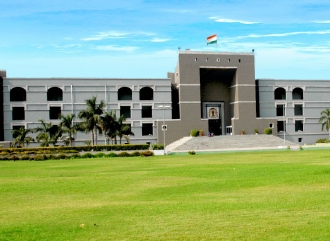
In a significant interim relief to the Tata Group’s Taj Hotel resort situated in the Gir National Park, the Gujarat High Court has restrained authorities from taking any coercive measures, including sealing of the premises, until August 28, 2025.
A Division Bench comprising Chief Justice Sunita Agarwal and Justice D.N. Ray passed the order while hearing a modification application filed by Indian Hotels Company Limited—the operator of Taj Hotels—seeking relief from a previous order dated April 13, 2015. That earlier order had permitted authorities to seal or discontinue operations of hospitality units allegedly operating without necessary permissions in the ecologically sensitive Gir Wildlife Sanctuary.
“The prayer for modification of the order dated 13.04.2015... is allowed to the extent that there shall be no coercive action against the modification applicant (respondent No.67 in the main matter) till the next date of listing,” the Court directed.
The matter stems from a 2014 suo motu public interest litigation (PIL) initiated after the Chief Justice of the High Court received an anonymous letter expressing concern over the Gujarat Government’s proposal to develop a new tourism zone at Chikhal Kuba near Jasadhar in the Dhari Division of Gir Sanctuary. The letter warned against treating the ecologically vital Gir Sanctuary as a mere tourist destination, citing potential threats to wildlife and habitat conservation.
The PIL sought strict implementation of the Wildlife (Protection) Act, 1972, the Indian Forest Act, and the Forest (Conservation) Act, 1980, and called for discontinuation of all commercial hospitality operations lacking No Objection Certificates (NOCs) from the Forest Department or competent authorities.
In its April 2015 order, the High Court had declined to grant protection from sealing or discontinuance to the Taj resort, holding that commercial activity within forest areas cannot be justified merely because the land was allotted by the Tourism Corporation of Gujarat. It rejected the applicant’s contention that no NOC was required since the land was originally owned by the Central Government and leased through government channels.
“A tourism corporation, even if state-owned, operates as a commercial entity and cannot be equated with the sovereign function of forest or wildlife preservation. Commercial activities in forest areas require explicit permission under applicable statutes,” the Court had observed at the time.
Following that order, the Taj hotel was sealed. The company challenged this action before the Supreme Court, which stayed the sealing and other coercive actions in its orders dated May 15, 2015; December 1, 2015; March 6, 2017; and most recently on May 6, 2025.
In the present modification plea, Indian Hotels Company Limited cited these Supreme Court orders and requested interim protection from any further coercive action. Taking note of these submissions, the High Court allowed interim relief and directed that no coercive steps be taken against the company until the next hearing.
Additionally, the Bench ordered the Registry to implead the Tourism Corporation of Gujarat Limited as a respondent party to the PIL. It further instructed the applicant to serve copies of the PIL and the modification application to the panel counsel for the Tourism Corporation within three days.
“The panel counsel appearing for the Tourism Corporation of Gujarat Limited and the learned Government Pleader appearing for the Principal Chief Conservator of Forests shall complete their instructions by the next date fixed,” the Court directed.
The matter is now scheduled for further hearing on August 28, 2025, by which time the parties have been directed to complete the exchange of pleadings.
Picture Source :




















