









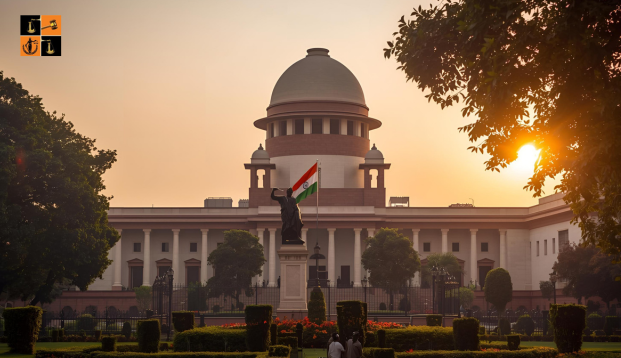
On Tuesday, the Supreme Court urged the Union of India to formulate a nationwide mechanism to ensure that trials under statutes such as the Unlawful Activities (Prevention) Act (UAPA) and Maharashtra Control of Organised Crime Act (MCOCA) conclude within six months. A Bench of Justice Surya Kant, Justice Ujjal Bhuyan, and Justice N. Kotiswar Singh emphasised the need for dedicated courts that function exclusively and expeditiously, thereby reducing avoidable bail litigation and ensuring the constitutional promise of a timely trial for all parties.
The case stemmed from two matters before the Supreme Court in which the Bench had previously highlighted the necessity for exclusive courts to handle special statute trials. The proceedings involved an enquiry into systemic delays affecting trials under laws invoked in cases concerning national security and organised crime. The Bench had earlier expressed concern over protracted pendency and had directed the Union/NIA to examine the feasibility of specialised courts.
Appearing for the Union of India and the National Investigation Agency (NIA), Additional Solicitor General Aishwarya Bhati submitted that a meeting chaired by the Home Secretary was held in October and that progress had been made in implementing the Court’s earlier directions. Additional Solicitor General S.D. Sanjay, addressing the situation in Delhi, informed the Bench that certain dedicated courts had been sanctioned and that an NDMC building near Karkardooma Courts was proposed to be acquired for establishing additional courts.
Counsel for the High Court of Delhi apprised the Bench of the operational challenges, including the practice of assigning cases under other statutes, such as PMLA, NDPS and other heinous offences, to courts designated for NIA trials.
Justice Surya Kant pressed for the immediate creation of a structured national mechanism, stating, “We want a very committed system to be introduced immediately that in all these matters, the trial must be completed in all respects within 6 months… so that issue of consideration of bail, etc., those litigations can be avoided.”
Emphasising the balance between the rights of the accused and the public interest in swift prosecution, he added that, “They also have a right to speedy trial. Both things can be balanced. [Prepare] an infrastructure for this on pan-India basis. We will make sure that these courts exclusively work, maybe day and night.”
Addressing the concerns raised by the Delhi High Court counsel, Justice Surya Kant remarked, “The purpose of creating a specialized court is frustrated the moment you enter the other cases. Let that court deal with these cases exclusively on day-to-day basis.”
The Bench also suggested structural reforms in the conduct of NIA trials, noting the burden created by voluminous witness lists. It recommended pruning of witnesses and adopting online deposition facilities. The Bench observed, “One witness may be in Kerala, another at border of Manipur, a third in J&K… Why all these people should travel all the way only for deposition? We can provide them online facility.” He further stressed that witness protection principles must be fully implemented. It added that an existing Supreme Court scheme supports such measures.
The Bench was informed that decisions had been taken “in principle” and that work was underway to implement them, including steps to augment financial allocations. ASG Bhati assured that action taken reports would continue to be filed.
Before adjourning the matter to December, Justice Surya Kant stated that the issue should ideally be resolved through administrative action rather than judicial intervention, remarking, “Why system should invite judicial directions or command for these things?” He concluded by directing the authorities to take “a formal decision” and ensure that “all notification etc. should be done” before the next hearing.
The matter will be taken up again after the Union places the updated status of implementation on record.
Disclaimer: This news/ article includes information received via a syndicated news feed. The original rights remain with the respective publisher.
Picture Source :




















