









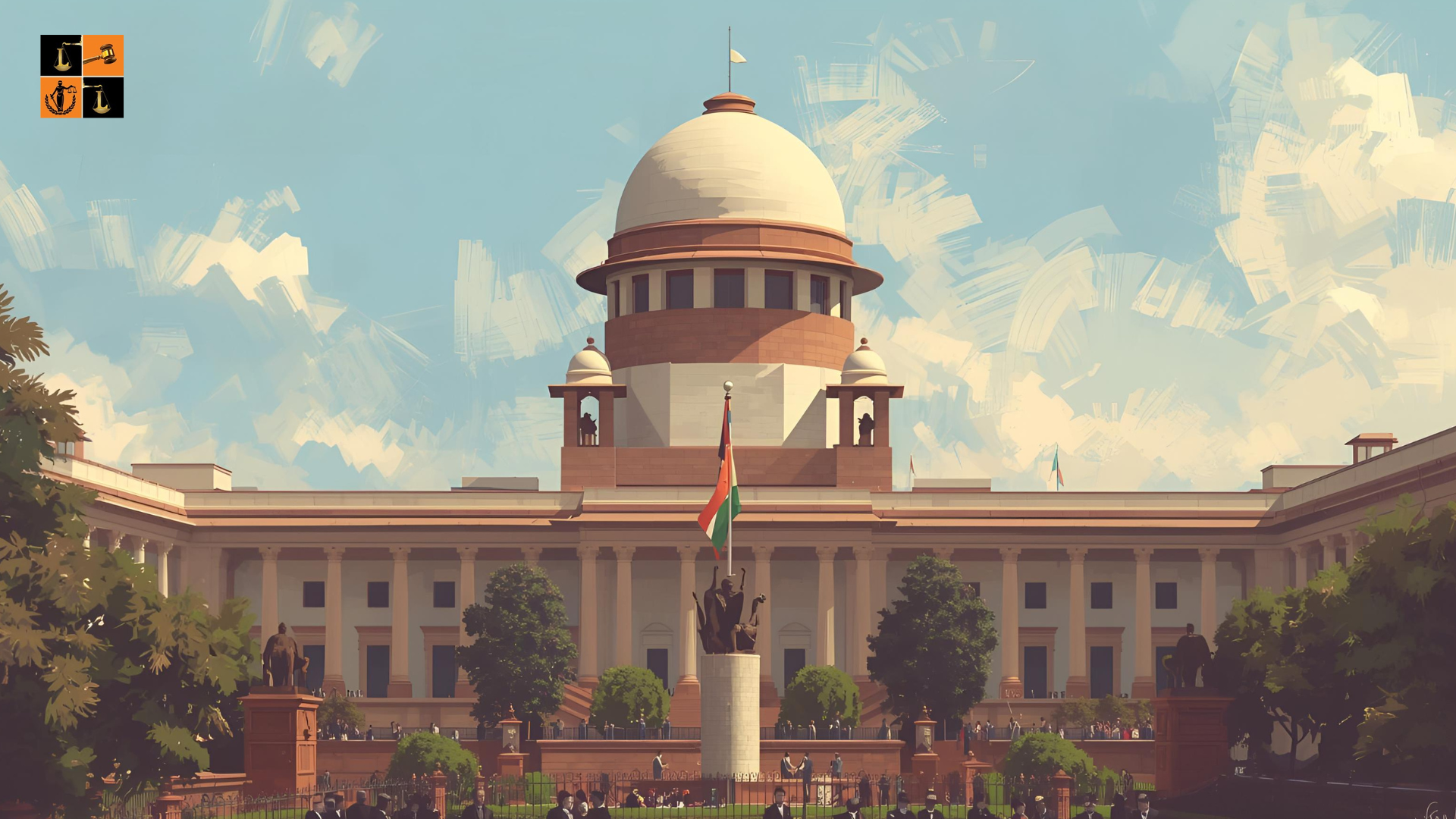
Recently, the Supreme Court cancelled the bail granted to a man accused in a Ghaziabad dowry death case, holding that the Allahabad High Court had failed to properly appreciate the seriousness of the allegations, the medical evidence, and the statutory presumption applicable in offences involving dowry death. The Court expressed concern over the manner in which bail had been granted in a case involving allegations of cruelty and dowry harassment and remarked that “a young girl does not get married to be killed mercilessly at her matrimonial home for want of dowry.”
Brief facts:
The case stemmed from the death of a married woman within seven years of marriage at her matrimonial home in Ghaziabad, allegedly following prolonged harassment and cruelty over dowry demands. According to the prosecution, the deceased was repeatedly pressured by her husband and in-laws for additional dowry, including cash and a luxury vehicle, despite substantial payments already made by her family. After her death under suspicious circumstances, an FIR was lodged alleging physical assault, mental cruelty, and threats to kill her for non-fulfilment of dowry demands. Following the investigation, a charge sheet was filed against the husband and his parents under Sections 85, 115(2), 352, 351(2), and 80 of the Bharatiya Nyaya Sanhita, 2023, along with Sections 3 and 4 of the Dowry Prohibition Act, 1961. While the Sessions Court declined bail, considering the gravity of the allegations, the Allahabad High Court later granted relief primarily on the ground of alleged delay in lodging the FIR and the post-mortem opinion referring to asphyxia due to ante-mortem hanging, which ultimately led to the present proceedings before the Supreme Court.
Contentions of the Appellant:
The Appellant argued that the High Court had granted bail in a mechanical manner without appreciating the gravity of the allegations or the statutory presumption under Section 118 of the Bharatiya Sakshya Adhiniyam, 2023 relating to dowry deaths. The Counsel contended that the deceased had died within seven years of marriage inside her matrimonial home after sustained cruelty linked to dowry demands. The Appellant further stressed that the FIR was lodged promptly on the very next day after the death and that the post-mortem report disclosed multiple ante-mortem injuries, including ligature marks and contusions, making the grant of bail legally unsustainable in a serious offence involving alleged dowry death by strangulation.
Contentions of the Respondent:
On the other hand, the Respondent supported the High Court’s order and relied upon the reasoning adopted in the impugned judgment. The defence highlighted the alleged delay in registration of the FIR and pointed to the post-mortem opinion referring to asphyxia due to hanging. The Counsel argued that the High Court had exercised its discretionary jurisdiction after considering the available material and that no interference with the bail order was warranted at the appellate stage.
Observation of the Court:
The Division Bench of Justice J. B. Pardiwala and Justice Vijay Bishnoi observed that “Over a period of time, we have noticed that in the State of Uttar Pradesh, young girls just married are being killed mercilessly at their matrimonial home for want of dowry. Either they are forced to commit suicide due to incessant harassment or are murdered for want of more dowry. A young girl gets married with many dreams, she would like to make them true. A newly married girl would always yearn to live a happy marital life. She would also yearn for love and affection from her husband and the family members of her husband. She would long to raise a family. A young girl does not get married to be killed mercilessly at her matrimonial home for want of dowry.”
The Bench observed that the High Court failed to properly appreciate the gravity of the allegations while granting bail in a dowry death case involving allegations of continuous cruelty, harassment, and dowry demands. The Court held that in such offences, courts are required to consider not only the prima facie case but also the statutory presumption under Section 118 of the Bharatiya Sakshya Adhiniyam, 2023, particularly where the woman dies within seven years of marriage at her matrimonial home. It noted that the FIR itself disclosed specific allegations of persistent dowry-related abuse and threats, which the High Court overlooked while exercising discretion in favour of the accused.
The Court further observed that the High Court’s reasoning regarding the delay in lodging the FIR was factually incorrect, noting that the FIR had been registered on the very next day of the incident. The Bench questioned how such prompt registration could be treated as a delay and remarked that even otherwise, the alleged delay alone could not justify bail in a serious offence like dowry death. It also found fault with the High Court for ignoring the post-mortem report, which recorded a ligature mark around the neck along with multiple ante-mortem injuries on the body of the deceased. According to the Court, these injuries prima facie indicated strangulation and warranted greater judicial caution at the stage of bail.
The Bench also expressed concern over the continuing rise in dowry deaths, particularly in States such as Uttar Pradesh, observing that newly married women are often subjected to relentless harassment and violence for dowry. The Court stressed that bail courts must remain careful while dealing with offences against women, as casual reasoning in such cases may create an impression that the justice system is treating these crimes lightly. It reiterated that a young woman enters marriage with hopes of dignity, affection, and a peaceful life, not to face cruelty or death over unlawful dowry demands.
The decision of the Court:
Allowing the appeal, the Apex Court set aside the High Court’s order granting bail to the accused-husband and directed him to surrender before the jail authorities within one week. The Court also instructed the trial court to complete the trial within one year while clarifying that its observations were confined to the issue of bail and would not influence the merits of the case.
Case Title: Mahesh Vs. State of Uttar Pradesh & Anr
Case No.: SLP (Crl.) No. 6716/2026
Coram: Hon'ble Mr. Justice J.B. Pardiwala, Hon'ble Justice Mr. Vijay Bishnoi
Advocate for the Petitioner: AOR Ashutosh Dubey, Adv. Anirban Tripathi, Adv. Rajshri Dubey, Adv. Vatsala, Adv. Abhishek Chauhan, Adv. Amit Shahi, Adv. Rishabh Bhardwaj, Adv. Rahul Sethi, Adv. Rekha Chaudhary, Adv. Dev, Adv. R Anbhule, Adv. Ashutosh Dubey,
Advocate for the Respondent: None
Read Judgment @Latestlaws.com
Picture Source :




















