









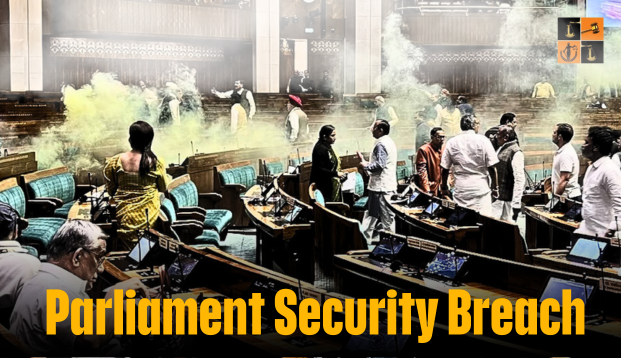
The Delhi High Court considered submissions made by the Delhi Police while opposing the bail application filed by Neelam Azad, one of the individuals accused in the serious security breach that occurred at the Parliament on 13th December 2023. The incident, which coincided with the anniversary of the 2001 Parliament terror attack, has drawn significant national attention due to its symbolic overtones and the gravity of the breach.
The incident in question involved two accused individuals, Sagar Sharma and Manoranjan D., who reportedly leaped into the Lok Sabha chamber from the visitors’ gallery during the Zero Hour session. They released a yellow-coloured gas from canisters while shouting slogans, before being subdued by Members of Parliament. Meanwhile, outside the building, co-accused Neelam Azad and Amol Shinde were allegedly seen releasing coloured gas and raising slogans, including "tanashahi nahi chalegi."
The Delhi Police, in its response, asserted that the accused deliberately chose the newly inaugurated Parliament building, described as a symbol of a revitalised and progressive India, as the venue for their planned act of disruption. According to the police, the idea of staging an incident within Parliament had been contemplated by the accused since as early as 2015, but the plan was only executed once the new Parliament complex became operational. It was further submitted that in a recorded statement, one of the prime accused allegedly remarked that the act would "revive haunting memories" associated with the 2001 attack on the old Parliament building. The police contended that the execution of the plan triggered widespread panic among those present in the chamber and momentarily stunned the nation.
As per the investigation findings placed before the Court, the act was not spontaneous but the result of prolonged and coordinated planning. The police highlighted that Manoranjan D., alleged to be the principal conspirator, and his associates had long been preparing for a disruptive strike aimed at Parliament. The use of encrypted communication platforms such as Signal, along with deliberate attempts to erase digital footprints prior to the incident, was cited as an indicator of the effort to maintain operational secrecy.
The Delhi Police also pointed to a pattern of invoking national icons such as Shaheed Bhagat Singh and Netaji Subhash Chandra Bose in the digital communications of the accused, allegedly to lend a veneer of patriotic justification to their actions. However, it was asserted that interrogation revealed a superficial or limited understanding of the ideals these figures stood for.
Additionally, the police maintained that the accused strategically dissociated themselves from any tangible or personal grievances related to the agendas they professed to support. It was argued that the invocation of varied and unrelated causes served only as a façade to attract attention and recruit sympathisers, thereby undermining the legitimacy of their purported dissent.
The Court took note of the serious nature of the allegations and the extent of planning involved, reserving its decision on the bail application while affirming the need to address national security concerns with utmost seriousness.
Picture Source :




















