









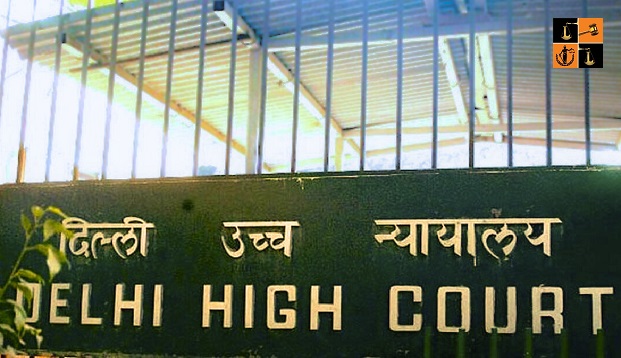
Recently, the Delhi High Court underscored the primacy of party autonomy in arbitration by holding that an arbitrator’s procedural order cannot override an exclusive jurisdiction clause agreed upon by the parties. The case arose from a contractual dispute between a private construction company and the New Okhla Industrial Development Authority regarding road construction work. Importantly, the Court reaffirmed that when parties agree on exclusive court jurisdiction in an arbitration clause, the arbitral tribunal cannot unilaterally shift the seat of arbitration.
Brief Facts:
The dispute emerged after the New Okhla Industrial Development Authority (NOIDA) floated a tender for a road construction project in Greater Noida. The petitioner, a private limited company, was awarded the tender and entered into a contract with NOIDA. The agreement provided for dispute resolution by a sole arbitrator and explicitly stated that courts in Gautam Budh Nagar would have exclusive jurisdiction. Notably, the contract did not specify the seat of arbitration.
Following the emergence of disputes, an arbitrator was appointed under Section 11 of the Arbitration and Conciliation Act, 1996. With the consent of both parties, the arbitrator issued a procedural order changing the venue of arbitration to Delhi. The petitioner approached the Delhi High Court seeking extension of the arbitrator’s mandate, but the respondent challenged the court’s territorial jurisdiction, citing the exclusive jurisdiction clause favoring Gautam Budh Nagar.
Contentions of the Petitioner:
The petitioner argued that since the arbitration agreement did not designate a seat, the exclusive jurisdiction clause (favoring Gautam Budh Nagar) would serve as the implied seat. They submitted that the procedural order issued by the arbitrator, changing the venue to Delhi, was passed with the consent of both parties and therefore Delhi had become the seat of arbitration.
The counsel relied heavily on BGS SGS Soma JV v. NHPC Ltd., to support the claim that the seat of arbitration determines exclusive jurisdiction of courts. Further, reference was made to Inox Renewables Ltd. v. Jayesh Electricals Ltd., where the Supreme Court had held that change in seat also changes the court’s jurisdiction. The petitioner thus contended that Delhi was now the legal seat and the Delhi High Court had jurisdiction.
Contentions of the Respondent:
The respondent contended that the contract expressly provided Gautam Budh Nagar courts with exclusive jurisdiction, and that this could not be modified unilaterally or through an arbitrator’s procedural order. According to them, there was no separate agreement in writing between the parties to change the jurisdiction.
It was further argued that an arbitrator's power is limited to procedural issues and does not extend to altering substantive rights such as jurisdiction. Citing the decision in BBR (India) Pvt. Ltd. v. S.P. Singla Constructions Pvt. Ltd., the respondent emphasized that mere conduct of hearings at a different venue does not amount to a change in the seat of arbitration.
Observations of the Court:
The High Court placed emphasis on Section 20 of the Arbitration and Conciliation Act, 1996, and reiterated that party autonomy is paramount. The Court clarified that parties are free to agree upon the place (seat) of arbitration and, if no agreement exists, only then does the arbitral tribunal have power to fix the seat.
It held that the exclusive jurisdiction clause in favor of Gautam Budh Nagar was indicative of the parties’ choice of seat and supervisory court. The Court observed, “The seat of arbitration has to be treated as akin to an exclusive jurisdiction clause.”
Citing Precitech Enclosures Systems Pvt. Ltd. v. Rudrapur Precision Industries & Anr., the Court reiterated that, “An exclusive jurisdiction clause would prevail even if there would have been any separate clause for fixing the seat of arbitration.”
Importantly, the Court clarified that an arbitrator’s procedural order, even if passed with party consent, cannot override a clearly worded exclusive jurisdiction clause in the agreement. It stressed that consent during proceedings cannot substitute a formal contractual modification.
The decision of the Court:
The High Court dismissed the petition on the ground that it lacked territorial jurisdiction, affirming that the exclusive jurisdiction clause in the contract, favoring Gautam Budh Nagar, prevailed over any procedural changes made by the arbitrator during the arbitral process.
Case Title : M/s Viva Infraventure Pvt. Ltd vs. New Okhla Industrial Development Authority
Case No. : O.M.P.(Misc.)(Comm.) 606/2024
Coram : Justice Jasmeet Singh
Advocate for petitioner : Suhail Dutt (Sr. Adv.), Vikas Tiwari, Kumar Deepraj, Arushi Rathore,
Advocate for respondent: Suvigya Awasthy, Vivek Joshi, Rohan Gulati
Picture Source :




















