









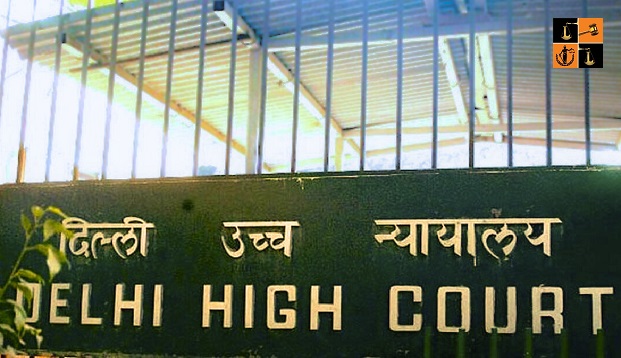
Recently, in a case testing the limits of trademark protection in the digital marketplace, the Delhi High Court engaged with the unauthorised use of well-known marks on edible goods sold through online platforms. The central issue before the Court was whether the defendants’ alleged imitation of Reliance Industries’ “RELIANCE” and “JIO” trademarks, particularly in relation to food products marketed under fictitious identities, amounted to actionable infringement, posing not just commercial harm but also risks to consumer safety. Read on to explore how the Court approached this complex intersection of intellectual property rights, e-commerce liability, and public interest.
Brief facts:
The case stemmed from a suit filed by Reliance Industries Limited, a company incorporated under the Companies Act, 1956, alleging trademark infringement by various entities engaged in the unauthorized use of its well-known marks “RELIANCE” and “JIO.” The plaintiff, headquartered in Mumbai, adopted the “RELIANCE” mark in the 1960s and “JIO” in 2011 for its telecom and related businesses, amassing a subscriber base exceeding 481.8 million. Both marks are protected under multiple valid trademark registrations and have been recognised as “well-known” by the Supreme Court in T.V. Venugopal v. Ushodaya Enterprises Ltd. & Anr. The alleged infringers, using fictitious identities, were marketing edible products such as poha under the plaintiff’s marks and deceptively similar packaging on various e-commerce platforms, including those operated by other named defendants (e.g., IndiaMART). Reliance contended that such use misled consumers and posed public safety concerns, prompting the present suit before the Delhi High Court seeking a permanent injunction, damages, and other reliefs.
Contentions of the Plaintiff:
The plaintiff contended that the defendants were engaged in soliciting orders, marketing, advertising, selling, and delivering goods using the "RELIANCE" and "JIO" formative trademarks without authorization, amounting to trademark and copyright infringement. It was submitted that such actions were likely to deceive and confuse consumers, particularly given that the goods in question were edible, thereby raising concerns over public health and safety. The plaintiff further pointed out that several defendants were operating under fictitious identities, making it challenging to initiate or enforce legal proceedings against them. In view of the potential irreparable harm and loss of goodwill, the plaintiff sought an ad-interim injunction to restrain the defendants from using the "RELIANCE" and "JIO" marks or any deceptively similar variants, including in packaging.
Contentions of the Defendants:
The defendants contended that they required additional time to file their written statements and replies to the plaintiff’s applications. However, as no written submissions had been placed on record at the time, no substantive arguments were noted in the order.
Observation of the Court:
The Court noted that the plaintiff, Reliance Industries Limited, is a flagship company with a global presence and a well-established reputation for its "RELIANCE" and "JIO" trademarks, recognized as "well-known" by the Supreme Court. The Court observed that "it is prima facie evident that the defendant nos. 1 to 21 are using the marks of the plaintiff, which, thus make it apparent that the defendant nos. 1 to 21’s are guilty of imitating/ coping the plaintiff’s trademarks in in whole, which the unaware customers will certainly not know of." It further found that the defendants had copied essential features such as the "flame device" and the font, color, and layout of the plaintiff’s original artistic works in a "near identical form."
The Court emphasized the public interest concern, stating that "since the present dispute involves edible product i.e., poha, which is commonly purchased by wide section of consumer, including those from rural and semi literate background," and sold through e-commerce platforms, "if any confusion between such products, if allowed to continue, could risk consumer safety."
Consequently, the Court held that "the plaintiff is prima facie entitled for protection as sought by it against the defendant nos. 1 to 21 since the balance of convenience lies in its favour and it will incur irreparable loss and injury if an ex parte ad interim injunction is not granted." The Court emphasized the need for a "more cautious and stringent approach" to prevent consumer confusion, particularly given the technological and commercial context of online sales.
The decision of the Court:
In the light of the foregoing discussion, the Court granted an ex parte ad-interim injunction restraining the alleged infringing parties from manufacturing, selling, marketing, or using the "RELIANCE" and "JIO" trademarks or any deceptively similar marks and packaging. Online platforms hosting the impugned listings were directed to delist the products and disclose the contact details of the sellers involved. The Court also allowed the plaintiff’s applications seeking exemption from pre-institution mediation and advance service, granted time to file deficient court fees, and permitted the submission of additional documents. Summons were issued, and the matter was directed to proceed before the appropriate forum for further hearing.
Case Title: Reliance Industries Limited Vs. Pawan Kumar Gupta & Ors.
Case No.: CS(COMM) 675/2025
Coram: Justice Saurabh Banerjee
Advocate for Plaintiff: Advs. Ankit Sahni, Kritika Sahni, Chirag Ahluwalia, and Mohit Maru
Advocate for Defendant: Advs. Naman Joshi, Priya Goyal, Aakash Deep Singh, Akshay Maloo, Rishabh Rao, Vivek Ayyagari, Mishthi Dubey, and Abhay Aren
Picture Source :




















