









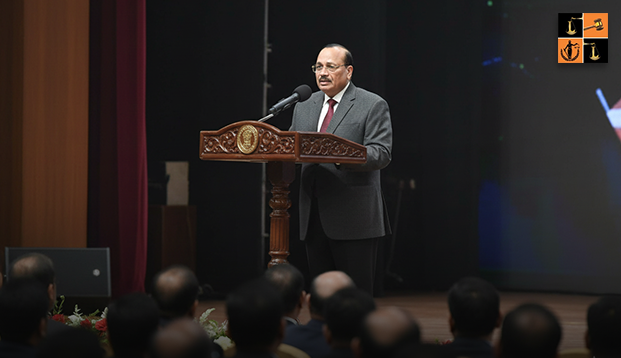
On Saturday, the CJI Surya Kant sparked a fresh conversation on the future of India’s correctional system while speaking in Gurgaon. He presented a forward-looking vision of prisons that function not as punitive enclosures but as spaces designed to rebuild lives. Without indicating where his ideas may ultimately steer policy, he framed the need for a modern, humane, and tech-enabled approach that prepares individuals for reintegration into a fast-evolving economy.
The discussion took place during the launch of new skill development and polytechnic programmes in Haryana jails. The CJI emphasised that training provided to inmates must match contemporary workforce demands, particularly in digital literacy, logistics, and present-day vocational trades. He also referred to international practices, such as a monitoring model used in the UK and introduced in India by a Bengaluru-based technology firm. Under this system, convicts live at home within a permissible radius, wearing a device that tracks their movements through software. The CJI additionally revisited his longstanding advocacy for prisoner rights, including his earlier decision recognising conjugal and reproductive rights as part of constitutional guarantees. The event was attended by several judges of the Supreme Court and the Punjab and Haryana High Court, along with senior officials from the state administration.
The CJI observed that modern correctional reform must blend empathy with technology. He explained that advanced monitoring tools can allow supervised inmates to remain with their families, maintain emotional support systems, and continue earning, thereby reducing the collateral damage faced by their children. He stressed that expanding open-prison models could create a more dignified and rehabilitative environment that eases the transition back into society.
He also emphasised the role of data-backed decision-making, noting that prisons should systematically track behavioural improvements and the progress of individuals after release. According to him, measuring rehabilitation in a structured way is crucial for lowering repeat-offence rates. Finally, he warned that without adequate guidance, education, psychological help, and structured reintegration plans, individuals leaving prison often face heightened marginalisation and risk falling back into conflict with the law.
The CJI concluded by calling for a coordinated shift toward technology-driven, humane, and industry-linked correctional practices. He urged governments to expand open-custody models, use digital monitoring where appropriate, involve private companies in skill training and recruitment, and adopt data-based assessments to evaluate the effectiveness of rehabilitation programmes. His proposals collectively aim to turn prisons into institutions that genuinely support reintegration and reduce recidivism.
Disclaimer: This news/ article includes information received via a syndicated news feed. The original rights remain with the respective publisher.
Picture Source :



















