









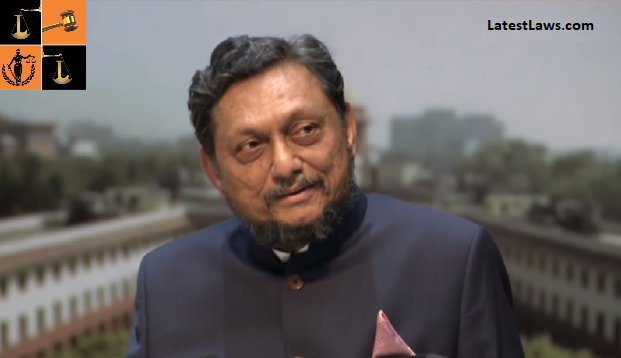
During the hearing held on Thursday in the revision petition filed by Amroha Murder Case convicts, Supreme Court bench, headed by the Chief Justice of India SA Bobde has reserved its order against capital punishment that has been awarded to them.
The bench also comprised of Justice S Abdul Nazeer and Justice Sanjiv Khanna.
The Death penalty has been hurled to them in 2015 after the Apex Court affirmed it.
The Allahabad High Court, in 2010, had also upheld the Sessions Court's decision to send them to the gallows for murdering seven members of a family.
The Courts find out that the lovers (petitioner) had wiped out the girl's family, including her father and her 10-month-old nephew, on April 15, 2008, for reason that they were strongly opposed to them getting married.
This plea was urged before the bench, on the grounds of mitigating circumstances in view of good behavior after having been convicted.
The issue to take note before the Court was that whether the prayer seeking commutation of death sentence to life imprisonment could be granted on this basis of showing reform, through good behavior post-conviction of a heinous crime.
Senior Advocate Meenakshi Arora submitted before the Court that Shabnam had started a literacy program inside the jail and had been teaching inmates. She further stated that various aspects of a crime and the convict must be examined before sentencing, and in this instance, the offender was a first-time convict who had demonstrated exceptional conduct in prison. A heinous crime isn't the same as the criminal, who must be allowed a shot at reform.
Taking note of the submission made, CJI Bobde agreed that the possibility of reformation was indeed an important aspect of sentencing, they must look at the impact it would have if they were considered to a convict's behavior in jail, after being found guilty, to commute death penalty.
With regard to the argument on the nature of crime and that of a criminal, the CJI opined that human beings are born with pure souls, they are innocent, and while no one is a criminal in the depths of their heart, "the courts punish the crime and not the person".
"We do justice for society, not according to how she behaves with other criminals in jail."
CJI remarked that her conduct had been 'exceptional' after having strangled a 10-month-old child. The bench then expressed that a sentence must be in proportion to the crime, and in this case, it was about balancing the killing of seven of her own family members with capital punishment.
The Bench then asked the same to Solicitor General, Tushar Mehta, who was representing the State of UP. who asserted that in that way, there would be no death penalty.
Legal Counsel of the convicts sought mercy on their behalf by citing that they were poor and illiterate.
To this, the bench clearly responded that there are many who are poor and uneducated, but that's no ground for allowing a review petition. While arguing a plea for reconsideration of sentence, you must show error in the sentence, reminded the bench and asked to show grounds for error.
It was during the hearing of this case that the bench, through the CJI, passed some serious comments regarding the execution of capital punishment. It stressed that the finality of a death sentence was extremely important and that judgments must be respected and executed in a timely fashion.
The statement perceived to be a hint at the recent filings in the 2012 Delhi Gangrape Case (Nirbhaya), the CJI also stated that convicts must not be allowed to believe that sentences are open to challenge at any time.
"Litigation cannot continue endlessly", he quoted.
SG Mehta also mentioned at this point that the Centre, through the Home Ministry, had filed an application before the Top Court to modify its 'convict-centric' guidelines framed in the Shatrughan Chouhan case in 2014. He stated that the application was for more 'victim-centric' guidelines to be framed for the timely execution of death row prisoners.
Picture Source :




















