









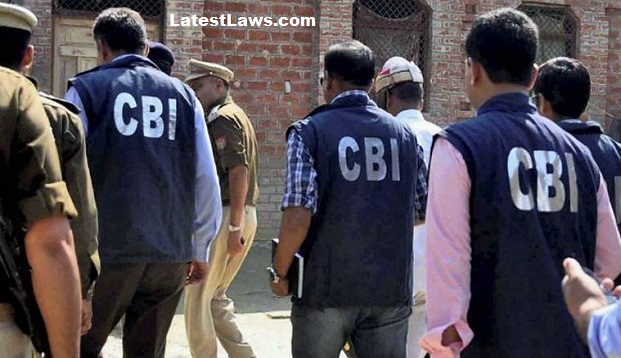
The Calcutta High Court on 03.02.2021 (Wednesday) comprising of a Single Bench of Justice Sabyasachi Bhattacharyya ruled that the authority of the CBI investigation into the allegations in a particular case within Railway areas remains unfettered by the withdrawal of consent by the State Government.[Anup Majee Vs. Union of India and others]
The Bench further observed that the extension of powers of the CBI in respect of Railway areas falls outside the purview of the State's authority to grant or withdraw consent
Facts of the case
The Central Bureau of Investigation (CBI) started an investigation in an FIR, wherein the Petitioner was named as an accused.
As per the FIR, the suspected offence was a criminal conspiracy, criminal breach of trust by public servants, and criminal misconduct by public servants by dishonestly or fraudulently misappropriating the property entrusted to them or any property under their control as public servants or allowing other persons to do so. The FIR specified the place of occurrence of the offence as leasehold area of ECL under Kunustoria, Kajora area, District West Burdwan, corresponding Railway Sidings, and other places.
The issue before the Court?
Whether the withdrawal of consent by the State of West Bengal denuded the CBI of any authority to conduct an investigation within the territory of West Bengal, including Railway areas?
The contention of the parties
Learned counsel for the petitioner submitted that the consent given by the State of West Bengal under Section 6 of the Delhi Special Police Establishment Act, 1946 (hereinafter referred to as “the 1946 Act”) on August 2, 1989, was withdrawn vide a subsequent Notification published in the Official Gazette.
It was submitted that the extension of powers and jurisdiction of the CBI to any area (including Railway areas) in a State, granted by the Central Government under Section 5, is subject to the consent of the concerned State Government under Section 6 of the 1946 Act. Thus, in view of the withdrawal of such consent by the State of West Bengal, the CBI had no authority to register FIR and conduct an investigation pursuant to the same within West Bengal.
Secondly, it was argued, even it is assumed for argument’s sake that Railway areas are exempt from the purview of the State’s consent under Section 6, the FIR disclosed the place of occurrence primarily to be the ECL area pertaining to coal mines and could not occasion any investigation in Railway areas.
Learned Advocate General, appearing for the State-respondent, submitted that the Railways Act, 1989 (hereinafter referred to as “the 1989 Act”) is a complete Code by itself and covers Railway offences. As such, it is argued that the CBI has no authority to investigate in Railway areas, in the absence of any consent by the State Government in that regard.
The allegations in the FIR relate to coal mining in mine areas, which are beyond Railway areas. As such, the conduct of the investigation by the CBI for such offence, in Railway areas, is dehors the law.
Learned Advocate General contends that, in view of the withdrawal of consent under Section 6 of the 1946 Act by the State of West Bengal, the CBI has no authority to continue the investigation in West Bengal,
unless a fresh extension is granted by the Central Government with the consent of the State Government of West Bengal.
Courts observation & Judgment
At the very outset, for the purpose of defining Railway area as contemplated in the 1946 Act (DSPEA), the Court borrowed the definition of "Railway" given in Section 2 (31) of The Railways Act, 1989 (as 1946 Act doesn't define "Railway area") and held,
"All conceivable areas covered by the Railways, including rails, sidings, yards or branches used for the purposes of or in connection with Railway, fall within the periphery of Railway area."
After that, the Court held that the extension of powers and jurisdiction of members of the Delhi Special Police Establishment to a State would automatically include Railway areas falling therein, in the absence of any specific exclusion of such areas in the order conferring such powers.
Further, the Court remarked,
"Since, under Section 6, the consent of the State Government operates only in respect of a State and not Railway areas, which are specifically excluded in the section, the grant or withdrawal of consent by the State Government is irrelevant in respect of Railway areas."
With regard to Section 6 of the DSPEA, the Court said,
"… For obvious reasons, Railway areas were excluded, since such areas spread over the whole of the country and are interconnected. Therefore, it would be absurd if each and every State asserts rights over the Railway areas to impose their own fiat regarding such areas, which would adversely affect the continuity of services and operation of the Railways."
The Court further observed that a composite reading of Sections 5 and 6 of the 1946 Act makes it evident that the grant or withdrawal of consent by the State Government, though valid for other territories in the State, does not have any repercussion on Railway areas.
Importantly, the Court did note that it might lead to certain practical difficulties for CBI to investigate in the Railway areas falling within the State of West Bengal while not being able to conduct such investigation in the other areas of the State.
However, the Court also clarified that the CBI shall have the authority to summon any witness or suspect for the purpose of interrogation, even if they reside outside the Railway areas in West Bengal, to the limited extent as such interrogation is necessary for investigation within the Railway areas.
Accordingly, the Plea was disposed of in the following manner
The Central Bureau of Investigation is authorized to continue its investigations in respect of the said FIR in whatsoever manner within the "Railway areas" situated in West Bengal.
Although the CBI is not authorized to conduct physical raids and/or active investigation into other areas of West Bengal than the Railway areas, it can summon and interrogate witnesses residing in West Bengal, even in places other than Railway areas, for the purpose of such investigation;
In the event the CBI deems it necessary for the purpose of such investigation within the Railway areas in West Bengal and in other States, pertaining to the FIR impugned herein, the CBI will be at liberty to approach the State authorities of West Bengal for the purpose of the latter's co-operation in the matter and necessary permission to hold joint raids and/or investigation.
However, such action, in areas beyond the Railway areas, shall be conducted by the CBI only subject to specific consent being granted by appropriate authorities of the State of West Bengal.
Read Judgment @Latestlaws.com
Share this Document :Picture Source :




















