









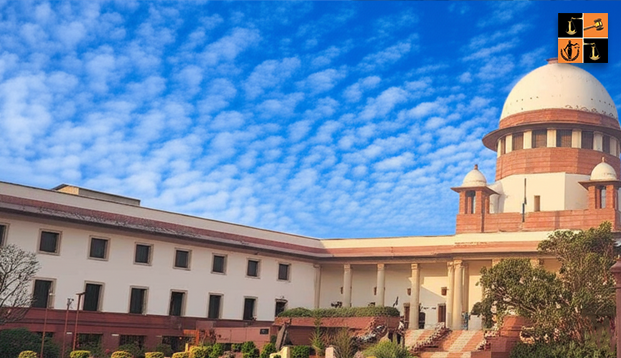
In a matter bearing far-reaching constitutional consequences, the Supreme Court will commence hearings on the Presidential reference concerning timelines for Governors and the President in dealing with state legislation, starting August 19. The reference, arising under Article 143 of the Constitution, stems from the Apex court’s April 8 ruling prescribing enforceable timelines for assent to state bills. The five-judge Constitution Bench, led by Chief Justice of India B. R. Gavai and comprising Justice Surya Kant, Justice Vikram Nath, Justice P.S. Narasimha, and Justice Atul S. Chandurkar, finalised a nine-day hearing schedule stretching into September, and has decided to hear preliminary objections to the maintainability of the reference as the first order of business.
The Presidential reference, made by President Droupadi Murmu, raises fourteen constitutional questions, triggered by the Court’s April 8 judgment in a petition filed by the Tamil Nadu government. In that judgment, the Court held that Governors must act “forthwith” or within one month on re-passed bills and take a decision within three months on whether to grant assent or reserve them for Presidential consideration. It further held that prolonged inaction could lead to “deemed assent”, invoking Article 142 to ensure constitutional efficacy.
The Tamil Nadu government had alleged unjustified delays by the Governor in granting assent to ten bills, leading the Court to describe such inaction as “illegal”. The ruling raised constitutional concerns regarding the scope of judicial review over high constitutional authorities and the division of powers between the executive and judiciary.
During the hearing on July 29, the Bench accepted requests by Senior Advocate K.K. Venugopal and Senior Advocate Abhishek Manu Singhvi, appearing for Kerala and Tamil Nadu, respectively, to first address the threshold issue of maintainability. They argued that the reference was an impermissible attempt to re-litigate settled law and amounted to an appeal disguised as a reference. Kerala has accused the Union of attempting to mislead the Court into overturning the April 8 judgment, while Tamil Nadu has already filed a formal application for dismissal of the reference. The Court has allotted one hour on August 19 to both States to present arguments on this issue.
Solicitor General Tushar Mehta, appearing for the Union government, requested the Court to hear maintainability along with the merits, citing past precedent. However, the Bench opted to prioritise preliminary objections.
The Constitution Bench has issued clear procedural directions. Written submissions are to be filed by August 12. The schedule allocates hearings for August 19, 20, 21, and 26 to the Union and supporting States, August 28 and September 2, 3, and 9 to States opposing the reference, and September 10 for the Union’s rejoinder.
Advocate Aman Mehta has been appointed as nodal counsel for parties supporting the reference, while Advocate Misha Rohatgi will coordinate for those opposing it. The Bench cautioned, “The time fixed shall be scrupulously followed and parties shall complete their arguments within the stipulated time.”
The Presidential reference places before the Supreme Court a series of intricate constitutional questions arising from the April 8 judgment. These include whether the concept of “deemed assent”, as recognised in the judgment, is constitutionally sustainable, and whether the judiciary can impose binding timelines on the President and Governors in the discharge of their duties under Articles 200 and 201. The reference also raises the issue of whether Article 142 permits the Court to issue directions that effectively override express constitutional provisions. Another question pertains to the composition of the Bench in the April 8 ruling, specifically, whether it should have been decided by a Constitution Bench in accordance with Article 145(3), which mandates a bench of at least five judges for matters involving substantial questions of constitutional law. Additionally, the reference queries whether constitutional immunity under Article 361 bars judicial scrutiny of the actions or inactions of high constitutional functionaries such as the Governor or the President. It also seeks clarity on whether such disputes fall exclusively within the purview of Article 131, governing intergovernmental disputes, or whether they can be entertained under the Court’s writ jurisdiction. Finally, the reference asks whether the Governor is bound to act on the aid and advice of the Council of Ministers while exercising powers under Article 200.
This marks one of the rare instances where Article 143 has been invoked post-independence, historically used in only 14 instances, seeking the Supreme Court’s advisory opinion on complex constitutional matters. While advisory opinions under Article 143 are not binding, they carry considerable weight in shaping constitutional jurisprudence.
The next phase of hearings will test the constitutional contours of executive discretion, judicial authority, and legislative primacy in a federal polity, as the Court prepares to engage with the maintainability and substance of the Presidential reference from August 19 onwards.
Picture Source :




















