









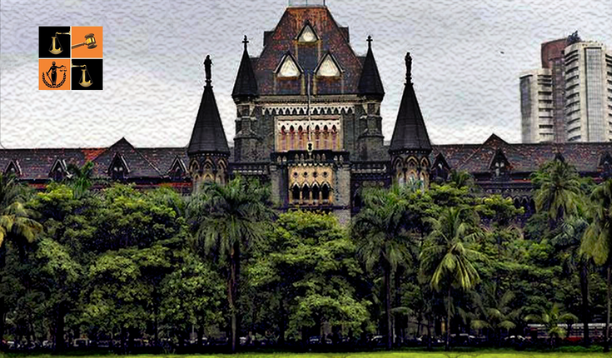
The Bombay High Court raised concerns today regarding the classification of statements made during election campaigns as "business of the government" and the implications of the 2023 amendment to IT Rules, 2021. The amendment grants the government the authority to identify and address "fake or misleading news" about itself. A division bench comprising Justice GS Patel and Justice Neela Gokhale presided over a series of petitions challenging the legality of Rule 3(i)(II)(C) of the Information Technology (Intermediary Guidelines and Digital Media Ethics Code) Amendment Rules, 2023.
During the hearing, Justice GS Patel inquired about the status of statements made during political rallies, particularly in cases where online journalists question the accuracy of such statements. He wondered whether such instances would be considered the "business of the government" and whether the government would demand the removal of such content. The judge expressed his confusion, stating, "How is this supposed to work?"
Justice Patel further raised concerns about the implications for online intermediaries, highlighting that if the government's fact-checking unit (FCU) takes no action against a statement, it would imply that the political entity was incorrect, as at least one online portal highlighted the error. However, categorizing such content as the "business of the government" would require its removal, potentially leading to the loss of safe harbour for intermediaries.
The petitions challenging the amendment were filed by stand-up comedian Kunal Kamra, the Editor's Guild, and the Association of Indian Magazines. Senior Advocate Navroz Seervai, representing Kamra, argued that the amended rule denies safe harbour to social media intermediaries, effectively forcing them to comply with the government's desired narrative. Seervai contended that the amendment violated freedom of speech under Article 19(1)(a) of the Constitution and discriminated between false news about the government and other false news, thereby infringing upon Article 14.
The court also addressed the government's affidavit, which failed to provide concrete examples of misinformation about the government causing significant harm. Seervai suggested that the government could simply clarify the truth instead of resorting to censorship. Additionally, concerns were raised regarding the government's ability to act as a judge in its cause and whether the amendment adhered to principles of natural justice.
Justice Patel echoed these concerns, stating that the government's attempt to limit technology demonstrated a lack of understanding regarding its reach and power. He emphasized that the internet has become indispensable for governments and businesses, making attempts to curtail it concerning. The court adjourned the hearing until July 7, 2023, for further deliberations.
The petitions filed by Kamra and others argue that the amended rules could lead to arbitrary blocking or removal of content, as well as the suspension or deactivation of social media accounts. They contend that the government's true motive is to evade scrutiny of its actions, asserting that the amendment does not fall within the reasonable restrictions outlined in Article 19 of the Constitution.
The Bombay High Court's deliberations on the constitutionality and potential chilling effects of the amendment to IT Rules are being closely watched as they have significant implications for freedom of speech and expression in the digital age.
Source: Link
Picture Source :




















