









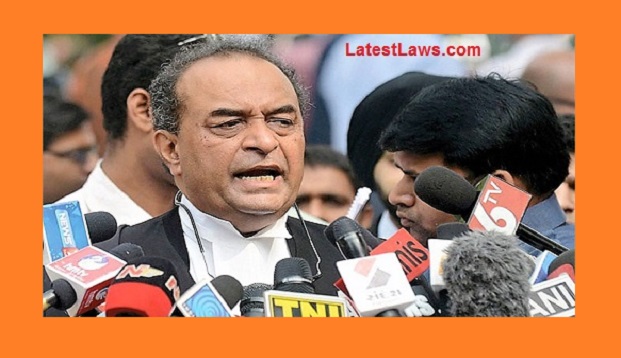
Senior Advocate Mukul Rohtagi stated that,"Supreme Court should graciously give up its right to appoint judges. In no country of the world judges appoint itself. Fresh blood and fresh inside, fresh views must be welcomed. We have to find out a way to get good judges. Appointment of the judges should be on merit. Seniority may play a part but merit is also important. According to him seniority can’t outweigh merit. He has shown little displeasure by saying that, in the last several years we have seen that only Chief Justices of High Courts are being appointed as judges of Supreme Court".
On 16.05.2020 ‘Second Online Lecture’ was organized by Akhil Bhartiya Adhivakta Parishad in continuation of Prof. Madhava Menon Memorial Lecture Series in which Mr. Mukul Rohatgi, Senior Advocate and Former Attorney General for India shared his views as Keynote speaker on the topic of ‘Journey of Supreme Court from 1950 till now’.
Before the Lecture Dr. Sudhir Krishnaswamy, Vice Chancellor, NLSIU, Bengaluru delivered the Welcome Speech and addressed the Audience. Dr. Krishnaswamy introduced the audience with the Contribution and dedication of Prof. Menon who is called the father of modern legal education in India. Dr. Krishnaswamy referring to Dr. Ambedkar said that you do the small things well, you do consistently, Dr. Menon also did that. ‘Tahira Karanjawala’ introduced Mr. Mukul Rohatgi and Mr. Krishnaswamy as host.
In Prof. Menon Lecture Series 1st Lecture was delivered by Mr. K.K. Venugopal, Sr. Advocate, Attorney General for India on the topic of "Contours of Judicial Review” on 08.05.2020. Prior to ‘Prof. Menon Lecture Series’, “Dattopant Thengadi Lecture Series” was organized by Akhil Bhartiya Adhivakta Parishad, wherein twelve lectures were delivered by Senior Advocates, ASG’s and prominent legal personalities.
Mr. Rohatgi while observing his views with the thousands of viewers recalled Prof. Menon and stated that he was visionary and soft spoken person.
Introduction of Topic by Mr. Rohatgi:
Mr. Rohatgi while introducing the topic stated that Supreme Court born in 1950. Prior to the Supreme Court the Federal Court was highest court of India was and it was established under pre independence law under government of India Act 1935. The Federal Court was abolished when Supreme Court came into existence. He said that the life of Federal Court was only few years, before the Supreme Court.
Supreme Court is overburdened:
Mr. Rohatgi stated that Supreme Court was started with Chief Justice and Seven Judges; and later on, the strength increased, and today the strength of Supreme Court is to 34 judges. Originally the Supreme Court was meant only to be a Constitutional Court and to decide the grave Constitutional issues, related to fundamental rights of the citizens which are guaranteed under constitution, conflict of state with state authorities. Mr. Rohatgi stated that today, unfortunately the Supreme Court has taken too much burden and has become the appellant court. It hears appeal against different High Courts, hear appeal against Tribunals, it has advisory jurisdiction, it has a jurisdiction which can be directly approached by any citizen for enforcement of fundamental rights of any citizen.
Procedure of Appointment of Judges:
Mr. Rohatgi also touched the issue related to the procedure of Appointment of Judges of Supreme Court he said that judges are elevated from different High courts, like a promotion from High Court to Supreme Court. He also stated that there is a procedure of direct elevation of a lawyer, jurist, academician, as judges of directly to Supreme Court but experience may be shown. He said that about 4 to 5 appointments are made directly from the Bar to the Bench and this appointment has added a lot of merit and talent. Judges of Supreme Court are retired at the age of 65 and judges of High Courts are retired at the age of 62 years. Mr. Rohtagi stated appointment from High Court to Supreme Court is based generally on the seniority, not purely on merit, he said that only 7-8 judges in last 20-30 years from the High Courts have gone to the Supreme Court who were not the Chief Justices.
All laws much follow the spirit of constitution
Some of the common laws were inherited from the British Laws on the basis of precedential values. If the lower benches had doubt then it could made a reference, though this was not very usual. This precedential system is not followed in France. Constitution is Supreme Law of the Land. All laws much follow the spirit of constitution. He quoted an example as equal must be treated equally. He said that all laws must be in synchronization with the Constitution. Constitution must frame by the body called Constituent Assembly which commences it’s work prior to Independence. Many debates were held, headed by Dr. Rajendra Prasad and Dr. Ambedkar was the architect of the Constitution. He said that while reading the constitution we must read the background of particular Articles as from where it came from. The debate of Constituent Assembly tells us as what went on in the mind of the Assembly Members, he stated.
Again touching the issue related to appointment of judges, Mr. Rohatgi stated, that judges of High Court and the Supreme Court under the constitution have to be appointed by the President of India, president means the government of the day because all the decision of the government are ceremoniously taken in the name of President, president doesn’t exercise his independent ‘Will’, but he is guided by the ‘Will’ of government expectance of certain special circumstances, but unfortunately by a judgment delivered recently in last five years (NJAC Judgment) the court has not gone on with this principle that, ‘Government will appoint judges and Government will consult with the Chief Justice’. While sharing his views on appointment of judges he said that, ‘Unfortunately, the consultation has been rendered to be concurrence to the Chief Justice, which was not meant to be and now the role vest only in the Chief Justice to appoint judges’. He further said that the Role of Supreme Court can also be described as a role of a sentinel to lookout or as a guard of constitution.
Journey of Supreme Court : Decade Wise
1950-1960: Mr. Rohatagi while taking the audience to the journey of Supreme Court, started with the 1950-60 as initial decades. He stated, that Pandit Nehru found that there are a large number of Jamidars who own vast number of villages, and hence, the normal persons were facing cruelty of Jamidars, accordingly, Jamidari was abolished. The same abolition was challenged by Jamidars. Because at that time there was fundamental rights to property, (this fundamental right of property was done away in the year 1979) therefore, fifty’s witnessed of a clash between fundament rights of Jamidaras (right to property) and the government taking about abolition of these Jamidari across India. He added, that immediately Pandit Nehru amended the constitution, since there were the power of amendment were given in the constitution itself. The extent of amendment, the width of amendment, all these things came little later, so first amendment came in 1951. This was the first inroad in the power of the Supreme Court in striking down a law for being in violation of fundamental right.
Mr. Rohatagi, brings to audience to the history of IXth schedule of Constitution, which was added to give immunity to that law from challenge, he said that the same was otherwise the right of Supreme Court to entertain a challenge based on infraction of fundamental rights. Mr. Rohatgi stated that this IXth schedule has been abused by the various governments.
1960-70- Mr. Rohatgi spoke about Judgment of Shankari Prasad, wherein parliament was of the opinion that constitution can be amended in any way (including fundamental right), if it is following the procedure, the fundamental right could be deleted and amended, and Supreme Court was in consonance with this. This issue again attracted the attention of Supreme Court in the next decade, so a bench of 11 judges was constituted, that case is called Golaknath’s Case. In that case Hon’ble Supreme Court said (taking an opposite view to above Shankari Prasad judgment), that fundamental rights can’t be amended, even thought there was procedure of power of amendment of fundament right.
It was 6:5 judgment. This happened in 1967, so we have two contrary views, one in 1950’s and one in 1960’s, Mr. Rohatgi said.
1970-1980- This was most stormiest and turbulent decade, because of emergency. Ms. Gandhi was the Prime Minister. This was the decade of nationalization, (i)all banks were nationalized, their assets were taken over. (ii)All the coal mines in the country were nationalized. He said that India is 5th largest producer of coal. (iiii)Privy Purses were deleted who joined the federation of India. All these were challenged because the right to property was a fundamental right.
The Bank Nationalization was annealed by the Supreme Court. The amalgamate of Privy Purses was also by Supreme Court. Then started a contest between parliament and judiciary. The above 6:5 judgment again came before Supreme Court, and went before larger bench, it went to a bench of 13 judges. Mr. Rohatgi added that this largest bench ever from that date till today in the history, and that case is called Kesavananda Bharati’s Case. Again all 13 judges were not unanimous, some were agreed on some point and some were not. He added that only 7 judges signed the operative part of judgment, so it was 7:6. In the majority view, it was stated that parliament doesn’t have power to take away the fundamental rights; the court said that there is core of the Constitution or a basic pillar of the constitution, pillars of a structure can’t be altered. Democracy, Federalism, Rule of Law can’t be done away with; we can’t done away with the ‘parliamentary system’. Court held that Parliament has no power to do this. Mrs. Gandhi was incensed with this verdict and this was the first time when three Seniors Judges were superseded by a Junior Judge (Justice Ray) and he was appointed Chief Justice. Those three judges resigned. Allahabad High Court Single Bench (Justice Jagmohal Lal Sinha) in June 1975, gave a courageous verdict. He annealed the election of Mrs. Gandhi on corrupt practice by using the powers under Representation of People’s Act. Immediately, Mrs. Gandhi who could not take that defeat declared emergency in India on June 26th 1975 and it was the darkest day for the democracy and for the Nation. It was declared and singed by the then president Mr. Fakrudeen Ahmed who soon died, may be due to that shock of signing the death of democracy. Thousands of people were arrested and put in Jail. All fundamental rights were taken away in that emergency period. The courageous stand of High Court saving fundamental rights was challenged before Supreme Court. Five Judges Bench was constituted and this bench with the majority of 4:1 reverse the courageous stand of High Court Judges. It played into the hands of government and said that, yes, fundamental rights will remain suspended.
Mr. Rohtagi stated that only one judge has courage to say no to it namely Justice Hansraj Khanna. Justice Khanna was the one who tilted the balance in Keshwanand Bharti’s case, resulted into 7:6. So, Justice Khanna, has shown courage not once but twice in these three years. He said that Justice Khanna who was in queue to be next chief justice was again superseded. Nobody followed that 4:1 judgment, as rights of citizens can be trampled upon. Janta government formed, who deleted fundamental right of property. Right to property is a constitutional right now, but not fundamental right which is on highest pedestals.
1980-1990- This decade is remembered for doctrine of Public Interest Litigations. A Letter Post Card could be considered as PIL. Mr. Rohatgi gave credit of this to Justice Bhagwati. Mr. Rohatgi also referred the episode related to seniority of J. Bhagwati and J. Chandrachud.
1990-2000- PIL went on further and further. Important case of Vishakha came in reference of sexual offences in work places.
2000-2010- Mr. Rohatgi referred I.R. Cohelo judgment delivered by Justice Sabharwal as a path breaking Judgment against the laws which were kept immune from challenges under IXth Schedule. In the said that judgment is like piercing into the steal body doors of an Almira against the Laws which were kept in IXth schedule. By virtue of that I.R. Cohelo judgment such laws can still (kept in IXth schedule) can still be challenged.
2010-2020-Many PIL’s are filed on Environment and on the issue of Right to live @ Right to live with dignity. He said that Supreme Court has lost its way in this decade. He said that in that decade Supreme Court has lost its zeal. According to him the orders to uphold the environment, orders to correct government order and government inactions, dealt with a serious blow to the economy of this Nation. In explanation to the above, he quoted the judgments of cancellation of all Coal Blocks/Mines allocations of this country, lakhs of jobs, equipment’s; infrastructure, foreign investments got hit. He said that according to me impact of the judgments could have been seen. He further referred 2G’s case. He also referred ‘Iron Mining Case’ in the State of Goa and Karnataka. He indicated the economy loss due to such decisions. He said that that’s why I submitted as Supreme Court lost its way. Mr. Rohatgi also referred Judgment of Nine Judges on Right of Privacy delivered in this decade.
While referring the decision in ‘Triple Talaq’, decision striking down ‘Section 377’, ‘Rights of Transgenders’, he said that in the recent years we have also seen some good path breaking judgments. Later on added NJAC case in above cases.
CORRECT PATH OR WAY FORWARD:
Merit / fresh blood can be criteria of appointment of judges:
In the background of journey of Supreme Court, Mr. Rohatgi while expressing his opinion to way forward, explained, that Supreme Court should graciously give up its right to appoint judges. In no country of the world judges appoint itself. Fresh blood and fresh inside, fresh views must be welcomed. We have to find out a way to get good judges. Appointment of the judges should be on merit. Seniority may play a part but merit is also important. According to him seniority can’t outweigh merit. He has shown little displeasure by saying that, in the last several years we have seen that only Chief Justices of High Courts are being appointed as judges of Supreme Court.
Pendency of cases:
He also referred the problem of pendency of cases. He said that we have to go with the time management. It must not be allowed that argument in a case is going on for days as in the current system. Lawyers must also understand, it’s not only to the blame to the court; lawyers are are also primarily guilty, as they goes on with the long argument and takes adjournment.
Challenges due to Covid 19
Mr. Rohatgi also expressed his opinion on challenges occurred due to Covid’- 19. He said that in the last two months I have myself argued several cases on video conferencing and that’s a new technology, hence, there are some issues with it, so it will take time to adapt this system. He said that, I am glad to see that Supreme Court is constantly working on it. He also held that People should be able to work from home. Justice delivery system can’t be stopped even for a day. He shared his happiness as more benches of Supreme Court is sitting from next week. He shown his happiness with the situation when one mike is muted in online system, once a lawyer speaks, he said that this will built a good bar and Senior won’t be allowed to take advantage of his stature.
Supreme Court should goes back on the path that restates the law
He said that Supreme Court should ultimately must goes back on the path that restates the law and its role, which is assigned to it in the constitution and should not merely become the court of appeal.
He said that every Monday Supreme Court decides around 60-70 cases, average of that comes to 1 minute, time to pick up and to place the file also takes 1 minute.
He said that this is what he perceives from this journey.
Picture Source :



















