









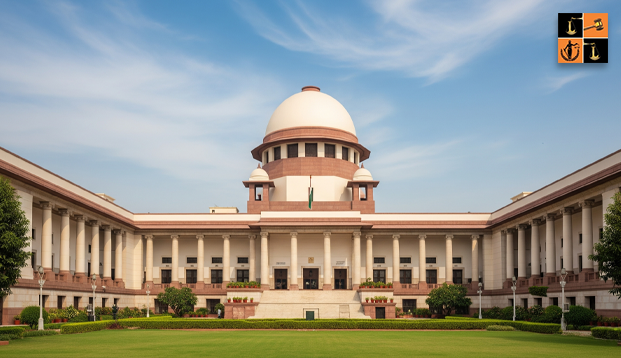
In a detailed examination of a circumstantial evidence-based murder trial involving allegations of debt-related animosity among policemen, the Supreme Court was called upon to decide whether a conviction could be sustained when motive remained unproven, eyewitnesses turned hostile, and key evidence, including confessions and weapon recovery, was under serious doubt. The decision probes the limits of Section 106 of the Indian Evidence Act, the admissibility of extra-judicial confessions, and the evidentiary value of recovery under Section 27 of the Indian Evidence Act.
Brief Facts:
The case arose from a loan taken by one policeman from the deceased, which led to repeated demands and quarrels over repayment. The deceased was reportedly called to a house under the pretext of repaying the debt and was allegedly attacked and killed with choppers during the night. The individuals present in the house were initially convicted on the basis of circumstantial evidence, including the alleged motive, confessions made to police, recovery of a weapon, and the discovery of the body at the accused’s residence. Eyewitnesses, including tenants, turned hostile during the trial. While the trial court acquitted the individual accused of instigating the crime, it convicted the others under Section 302 read with Section 34 of the IPC and sentenced them to life imprisonment, which was subsequently upheld by the High Court.
Contentions of the Parties:
The appellants argued that the acquittal of the alleged instigator should benefit them, citing precedents such as State of West Bengal v. Vindu Lachmandas Sakhrani and Suraj Pal v. State of Uttar Pradesh. They contended that the hostile eyewitnesses and lack of corroborative evidence failed to establish culpability.
The State, however, maintained that the recovery of a chopper, the confessions made to police, the body’s presence at the house, and the motive proved the accused’s guilt beyond a reasonable doubt.
Observation of the Court:
The Court examined the circumstantial evidence with careful precision. It emphasized that a conviction requires an unbroken chain of reliable circumstances conclusively pointing to the guilt of the accused while excluding all reasonable doubt. The Court rejected the parity argument with the acquitted individual, noting that the charges against the others were independent and the acquittal of one did not affect the liability of the rest.
On the issue of motive, the Court found it unproven. Witness testimony regarding the loan was inconsistent, with even close family members of the deceased contradicting the prosecution’s narrative. The Court observed while referring to the case Babu v. State of Kerala that “absence of motive is a factor that weighs in favour of the accused” in circumstantial cases.
The Court also scrutinized the relevance of the deceased’s body being found in the accused’s house. It noted that the evidence was unreliable due to conflicting witness accounts and hostile testimony, stating that even if the body were hypothetically accepted as present, “there is no general presumption against the owner/tenant of a property with regard to his/her guilt if a dead body with homicidal injuries is found in his/her property” while referring to the case Santosh v. State, NCT of Delhi.
Further, the Court held while referring to the case Shivaji Chintappa Patil v. State of Maharashtra that "Section 106 of Evidence Act 1872 does not directly operate against either the husband or the wife, staying under the same roof, even if he/she is the last person seen with the deceased. It does not absolve the prosecution of discharging its primary burden of proving a case beyond reasonable doubt."
Regarding the recovery of the weapon, the Court found the evidence unreliable due to simultaneous disclosures by multiple accused, hostile witnesses, and absence of forensic linkage, relying on precedents such as State (NCT of Delhi) v. Navjot Sandhu and Mohd. Inayatullah v. State of Maharashtra. Additional supporting witnesses were discredited due to contradictions and doubtful presence at the crime scene.
The decision of the Court:
In the light of the foregoing discussion, the Court concluded that the prosecution failed to establish motive, the occurrence of the crime as alleged, or the culpability of the accused beyond reasonable doubt. Consequently, the convictions were overturned, and the accused were acquitted.
Case Title: Nagamma @ Nagarathna & Ors. Vs. The State of Karnataka
Case No.: Criminal Appeal No.425 of 2014
Coram: Justice K. V. Viswanathan and Justice K. Vinod Chandran
Counsel of the Appellants: Adv. C.B. Gururaj, AOR Prakash Ranjan Nayak
Counsel of the Respondent: A.A.G. Nishanth Patil, AOR Sanchit Garga, Advs. Arijit Dey, Awanish Gupta
Picture Source :




















