









October 21, 2018
The Interviewer, Avika Jaini is a 2nd year student at the O.P. Jindal Global University pursuing B.A. LL.B. She is currently interning with LatestLaws.com.
Name of Legal Stalwart: Mrs. Sonu Bhatnagar Introduction:
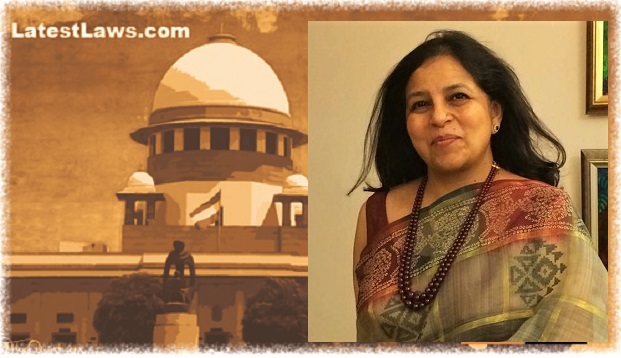
Mrs. Sonu Bhatnagar is a Senior Standing Counsel for the Ministry of Finance. Initially, she worked with Mr. Ravinder Narayan in JB Dadachanji & Co. for 17 years. She then proceeded to become a partner with ELC for 2 years. And is currently a Senior Standing Counsel in Delhi High Court.
Q1. Tell us something about your early childhood and schooling?
I was born and brought up in a joint family in Delhi. I did my schooling in Delhi and also pursued history honours in Hindu college and then LL.B. in Faculty of Law, DU.
Q2. Being a DU alumna, how do you feel that the fields of law and history are linked?
Not really, history and law are two very different areas of study and tend to be unassociated. Law can be pursued with a background in any other specialty too. However, I will say that the law relies on history very much in terms of seeking set precedents.
Q3. Are you a first-generation lawyer?
No, I am the fourth generation in this profession. My great-grandfather was senior sub-judge in 1912, my grandfather was a judge and my father was a lawyer.
Q4. When did you decide to pursue law as a profession and why?
Coming from a family of lawyers, I always knew I wanted to study law. I had seen my father working and instantly decided I wanted to follow his footsteps. And after that somehow no other profession interested me as much.
Q5. How was your experience in Law School?
Law school was a lot of hard work but great fun too. At the time, D.U. had very good professors like Upendra Bakshi and M.C. Sharma who enriched my learning experience even further. I parted D.U. with many cherishable memories. Perhaps it was my love for the subject that made me enjoy studying it even more.
Q6. How do you think that the Law School education has changed since then?
Law School education in India has definitely changed for the better. In our time, moot courts were relatively much less and I feel that now the universities are focusing more on practical knowledge and exposure for the kids. The mandatory internship requirements also allow the students to get a feel of the profession and helps them decide their area of expertise wisely.
Q7. How vast do you feel is the difference between studying law and practicing it?
So vast that sometimes I feel that the two are not even connected! Taking my example, I practice majorly indirect taxation apart from commercial litigation, arbitration in some matters. So, the majority of my work was not taught to me in the Faculty of Law; it was not even a course or subject. Thus, I learnt everything on the job.
What really matters in practice, I feel, is the first senior you work under. Your first job is very important because it is responsible for molding you as a professional. I was very lucky to have worked in a reputed firm like JB Dadachanji & Co. with such a great legacy and brilliant seniors to learn from.
Q8. What is the most interesting part of your area of practice?
In litigation, I think it is the uncertainty of the courts that keep the practice so interesting; you might just win an un-winnable case! Moreover, it is the fact that law is so alive, it is ever-changing and adapting with the times. Very few other professions offer such a dynamic field of study.
Q9. Would you like to share any experience of your first day/case in Court?
Even though, my first day at work was very uneventful, I do remember my first time in court very distinctively. The case was being argued by Nanabhoy Palkhivala who was my hero; just being in the same courtroom as him was exhilarating for me. Especially since I had heard so much of him and read all his books, being able to witness his arguments was a dream come true for me. What really stayed with me from that day was his humbleness. At the end of the case, he came to me, shook my hand and thanked me for my work even though I was the junior most in the team.
Q10. Please share two or three memorable cases you dealt in your professional journey?
I have worked many cases in front of a Constitutional bench like those of unjust enrichment case, luxury tax and entry tax. I recently worked on an entry tax matter before 9 judges. One of my most memorable cases will however, always be Murli S. Deora v. Union Of India And Ors. The case was on the issue of a ban on smoking in public places and debated under Article 21.
And apart from the court, I’ve done matters in the company with some of the greats like Harish Salve, Soli Sorabjee, Ashok Desai, Anil Dewan, K. K. Venugopal and Arun Jaitley. It is a brilliant learning experience working a case with them, seeing how they think; picking up on how sharp they are on their updates.
Q11. Please share three strengths of the Indian Legal System which make it strongest pillar of democracy?
Foremost, time and again, our judiciary has properly kept the executive in check which is a very important part of a vibrant democracy.
Additionally, the system of PIL’s in India makes it so easy for a common man to approach the courts for addressing any grievances. It is an irrefutable fact that our courts are so approachable.
Lastly, it is the fact that everybody in the Indian Legal System from the Supreme Court Judges to district court lawyers are so hard working. Our judiciary really is commendable.
Q12. What according to you are the areas where the legal system in our country needs to improve?
The one thing that needs to be improved is the pendency; the system takes too much time. However, that is an infrastructural problem as the ratio of our population to that of the courts is not proportionate.
Q13. What is your wisdom and success mantra for young legal professionals?
After observing new employees and interns under me, I feel like today kids are in a hurry. If they’ve worked for a year or two, they feel like they know everything. So what I would say is have patience and work hard. And always be ethical, once you’re wearing the robes, you are an officer of the court. There are no shortcuts to success.
Q14. Many students do not get internships today, because they lack ‘contacts’ in law firms, what would be your advice to them?
Nobody has reached success because they had ‘contacts’ in the right places. Everybody who is there has worked hard to be there. In the legal profession, nobody will come to you if you’re not good. So even if others get their first job through a contact, how far they go is dependent on their capabilities.
Picture Source :




















