









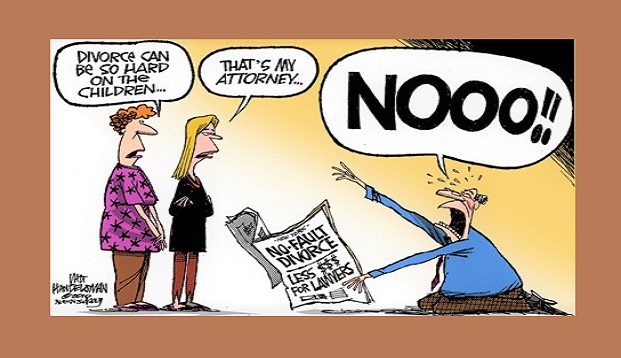
April 14, 2019:
Britain wants to end the Divorce related blame game between estranged Couples.
The government has announced plans to introduce "no-fault" divorces so separating couples no longer have to blame one another for the breakdown of a marriage.
A no fault divorce is not the same as an uncontested divorce. A no fault divorce refers to the grounds for the divorce, typically separation, incompatibility, or irretrievable breakdown of the marriage.
In any of these cases, neither spouse holds the other responsible. An uncontested divorce refers to the level of agreement between the spouses regarding the grounds for divorce.
While fault divorces can be uncontested (one spouse admits fault for the destruction of the marriage & &settlement ensues), it's more common for no fault divorces to be uncontested, since neither party blames the other & the desire for divorce is mutual.
Justice Secretary David Gauke said Tuesday that the government will introduce legislation after a public consultation revealed broad support for change.
The existing two-stage process, in which a decree nisi is followed by a decree absolute, will, however, be retained. A minimum of six months must pass between the time a petition is lodged to the divorce being made final, according to proposals.
Until now, couples have had to prove misconduct such as adultery by one partner or live apart for a fixed period before they could divorce.
The proposed changes would only require the couple to declare that their marriage had irretrievably broken down.
Jo Edwards, a family law specialist based at law firm Forsters, says lawyers will welcome steps to end ``the unnecessary acrimony caused day in, day out by the current fault-based system.''
Reducing animosity
The landmark reform comes after a woman lost a high-profile battle to divorce her husband of 40 years.
Last year, Tini Owens, 68, from Worcestershire, said she was stuck in a loveless marriage which had broken down. Hugh Owens, 80, contested his wife’s petition & disputed 27 incidents of his “unreasonable behaviour”.
The case went to the Supreme Court in July, but was rejected by five judges, who said a joyless marriage was not strong enough a reason to warrant a divorce if one party does not agree. The pair, who married in 1978, must remain together until 2020, the court ruled.
Source Link
Picture Source :




















