









July 30,2018:
Immigration and Border Security Officials across several countries are keeping an eye on your social media trail and looking up your online profiles.
This helps throw up the inconsistencies in the information submitted to the Immigration Authorities, connections to the extremist organisations- if any, and even posts that could be considered hate speech under the host country's laws.
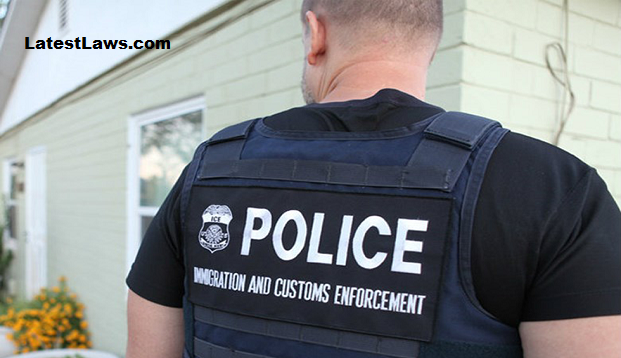
Oficials in some countries such as US have the Authority to search your electronic devices- be it your cell phone or laptop.
A white paper titled as "'Social Media and Immigration", issued by Berry Appleman & Leiden (BAL), a Global law firm, states that 30,200 searches of electronic devices were conducted by US border officials in fiscal 2017, a spike of 58% over the previous year.
This trend of increased searches continues. Up to March 31, which in US constitutes the first six months of fiscal 2018, nearly 15,000 searches were conducted.
BAL states that,"Although only a small percentage of travellers are likely to be so searched, those entering or exiting the US should be prepared in the event they are asked to unlock their cell phone or other device at the borders," states BAL in its white paper
A basic search of electronic devices can be conducted even without any suspicion of criminal conduct. An advanced search, which entails confiscating the device and sending it to a forensic lab, is carried out when officers have a reasonable suspicion of criminal violation or concerns of national security. Visa
BAL advises companies to have policies in place to better equip their employees to deal with such scenarios. "When people are prepared,they are more likely to respond to a late-night encounter after a long international flight with a border official in a calm and reasoned manner, making it less likely for a confrontation to escalate," says Stephanie Lewin, senior counsel in BAL's San Francisco office.
Under current US law, Warrantless border searches are only allowed for data stored on the device itself. Border officials are not authorized to search information stored on the cloud through a traveller's mobile device. Thus, travellers may take precautions such as limiting the number of devices they bring, or moving data on to the cloud and deleting sensitive information before they travel, states BAL.
In addition to physical searches of digital equipment, several countries such as Australia, New Zealand, Singapore, South Africa, UK and US are tracking social media footprints.
Canadian consular officers assessing applications for permanent residency can take cognisance of any information that is publicly available, and applicants have received rejection letters based on anomalies that were detected.
"Under the principle of 'procedural fairness', if the officer finds something unfavourable online- such as the applicant's social media account showing a number of photos with someone other than the 'spouse' listed in the application, the officer may call for an interview, giving the applicant a chance to explain," illustrates the white paper.
New Zealand's Immigration authorities publicly confirmed last September that their officials opened social media accounts using pseudonyms, to verify information relating to visa applicants. Hate speech and membership in banned organisations, knowledge of which can be gleaned by screening social media accounts, has led to visa denials in South Africa and UK. A US pastor was denied entry into South Africa owing to his extreme anti-gay rhetoric on social media.
Scrutiny of social media footprint is likely to get tighter and US may be the first mover in this regard.
Source TOI
Picture Source :




















