









March 27, 2019:
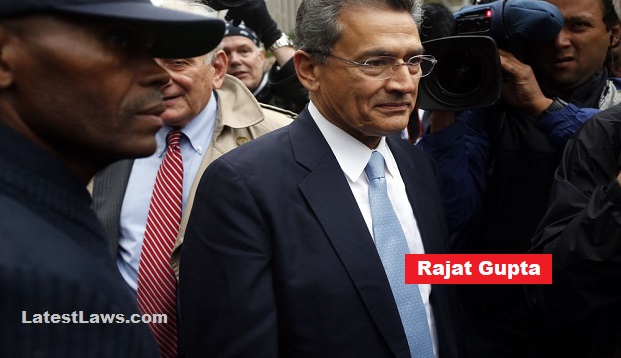
After years of reticence, Rajat Gupta has a lot to say on insider trading trial in which he didn't testify.
Some people do regret that he'd sooner said all of it.
The former managing director of consulting firm McKinsey & Company, who was convicted in a high-profile insider trading case in 2012, wishes he had testified in court during his trial. He shares this regret, and more, in his memoir Mind Without Fear.
Gupta's legal fate intertwined with that of Raj Rajaratnam, a hedge-fund billionaire currently serving an 11-year sentence for conspiracy and securities fraud. The former McKinsey chief was the most prominent of the 25 individuals - 21 of whom pleaded guilty - convicted of being part of Rajaratnam's network of informants.
However, 70-year-old Gupta, always maintained his innocence, and still does, well after his 2016 release following his two-year prison sentence.
Prosecutors pursued Gupta for a 2008 phone call that he, then a director of the investment bank Goldman Sachs, made to Rajaratnam in the seconds after a board meeting ended. The prosecution claimed Gupta had passed along key corporate secrets. Gupta said he had called the hedge-fund titan only to follow up on a soured business partnership.
Gupta's conviction sent ripples through the Indian community in the US, as some felt a pioneering figure of theirs had fallen from grace. His nine-year stint as managing director of McKinsey, which began in 1994, made him the first Indian to lead a major American company.
He has done extensive work in India as well, helping co-found major institutions, including the Indian School of Business, the Public Health Foundation of India, and the American Indian Foundation.
Quartz spoke with Gupta last month about his book and some of the topics raised in it, including his time in prison, the details of his case, and even what he thinks of Preet Bharara, the federal prosecutor who led the charge against him and who was recently fired by US president Donald Trump.
On asked about his decision to not to testify in Court he said, "Taken out of context, things seemed far more insidious than they actually were. The prosecutors had complete disregard for truth and kept repeating what they knew was untrue, just to influence the jury. For example, they kept saying that I owned 15% of Galleon International (Rajaratnam’s firm), but they never had any proof."
"Maybe I would’ve been able to correct that. And I’m the only person who could have really told the story because I knew the whole story, nobody else knew it. I always wanted to (take the stand) – I was even rehearsing. Until the very last weekend when we were supposed to decide, my lawyers kept saying no, no, you should not testify. By that time, I had sat through three weeks of the trial and it was very dispiriting. Momentarily, it was a lapse in judgement. I lost my will to fight."
He clearly denied the role of racism in his case and said, "The jury was 12 individuals who were (from) mainstream America, who were naturally a little suspicious of immigrants. They don’t know anything about business – they’re schoolteachers, beauticians, this and that. And here they see an immigrant who came from India, who is very successful and very wealthy. So their natural assumption was okay, he must’ve done something wrong. Some people in the jury must’ve thought that. But I’ve, in general, never encountered racism."
Source Link
Picture Source :




















