









Nine have net NPAs of over 5%, close to PCA risk threshold
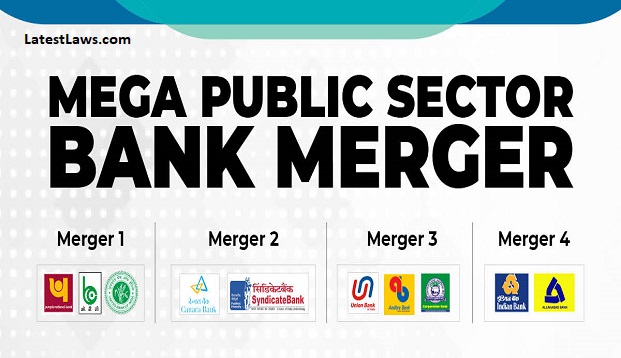
Out of the 10 banks that the government has decided to merge to create four, nine have net non-performing assets (NPAs) of over 5%. Only Indian Bank’s net NPA is below 5%, at 3.75%, as on March 31, 2019.
United Bank of India, for example, has a net NPA of 8.67% as on March 31 with provision coverage ratio (PCR) of only 51.17%. As a result, the merged entity will have a net NPA of 6.61% & PCR of 59.59%.
United Bank of India is also under the prompt corrective action framework (PCA) of the RBI due to high NPA.
Punjab National Bank (PNB), which suffered a loss of about ₹14,000 crore last year in the Nirav Modi scam, has a net NPA of 6.55%, while Oriental Bank of Commerce, which came out of the PCA framework earlier this year, has a net NPA of 5.93%. These three banks will create the second largest public sector bank after State Bank of India with around ₹18 lakh crore of business.
Net NPA of 6% is one of the risk threshold of PCA, the breach of which could invite restrictions by RBI.
Banking on Mergers (Source: Union Finance Ministry)
| Post-merger metrics | Punjab National Bank | Canara Bank | Union Bank of India | Indian Bank |
| Oriental Bank of Commerce | Syndicate Bank | Andhra Bank | Allahabad Bank | |
| United Bank of India | Corporation Bank | |||
| Rank | 2 | 4 | 5 | 7 |
| Number of branches* | 11,437 | 10,342 | 9,609 | 6,104 |
| Business (₹crore) | 17,94,526 | 15,20,295 | 14,59,434 | 8,07,859 |
| Net NPA ratio (%) | 6.61 | 5.62 | 6.3 | 4.39 |
| Number of employees | 1,00,649 | 89,885 | 75,384 | 42,814 |
Both banks in the second merger — Canara Bank & Syndicate Bank — have low a provision coverage ratio of 41.5% & 48.8% respectively. The merged entity’s PCR will be 44.32%, much lower than the regulatory comfort of 70%. The net NPAs are also high at 5.37% for Canara & 6.16% for Syndicate.
Net NPAs of all the three banks in the third merger — Union Bank, Andhra Bank & Corporation Bank — are around 6%, with Union Bank having the highest at 6.85%. Andhra Bank’s net NPA is 5.73%, while that of Corporation Bank is 5.7%. The combined NPA will be 6.3%.
Harmony in asset quality
“The amalgamation will require harmonisation of asset quality & provisioning levels among the merging banks & may spike the credit provisions this year as was seen in the recent merger of Bank of Baroda,” said Anil Gupta, vice-president & sector head — Financial Sector Ratings, ICRA. He added that given the sizeable capital infusion being announced for amalgamating banks, the merger was unlikely to be credit negative for merging banks.
Asset quality of the fourth set — Indian Bank with Allahabad Bank — looks much better, mainly because of the lower NPA of the former. The combined net NPA is 4.39%. Indian Bank’s provision coverage ratio is, however lower, at 49.13%.
Due to high bad loans of the merged entities, profitability could be impacted in the near term.
“Merger related issues including HR/IT related synchronisation, branch rationalisation ad realigning NPAs could impact interim profitability,” said Mona Khetan, banking analyst with Reliance Securities.
Geographical synergies
The fourth set also has geographical synergies. Allahabad Bank, headquartered in Kolkata, is stronger in east & north India, while Indian Bank has strong presence in the south.
This geographical synergy is somewhat missing in the other three sets. In the first set, both PNB & OBC are north-based, with strong presence. Similarly, both Canara Bank & Syndicate Bank have strong presence in the south. In the third set, Andhra Bank & Corporation Bank have strong presence in the south, while Union Bank is headquartered in Mumbai, with a national presence.
However, in all the four sets of merger, there is technological synergy as all the banks in a particular bucket have similar core banking solution platforms.
Source Link
Picture Source :



















