









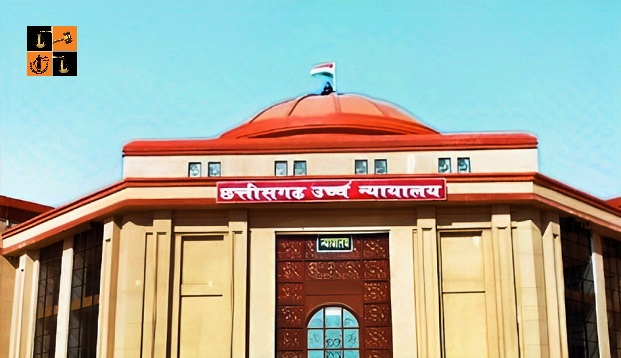
Recently, the Chhattisgarh High Court was called upon to examine whether the trial court had correctly framed charges in a case involving allegations of rape on the pretext of marriage, caste-based abuse, and offences under the POCSO Act. The case revolved around claims by the complainant that the appellant had repeatedly subjected her to sexual exploitation over several years, beginning when she was a minor, and continued the relationship even after marrying someone else. The Court was tasked with determining whether the trial court had erred in excluding the POCSO Act provisions despite evidence suggesting the complainant was below 18 years of age during part of the alleged period of abuse.
Brief Facts:
The complainant lodged an FIR alleging that on the promise of marriage, the appellant allegedly took her to his house and forcibly established physical relations. Thereafter, similar incidents occurred at multiple locations. She alleged that despite marrying another woman in 2019, the appellant continued a sexual relationship with her. Based on the complaint, offences under Sections 376(2)(n), 506 IPC, Sections 3(1)(r) and 3(2)(v) of the SC/ST Act, and initially Sections 4 and 6 of the POCSO Act were registered. The appellant’s discharge application under Section 227 CrPC was dismissed, and the trial court framed charges excluding the POCSO provisions.
Contentions of the Appellant:
The appellant argued that the victim was a consenting adult aware of the nature of the relationship, and there was no element of deception or coercion to attract the offence of rape. It was submitted that the POCSO Act could not be invoked retrospectively as the first alleged incident occurred before its enactment in 2012. It was further contended that the appellant was a juvenile at the time of the incident and the matter ought to be tried by the Juvenile Justice Board.
Contentions of the Respondent:
The complainant contended that the sexual exploitation and abuse continued from 2012 until 2022, including after the POCSO Act came into force. Since she was below 18 years of age during part of this period, the POCSO provisions were applicable. It was further argued that the caste-based abuse and threats made during the course of the relationship attracted provisions of the SC/ST Act. As the appellant had attained majority by 2022, the plea of juvenility was not sustainable.
Observations of the Court:
The Court, after hearing learned counsel for both parties and perusing the impugned judgment, noted two key issues for determination: (i) whether the trial Court was justified in framing charges under Sections 376(2)(n), 506 IPC and Sections 3(1)(r), 3(2)(v) of the SC/ST Act, and (ii) whether it was correct in not framing charges under the POCSO Act in light of the case facts.
The Court observed that the victim had alleged a longstanding relationship with the appellant beginning in 2009, during which she was allegedly induced into a physical relationship on the promise of marriage. It was noted that physical relations allegedly occurred at various locations including Pusour, Delhi, Jaipur, and Puri, and that the appellant allegedly gave the victim medicine to terminate her pregnancy. These allegations, the Court remarked, are supported by witness statements recorded under Section 164 CrPC. Referring to the applicability of the POCSO Act, the Court noted that the defence's contention, that the alleged acts occurred in 2012 before the Act came into force, was misconceived. It emphasized that "criminal law cannot be applied retrospectively", but held that the determination of whether the POCSO Act applies requires appreciation of evidence, and thus cannot be concluded at the stage of framing of charge.
The Court criticized the trial court for not framing charges under the POCSO Act despite being directed to reframe charges in an earlier order. It held that, "The trial Court without considering the order of this Court has committed illegality in not framing the charges under POCSO Act." The Court reiterated the settled legal position that the FIR is not an encyclopedia of all imputations and observed, quoting the Supreme Court in Somjeet Mallick v. State of Jharkhand, that “to test whether an FIR discloses commission of a cognizable offence, what is to be looked at is not any omission in the accusations but the gravamen of the accusations.” The Court emphasized that materials collected during investigation are relevant at the stage of framing charge and the trial court must draw an opinion as to what offence the accused should be tried for.
The Court also rejected the reliance placed by the appellant on the case Andrew Rani v. State of Meghalaya, holding it factually distinguishable as it dealt with a post-conviction scenario, whereas in the present case, evidence was yet to be appreciated. Further, while addressing the argument that the physical relationship was consensual, the Court observed that "whether relationship, abortion or vermilion applied on the forehead of the victim on the pretext of marriage cannot be ascertained without recording of the evidence" and dismissed the argument of consensuality as premature and falling within the realm of trial evidence.
On the scope of judicial intervention under Section 482 CrPC, the Court cited State by SP, CBI v. Uttamchand Bohra, emphasizing that at the stage of framing of charge, courts are not expected to conduct a “mini-trial.” The Court reaffirmed the principle that “the court must apply its judicial mind on the material placed on record and must be satisfied that the commission of offence by the accused was possible,” without delving into the probative value of the material. Additionally, the Court addressed a belated plea raised by the appellant regarding juvenility, observing that such a claim was not raised before the trial court and shall be considered there, if taken in accordance with the Juvenile Justice (Care and Protection of Children) Act.
Lastly, the Court held that the allegation of the victim being assaulted, resulting in injuries confirmed by medical reports, along with witness testimonies, provided sufficient basis for framing charges under Section 307 IPC. The submission that the charges were unwarranted was found to be devoid of merit.
The decision of the Court:
The Court found no error in the trial court’s decision to frame charges under Sections 376(2)(n), 506 IPC and Sections 3(1)(r), 3(2)(v) of the SC/ST Act, and thus upheld it. However, it noted that the trial court had overlooked relevant materials pointing to the applicability of the POCSO Act. Therefore, the Court allowed the revision petition filed by the victim and directed the trial court to also frame appropriate charges under the POCSO Act after reconsidering the matter in light of the available evidence.
The Court clarified that the observations made in this order were only for the purpose of deciding the framing of charges and would not influence the merits of the trial.
Case Title: Manoj Kumar Agrawal vs. State of Chhattisgarh & Anr.
Coram: Hon’ble Justice Narendra Kumar Vyas
Case Nos.: Criminal Appeal No. 1589/2024; Criminal Revision No. 706/2024
Advocate for the Appellant: Mrs. Fouzia Mirza, Sr. Advocate with Mr. Sooraj Jaiswal
Advocate for the Respondent No.2: Mr. T.K. Jha with Mr. Tapan Kumar Chandra
Advocate for the State: Mr. Kishan Lal Sahu, Dy. Government Advocate
Read Judgment @LatestLaws.com
Picture Source :




















