









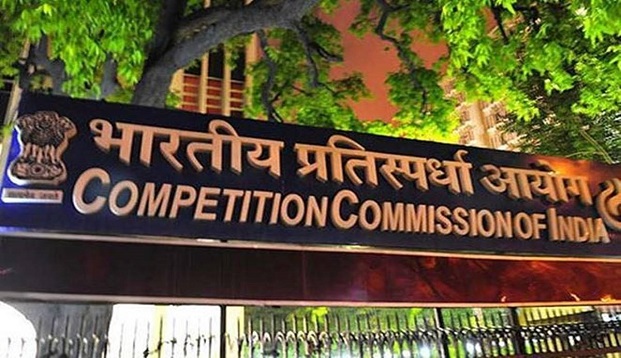
What happens when a market leader walks the fine line between competitive pricing and potential abuse of dominance? In a high-stakes antitrust battle involving pharmaceutical packaging materials, the Supreme Court was called upon to evaluate a rebate scheme that sparked allegations of exclusionary conduct and discriminatory treatment. With serious implications for competition law enforcement and commercial strategy alike, this case drew a sharp focus on the intersection of dominance, discounts, and downstream impact.
Facts of the case:
An allegation was made that Schott India, a dominant player in the neutral borosilicate glass tubing market used for pharmaceutical packaging, violated Section 4 of the Competition Act, 2002 through exclusionary pricing, discriminatory rebates, and restrictive agreements, primarily benefiting its joint venture, Schott Kaisha. The CCI found this to be an abuse of dominance. Central to the case was a “functional rebate” scheme offering an 8% rebate to converters meeting certain conditions: fulfilling annual purchase targets, avoiding Chinese tubing, and adhering to “fair-pricing” and traceability norms. From April 2010, these terms were formalized via a Trademark Licence Agreement (TMLA) paired with a Marketing-Support Agreement, allowing use of the “SCHOTT” mark in exchange for compliance and a Rs. 70 lakh bank guarantee. As only one converter opted into the TMLA, while others remained on a standard rebate ladder, the COMPAT overturned the CCI's decision, holding the rebate structure to be commercially justified and non-discriminatory. The CCI then appealed to the Supreme Court.
Submissions of the Appellant:
The counsel for Appellant submitted that during the investigation period, Schott India supplied more than sixty per cent of neutral USP-I borosilicate tubing, controlled the only large-scale domestic melt tanks, and possessed clear technological and capacity advantages. On any accepted test, it occupied a dominant position in the upstream market. The counsel further submitted that the annual-slab rebate scheme penalised converters who failed to meet their forecast: a single below-target month dragged the entire year’s purchases into a lower tier, clawing back earlier discounts. Converters therefore dared not split orders with alternative suppliers, while Schott Kaisha, by reason of volume, always secured the maximum twelve-per-cent rebate. Such discrimination is in violation of clause (a) of Section 4(2) of the 2002 Act.
Submissions of the Respondent:
The counsel for the Respondents argued that the discount ladder rewarded only the quantity actually lifted in a financial year; every converter, large or small, moved up the scale on identical tonnage slabs. Differential outcomes reflected differential volumes, not the identity of the purchaser. The counsel, therefore, submitted that Section 4 of the 2002 Act targets only conduct that harms the competitive process, not vigorous rivalry that benefits downstream customers.
Observations of the Court:
The Supreme Court referred to the decision in case of British Airways plc vs Commission (Court of Justice of the European Union in Case C-95/04 P, dated 15 March 2007), where it was observed that “dominant firm must not “favour or disfavour” trading partners. However, applying different prices only becomes abusive when it lacks an objective commercial justification or when equivalent customers cannot obtain the same terms”.
The true purpose of antitrust laws is to preserve the process of competition, i.e., to ensure that rivals may challenge the incumbent on the merits, that consumers enjoy the fruits of efficiency, and that technological progress is not stifled by artificial barriers, added the Court.
Thus, the Bench clarified that if mere size or success were treated as an offence, and every dominant firm exposed to sanction without tangible proof of competitive harm, the law would defeat itself: it would freeze capital formation, penalise productivity, and ultimately impoverish the very public it is meant to protect.
The Bench noted that for the relevant period, “Schott India circulated a single rebate ladder applicable to all converters, and four slabs of 2%, 5%, 8% and 12% were triggered exclusively by the aggregate tonnage of Neutral Glass Clear and Neutral Glass Amber collected within the financial year. Every customer who reached a slab, whether by one purchase order or by several, obtained the corresponding allowance on the entire year’s turnover. The rebate therefore rose mechanically with volume and with nothing else, and all converters were informed of the thresholds in advance, and none has suggested that any hidden concessions existed outside the ladder”.
The Court noted that a volume-contingent rebate transmits a share of those scale economies downstream, to the ultimate benefit of pharmaceutical customers, such an objectively grounded incentive cannot be condemned as “unfair”, that too when there is no evidence that the slab mechanism foreclosed alternative suppliers or throttled output in order to attract Section 4(2)(b)(i) of the Act.
The decision of the Court:
Since each condition is objectively connected with the legitimate aim, patient safety and brand integrity, and is proportionate to it, the Supreme Court dismissed the appeal and concluded that the functional rebate and its successor agreements therefore do not offend either Section 4(2) (a) or Section 4(2)(b)(i) of the 2002 Act.
Case Title: Competition Commission of India vs Schott Glass India Pvt Ltd
Case Number: Civil Appeal No. 5843 of 2014
Citation: 2025 Latest Caselaw 550 SC
Coram: Hon’ble Justice Vikram Nath and Hon’ble Justice Prasanna B Varale
Counsel for Appellant: Senior Advocates Haksar, Amit Sibal, AORs Mrigank Prabhakar, Arjun Krishna, and Advs Saurabh S Sinha, Chitra Y Parande, Gautam Prabhakar, Anand S Pathak, Shashank Gautam, Sreemoyee Deb, Anubhuti Mishra, Soham Goswami, Nandini Sharma, Anisha Bothra, Aashana Manocha, Abhijeet Singh, Saksham Dhingra and Rishabh Sharma
Counsel for Respondent: Senior Advocate Percival Billimoria, AOR E. C. Agrawala, and Advocates Rahul Goel, Anu Monga, Rishi Agrawala, Ankur Saigal, Victor Das, Himanshu Saraswat, Yash Jain, Aditi Sharma, Kriti Khatri, Rachita Sood and Tushar Bathija
Read Judgment @ Latestlaws.com, click here
Picture Source :



















