









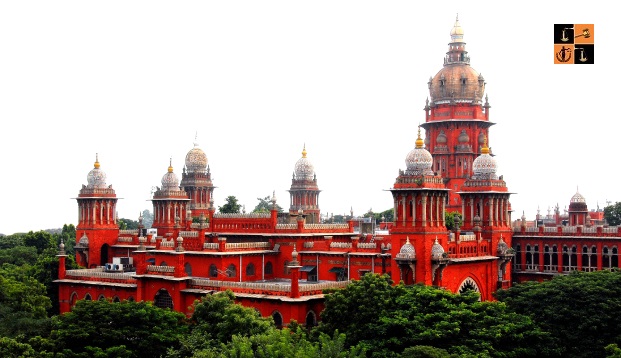
The Madras High Court recently affirmed the conviction of a man for the sexual assault of a girl aged about 7-9 years old specifically on the basis of victim’s testimony.
While upholding the conviction under the Protection of Children from Sexual Offences Act, 2012 Justice p Velmurugan also observed that in cases of this nature, no eyewitnesses can be expected. The evidence of the sole witness can be taken into consideration unless there is no strong reason to not consider the same.
Factual Background
The present case was one such case where the Court found that the victim child had certainly identified the convict/appellant as having sexually assaulted her. The judge overruled certain discrepancies alleged in other evidence by giving primacy to the victim’s statement, once it was found that the statement was vivid.
“The girl is aged about 7 years. She knows what good thing is and what bad thing is and also she knows who has committed offence. She named the appellant and indentified the appellant. Therefore, in cases of this nature, no eye witness can be expected. No corroborative evidence is
also expected”, the Court said.
The case concerned an incident that took place in 2016, when the victim was about 7-9 years old. As per the prosecution, the child was playing with her brother near a temple when they set fire to some coir. The appellant is stated to have seen what was happening and offered the victim to set out the fire.
However, as alleged he took the victim behind an idol and thereafter sexually assaulted her. As per the prosecution the appellant made the child lie on the floor, lifted her clothes, laid on her, embraced her and asked her to embrace him. The accused then told her to not reveal the incident to anyone. The child further stated that her clothes got “wet” before the appellant let her go.
A Special Court convicted the appellant of offences under Sections 366, 506 of the Indian Penal Code, along with POSCO Act charges. The verdict was challenged before the High Court by the appellant. The High Court ultimately, dismissed the appeal.
Case of the Appellant
The appellant pointed out that a medical examination found that there were no injuries in the child victim.
Observation of the Court
The High Court, however, observed that the victim has not stated that the appellant had forcibly penetrated her or that she had pain or sustained on any part of her body. “Therefore, mere injury not sustained by either the appellant or the victim may not be the ground to disbelieve the case of the prosecution and the evidence of the victim. Therefore, the opinion of the doctors also not conclusive proof and will not be helpful to take a different view”.
Further the issue was with respect to mismatch in the blood of the victim and the appellant. To this the Court opined that “At the time of analysis, there is possibility of mismatch or misplacement by mistake occurring” owing to which the semen sample found in victim’s clothes and the earlier blood group sent was reported as “O positive”.
The Judge concluded that such discrepancy is not within the control of the complainant and should be cited to throw away the prosecution case. It was also added that the opinion of experts is not conclusive proof and is only a piece of evidence to aid the Court in arriving at a conclusion.
“In this case, this Court does not find any reason to disbelieve the evidence of the victim who is only aged 7 years. She need not to show that the appellant has committed offence. The defence also not established that for good reason, the victim girl wrongly identified the person and also has given a false case,” the Court said.
The High Court found that the appellant had not committed penetrative sexual assault, but was guilty of aggravated sexual assault under Section 9(m) of the POCSO Act. Accordingly, the conviction was modified and he was convicted under Section 9(m) of the POCSO Act and Section 366 and 506 of the Indian Penal Code.
Case Details
Before: Madras High Court
Case Title: Raja v. State
Coram: Hon’ble Mr. Justice P. Velmurugan
Picture Source :




















